American Staffordshire Terrier: why visual breed identification is unreliable
Published by Planète Pets · managing editor: Clément Lacaille · how our guides are written
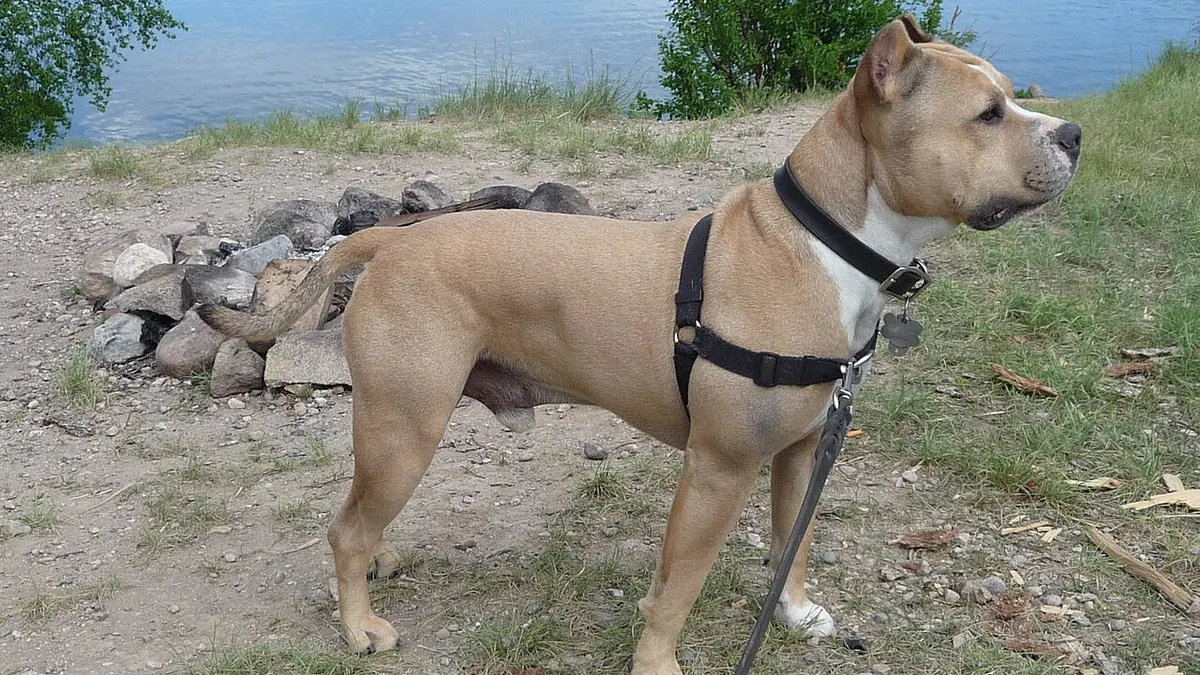
A dog often labelled an "American Staffordshire Terrier" or a "pit bull" based on looks alone may not actually be one: a large-scale study found that even canine professionals frequently get this wrong. Find all our gear guidance in the dog accessories section.
What the landmark study shows
Voith, Trevejo, Dowling-Guyer, Chadik, Marder, Johnson and Irizarry published a study in 2013 in the American Journal of Sociological Research comparing visual and DNA identification of twenty dogs among 923 canine professionals. The result: for fewer than half the dogs did the majority visual call match the actual genetic profile, and agreement between observers stayed low even among experienced professionals. A dog that looks like a "pit bull" or an "American Staffordshire Terrier" doesn't necessarily carry that genetic ancestry, and vice versa.

What that means for legal status in France
In France, regulation on dogs deemed dangerous separates American Staffordshire Terriers registered with the LOF pedigree book, classed as category 2, from unregistered dogs of similar type, which fall under even stricter category-1 obligations. This classification rests on the dog's official pedigree papers, not its appearance: a similar-looking dog lacking those precise recorded traits falls outside these categories, while a registered dog stays subject to them even if it doesn't "look the part."
- Keep identification and pedigree papers safe — the only document that holds up during a check, well before the dog's appearance.
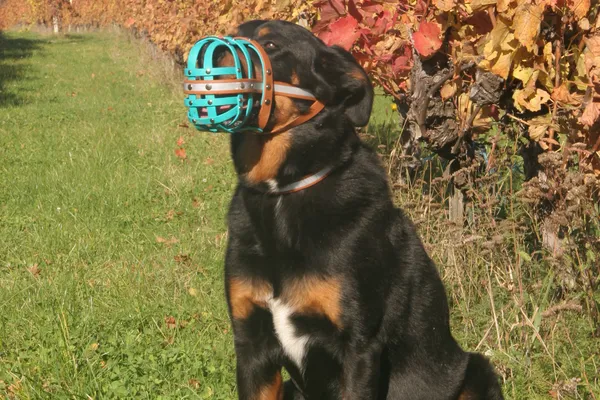
- Carry a muzzle and a non-retractable leash for any outing in public, a requirement shared by both categories.
- Check the exact classification with the town hall or a vet if in doubt, rather than relying on a visual assessment, including your own.
To find out exactly whether your dog is concerned and take the steps in the right order (aptitude certificate, behavioural assessment, insurance, ownership permit), our PDF guide Staffie, Cane Corso, Rottweiler: Living with a Mastiff-Type Dog in France covers the breed-by-breed table, with or without a pedigree, and muzzle training in ten steps.
For the fixed leash the regulation requires, our guide to the retractable or standard dog leash explains why a non-retractable model is the only compliant option. Find the full breed profile on the American Staffordshire Terrier page and browse all our guides on the dog hub.
Frequently asked questions
Is a DNA test enough to change a dog's legal classification?
Classification rests mainly on pedigree papers and the official morphological assessment, not on a standalone commercial DNA test.
Should a similar-looking but uncategorised dog still wear a muzzle?
Not legally, but suitable gear is still useful around other dogs or in busy public places.
Can the classification change over the dog's lifetime?
No, it's set once based on the dog's characteristics and stays fixed, barring an error found in the original documents.
This guide is part of Planète Pets’s Dogs universe. Our advice is general in nature: for any health concern, your veterinarian remains the only reference.