Accessories for a Great Pyrenees: harness, bowls and essentials
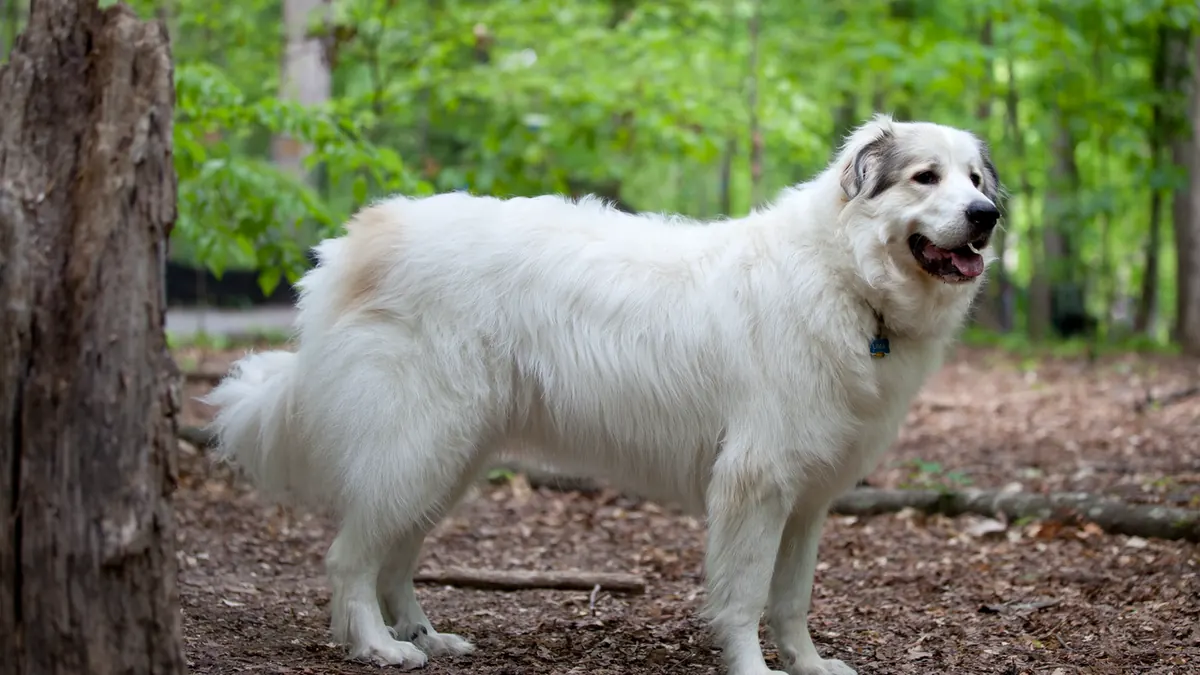

Great Pyrenees: Its independence makes recall unreliable: a 10 to 15 m long line and a sturdy XL harness are more realistic than off-leash freedom outside fenced areas. A GPS collar is a wise investment for this territorial roamer.
Our practical guides together, to download: Course: Train Your Dog in 8 Weeks — 2 PDF guides (85 pages in English (86 in French)), in English and French, instant download. Get my bundle — €49
In short: Giant dog, 65 to 80 cm and 40 to 60 kg, long white coat with a thick undercoat, moderate energy but highly vigilant. An autonomous livestock guardian, vigilant at night and wary of intruders. Bred to guard flocks alone: it decides without its owner, patrols and expands its territory the moment a fence weakens.
Harness and lead sized for the Great Pyrenees
Aim for a Y-fit harness in size XL to XXL, adjustable at two points minimum, tried on if possible: at 40 to 60 kg, a loose harness spins, a tight one blocks the shoulder. A 2-metre lead in town and a longer one for strolls match its steady pace.
Bowls and daily kit
A stable stainless bowl sized to its ration (420-650 g/day), slow-feed if meals last under a minute. The basics remain: continuous fresh water, a mat under the bowls, an airtight container to keep the kibble fresh.
The extras that genuinely matter for this breed
an undercoat tool (soft de-shedder) and a lint brush for textiles; a boot ramp to spare its joints — each under €40. The detailed picks are on the full Great Pyrenees profile.
Frequently asked questions
What harness size for a Great Pyrenees?
Size XL to XXL for an adult of 40 to 60 kg, in an adjustable Y-cut — measure the girth behind the elbows to decide between two sizes.
What starter budget for a Great Pyrenees?
Expect €250 to 450 for the full kit (bed, harness and lead, bowls, crate, toys, brush), food excluded.
The guides that apply to you
- Dog pulling on the leash: the loose-leash walking method, step by step
Dog pulling on the leash? The loose-leash method (stop, turn around, reward in the right place), the right harness and a 6-week plan, without prong or choke collars.
- Harness or collar for your dog: which to choose, and when?
Comfort, safety, control on walks: the pros and cons of harnesses and collars, so you can pick the right gear for your dog.
- No-pull front-clip harness for dogs: what does the science actually show?
Front-clip no-pull harness for dogs: what a recent study measured on pulling force, compared with a plain collar and a prong-style collar.
- Poop bag dispenser for dogs: which one should you choose?
Consistently picking up waste limits the spread of parasites transmissible in public spaces. Which dispenser keeps you from ever leaving home without a bag.