Grooming and care for a Great Pyrenees: brush, bath, health
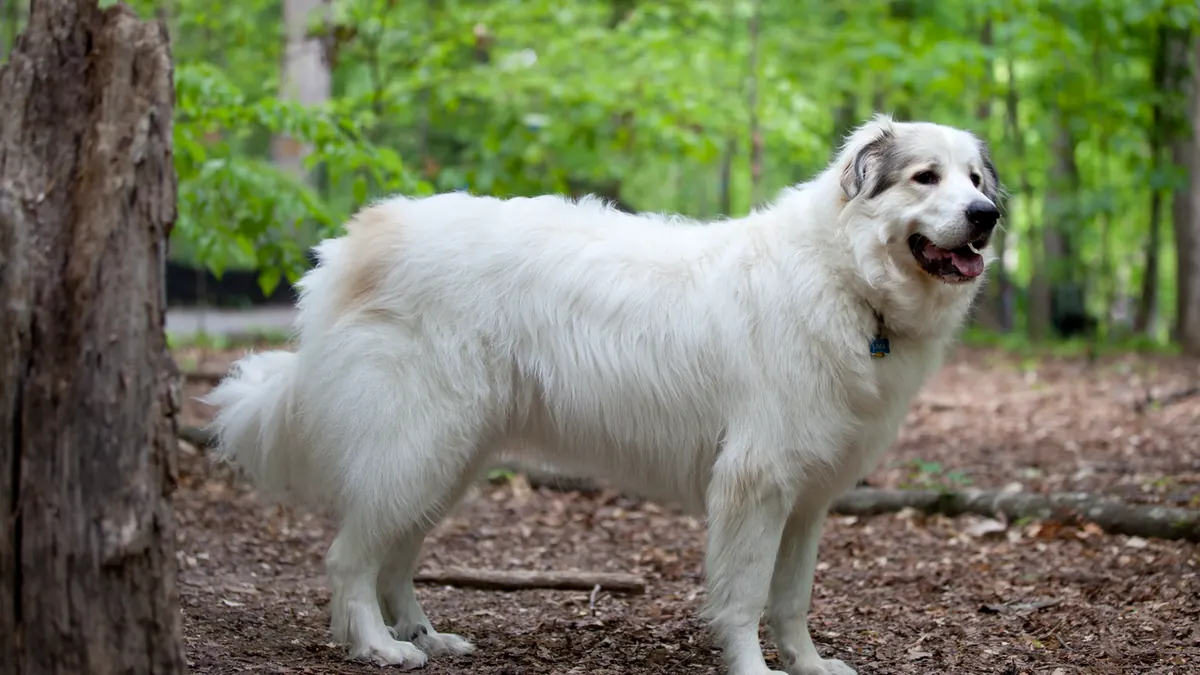

Great Pyrenees : Its self-cleaning white double coat does not need frequent baths, but it does need weekly raking, daily during the two big annual sheds. Do not forget the breed-typical double dewclaws on the hind legs, whose nails must be trimmed regularly.
An accessory from our shop for this use: Double-sided stainless steel dematting comb for dogs (€23.90) · the whole shop
We don’t ship products to your country yet; our practical guide downloads anywhere: Raising Your Puppy: The First Six Months (€19)
🩺 Our hygiene and health advice stays general: it never substitutes for an examination by a veterinarian, the only person qualified to advise on your animal.
In short: Giant dog, 65 to 80 cm and 40 to 60 kg, long white coat with a thick undercoat, moderate energy but highly vigilant. An autonomous livestock guardian, vigilant at night and wary of intruders. Bred to guard flocks alone: it decides without its owner, patrols and expands its territory the moment a fence weakens.
Coat care, brush by brush
Brush-wise, the Great Pyrenees calls for daily combing with a long-toothed comb then a slicker, or mats and tangles set in — and its seasonal moult is spectacular: for two to three weeks the undercoat comes out in handfuls and demands daily brushing. Start early and reward: a few positive minutes per session build an adult that accepts grooming without drama.
Baths, claws, ears, teeth
The Great Pyrenees’s bath comes round every four to six weeks, always with dog-pH shampoo, never your own products. Check claws monthly, inspect ears at the same time, and brush teeth two or three times a week.
Health watch-points for the Great Pyrenees
In the Great Pyrenees, the documented watch-points are: hip dysplasia and gastric dilatation-volvulus (bloat). Nothing inevitable, but they steer prevention — and at the first unusual sign, the vet decides, not the shop aisle. Life expectancy sits around 10 to 12 years.
Frequently asked questions
Which brush for a Great Pyrenees?
For its coat, plan on daily combing with a long-toothed comb then a slicker, or mats and tangles set in.
How often should a Great Pyrenees be bathed?
A four-to-six-week rhythm is required with this coat type — and exclusively with canine shampoo, never your own products.
The guides that apply to you
- Dog grooming budget: salon or at home, how much does it cost?
Salon prices by size, cost of home equipment, frequency by coat type: a dog’s yearly grooming budget and smart ways to bring it down.
- Basset Hound: why those floppy ears need particular care
The Basset Hound combines long, floppy ears with a poorly ventilated ear canal, a breeding ground for recurring ear infections. What veterinary research shows and how to cut down on flare-ups.
- Jack Russell Terrier: lens luxation (ADAMTS17) and genetic testing
In the Jack Russell Terrier, a hereditary mutation in the ADAMTS17 gene weakens the fibres that hold the lens in place. What the landmark study shows and why testing changes veterinary follow-up.
- German Shepherd: degenerative myelopathy (SOD1) and mobility gear
Degenerative myelopathy is a late-onset neurological disease of the German Shepherd, tied to an identified SOD1 gene mutation. What the landmark study shows and which gear supports a dog losing use of its hind legs.