Great Pyrenees: gear and buying guides
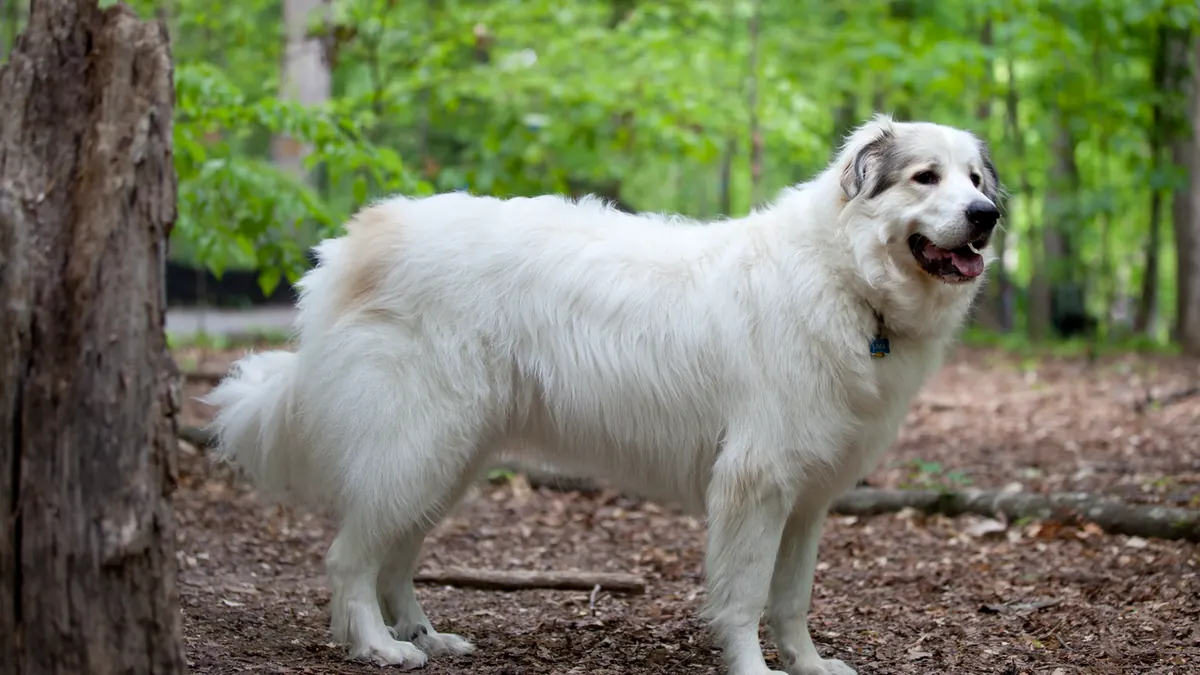

The Great Pyrenees is an independent livestock guardian dog, usually weighing 40 to 60 kg. Bred to work alone, it makes its own decisions and stays highly vigilant, often barking at night. Its size and thick white coat dictate every equipment choice.
Profile : Giant dog, 65 to 80 cm and 40 to 60 kg, long white coat with a thick undercoat, moderate energy but highly vigilant.
An accessory from our shop for this use: Self-cleaning stainless steel slicker brush for dogs (€25.90) · the whole shop
An accessory from our shop for this use: Folding wire dog crate 24 in (61 cm), single door, with tray ($62.90, ships from the US) · the US shop
We don’t ship products to your country yet; our practical guide downloads anywhere: Raising Your Puppy: The First Six Months (€19)
Species profile
- Lifespan
- 10 to 12 years
- Adult weight
- 40 to 60 kg
- Size
- 65 to 80 cm
- Temperament
- An autonomous livestock guardian, vigilant at night and wary of intruders.
- Health watch
- hip dysplasia · gastric dilatation-volvulus (bloat)
🩺 The health watchpoints on this page are for information only: only a veterinarian can examine your animal and make a diagnosis.
Great Pyrenees gear, family by family
-
🍖
Food
Despite its size, the Great Pyrenees has a frugal metabolism inherited from mountain work and often eats less than other giant breeds, around 400 to 600 g of kibble per day. Split it into two meals and avoid exercise right after eating to reduce the risk of bloat.
-
🧴
Care & grooming
Its self-cleaning white double coat does not need frequent baths, but it does need weekly raking, daily during the two big annual sheds. Do not forget the breed-typical double dewclaws on the hind legs, whose nails must be trimmed regularly.
-
🎾
Toys & enrichment
A guardian breed with little adult play drive, it prefers patrolling its territory to ball games. Offer sturdy chew-based occupation toys and scent games rather than fetch, which rarely interests it.
-
🏠
Bedding & habitat
Used to sleeping outdoors in all weather, it appreciates outside access and handles cold very well, but an XXL bed in a cool spot is still essential indoors. A tall, solid fence is vital: this guardian breed will expand its territory if it can.
-
🧳
Travel & safety
Plan on a giant-size travel crate or a large boot with a certified guard; at this weight a simple seatbelt harness is not enough in a crash. A folding ramp makes loading easier, especially for an aging dog prone to dysplasia.
-
🧰
Accessories
Its independence makes recall unreliable: a 10 to 15 m long line and a sturdy XL harness are more realistic than off-leash freedom outside fenced areas. A GPS collar is a wise investment for this territorial roamer.
🍖 Feeding a Great Pyrenees: portions, kibble and budget
The right daily ration for a Great Pyrenees
An adult Great Pyrenees of 40 to 60 kg eats 420 to 650 g of complete kibble a day, over two meals — a figure to adjust for age, neutering and actual exercise. The reference is the weight curve: you should feel the ribs without seeing them.
Matching the food to the breed
Like every breed this size, the Great Pyrenees should eat two calm meals a day, with no intense exercise in the following hour: the basic precaution against gastric dilatation-volvulus. Choose large-breed kibble (slow growth, joint support) and a stable, wide bowl.
Budget and smart buying
Budget €80 to €140 a month for quality kibble for an adult Great Pyrenees. Big bags cut the price per kilo, provided you store them dry in an airtight bin and use them within six weeks of opening. All our label-reading pointers are on the full Great Pyrenees profile.
Quick answers
- How much kibble per day for a Great Pyrenees?
- 420 to 650 g daily over two meals for an adult of 40 to 60 kg, adjusted for activity and the food’s density — the bag’s table gives the starting point, body condition the correction, the vet the verdict.
- How many meals a day for a Great Pyrenees?
- Two meals for an adult — essential at this size, which is exposed to gastric torsion, three to four for a growing puppy.
In our shop, for this use: 1.5 L anti-splash water bowl with floating disc (€37.90) · the whole shop
Our products don’t ship to you yet, but the PDF practical guide is instant: Raising Your Puppy: The First Six Months (€19)
🏠 Bed and sleeping setup for a Great Pyrenees: size and materials
What bed size for a Great Pyrenees?
Standing 65 to 80 cm at the withers, the Great Pyrenees needs a bed around 125 cm long — enough to stretch flat on its side, not just curl up. When torn between two sizes, always take the larger.
Materials and comfort
At this size, memory foam is not a luxury: it relieves joints and pressure points — a real issue in a breed concerned by hip dysplasia. Demand a zipped cover washable at 60°C — this breed’s moult will send it through the machine weekly, bolster edges as headrests and a base that grips tiled floors.
Where to put it?
The Great Pyrenees handles cool air well and even seeks out tiles in summer: offer two spots, a soft quiet bed and a cool corner. Overheating bothers it more than cold. An adult dog sleeps 12 to 15 hours a day: placement matters as much as the bed.
Quick answers
- What bed size suits a Great Pyrenees?
- Around 125 cm long for an adult of 65 to 80 cm at the withers: the dog must be able to stretch out fully.
- Can a Great Pyrenees sleep outside?
- Its hardiness allows it, with an insulated, raised kennel facing away from the wind — but family life indoors remains its real need.
An accessory from our shop for this use: Ice-silk cooling mat for dogs (62 × 50 to 100 × 70 cm) (€40.90) · the whole shop
An accessory from our shop for this use: Folding 3-step wooden pet stairs for beds and sofas ($75.90, ships from the US) · the US shop
Outside our shipping area? The downloadable practical guide: Raising Your Puppy: The First Six Months (€19)
Guides to read
- No-pull front-clip harness for dogs: what does the science actually show?Accessories
Front-clip no-pull harness for dogs: what a recent study measured on pulling force, compared with a plain collar and a prong-style collar.
- Why does my dog eat grass? What the research actually saysCare & grooming
Dog eating grass: what two studies show about how common the behavior is, its link with vomiting, and the cases that should raise concern.
- Reflective vest vs light-up collar for dogs: what's the real difference?Accessories
Dog visibility at night: what pedestrian-conspicuity research reveals about the real gap between a reflective vest and a light-up collar.
- Anxious dog in the car: motion sickness or real fear of the ride?Travel & safety
Dog car travel anxiety: what a veterinary study shows about the signs of travel-related problems and the factors that explain them best.
- BARF raw diet for dogs: what are the real benefits, what are the real risks?Food
Raw BARF diet for dogs: what studies actually show about the claimed benefits, bacterial risk, and real nutritional balance.
- Separation anxiety in dogs: what does research show, what actually helps?Care & grooming
Dog separation anxiety: what a veterinary study reveals about how common it is, its risk factors, and the solutions that actually work.
- Mental activities for dogs in winter: which indoor games actually work?Toys & enrichment
Winter mental enrichment for dogs: what a study shows about scent games and indoor activities that make up for shorter walks.
- Microchip or tattoo: which ID actually gets a lost dog home?Travel & safety
Dog identification: what a study shows about return-to-owner rates depending on whether the dog is microchipped or not.
Free guide: the 10 mistakes new owners make
A dog or cat just moved in? Food, first vet visits, training, budget: get our digest of the ten most expensive first-year missteps — with instant on-screen access.
✅ All set! Read the guide now.