Greek tortoise: gear and buying guides
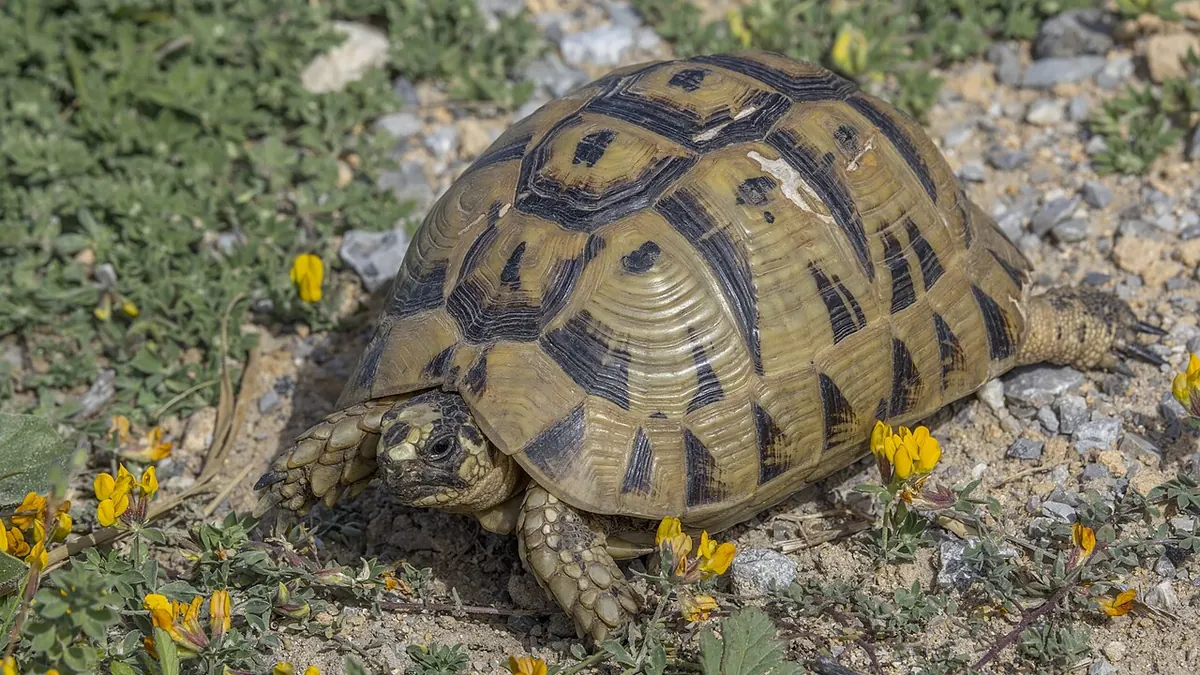
_male_Cap_Bon_2.jpg)
Close to Hermann's tortoise, the Greek tortoise is a peaceful land tortoise that needs sunshine, outdoor space and a strict herbivorous diet over several decades. Depending on the subspecies and its origin, hibernation must be adapted or shortened, and keeping one in France requires official paperwork.
Profile : 20 to 25 cm as an adult, commonly over 50 years of lifespan, intermediate level.
In our shop, for this use: 100 × 90 cm escape-proof net with 4 corner brackets for turtle tanks (€44.90) · the whole shop
We don’t ship products to your country yet; our practical guide downloads anywhere: Your First Terrarium: Leopard Gecko, Bearded Dragon, Corn Snake, Ball Python (€15)
Species profile
- Lifespan
- 50 to 100 years
- Adult size
- 20 to 25 cm
- Basking spot
- 32 to 35 °C
- Humidity
- 40 to 60 %
- Minimum enclosure
- 120 × 60 × 30 cm
- Temperament
- Close to Hermann's tortoise, peaceful and a grazer, it digs a little more and enjoys loose-soil areas.
- Health watch
- shell pyramiding and deficiencies from an unbalanced diet · herpesvirus and chronic runny nose syndrome, worsened by stress or poor hibernation
- Legal status
- A protected species, CITES Appendix II and Annex A of EU Regulation 338/97: keeping 1 to 6 animals requires a prefectural declaration, and an identified animal plus an intra-Community certificate are mandatory at transfer.
🩺 Our hygiene and health advice stays general: it never substitutes for an examination by a veterinarian, the only person qualified to advise on your animal.
Greek tortoise gear, family by family
-
🍖
Food
Strictly herbivorous, high in fibre and calcium: varied wild plants, endive, sedums, edible flowers, cuttlebone always available. Avoid iceberg lettuce, excess fruit and any dog or cat food.
-
🧴
Care & grooming
Regular lukewarm baths for juveniles, deworming on veterinary advice and monthly weigh-ins. Learn your animal's exact origin: some lines cope poorly with long, cold hibernation.
-
🎾
Toys & enrichment
It digs more than Hermann's tortoise: provide loose soil areas, varied terrain, sun-warmed flat stones and edible vegetation to graze on.
-
🏠
Bedding & habitat
A spacious outdoor enclosure (10 m² and more for an adult), well drained and south-facing, with buried opaque fencing and a dry shelter. Indoors, a tortoise table with strong UVB rather than a closed terrarium.
-
🧳
Travel & safety
A rigid hay-lined box, neither oversized nor slippery, at mild temperature. French regulations require identification and paperwork: keep documents with the animal whenever it travels.
-
🧰
Accessories
High-output UVB for indoor use, a basking lamp, an insulated outdoor shelter, a ground thermometer, cuttlebone and a scale. Typical equipment budget of 300 to 600 €, enclosure not included.
🧴 Caring for a Greek tortoise: shedding, enclosure hygiene, prevention
Shedding: the health barometer
In the Greek tortoise, the shed works as a health bulletin: complete and in one piece, all is well; in lingering patches, suspect the humidity first (target: 40 to 60%). A humid hide (sphagnum) added at shedding time is enough in a dry setup. Never pull skin off by hand — retained shed on the extremities is treated with lukewarm soaks.
Enclosure hygiene: real preventive medicine
Three rhythms to hold for a Greek tortoise: daily (fresh water, droppings), monthly (a complete disinfection with white vinegar or unscented reptile product), and exceptional — 60 days of quarantine at every arrival. In dry setups, the reverse trap: substrate soiled and damp at depth becomes an invisible bacterial nest.
The Greek tortoise’s health: the signals that matter
The Greek tortoise watch-list: shell pyramiding and deficiencies from an unbalanced diet and herpesvirus and chronic runny nose syndrome, worsened by stress or poor hibernation. Add herpetoculture’s universal alarms — abnormal lethargy, resting with the mouth open, behaviour changes that persist. Over a 50 to 100 year lifespan, an exotics vet identified before the emergency saves critical days.
Quick answers
- My Greek tortoise sheds in patches — is it serious?
- It signals insufficient humidity (aim for 40 to 60%): a humid hide and misting fix most of it. Persistent shed on toes or tail tip warrants lukewarm soaks, then a vet if nothing lifts.
- Which products for cleaning a Greek tortoise enclosure?
- Diluted white vinegar or a reptile-safe disinfectant, rinsed thoroughly — never unrinsed bleach or scented products, toxic in a confined volume.
Outside our shipping area? The downloadable practical guide: Your First Terrarium: Leopard Gecko, Bearded Dragon, Corn Snake, Ball Python (€15)
Guides to read
- Vertical terrarium for a crested gecko: height, ventilation and humidityBedding & habitat
Vertical terrarium for a crested gecko: why height matters more than floor space, what size fits each age, and how to manage the humidity cycle.
- Feeding a crested gecko: CGD powder, fruit and occasional insectsFood
Feeding a crested gecko: why complete CGD powder remains the base diet, when to add insects, and how often to feed by age.
- Tail loss in crested geckos: why you should never grab one by the tailCare & grooming
Tail loss (autotomy) in crested geckos: why the tail never grows back in this species, what handling mistakes to avoid, and what to do if it drops.
- Terrarium enrichment for a crested gecko: branches, hides and climbing supportsToys & enrichment
Terrarium enrichment for a crested gecko: why climbing supports matter as much as décor, what hides to provide, and whether to rotate the layout.
- Transporting a Green Iguana to the Vet: Carrier, Heat and StressTravel & safety
Rigid carrier, keeping the animal warm on the road, and grips to avoid with the tail: how to transport a green iguana to the vet without adding to its stress.
- Humidity and Shedding in the Chinese Water Dragon: Avoiding Skin ProblemsCare & grooming
Why the Chinese water dragon needs high humidity, how to maintain it without stagnation, and the early signs of an incomplete shed.
- Feeding a Green Anole: Which Insects, and How Often?Food
Small live insects, prey size and feeding frequency: the complete guide to feeding a green anole, a strict insectivore and a tiny lizard.
- Handling and Transporting a Pacman Frog: Limiting Stress and ContactTravel & safety
Why the Pacman frog's permeable skin means handling should stay minimal, and how to transport it safely for a vet visit.