Transporting a Greek tortoise: box, temperature and paperwork
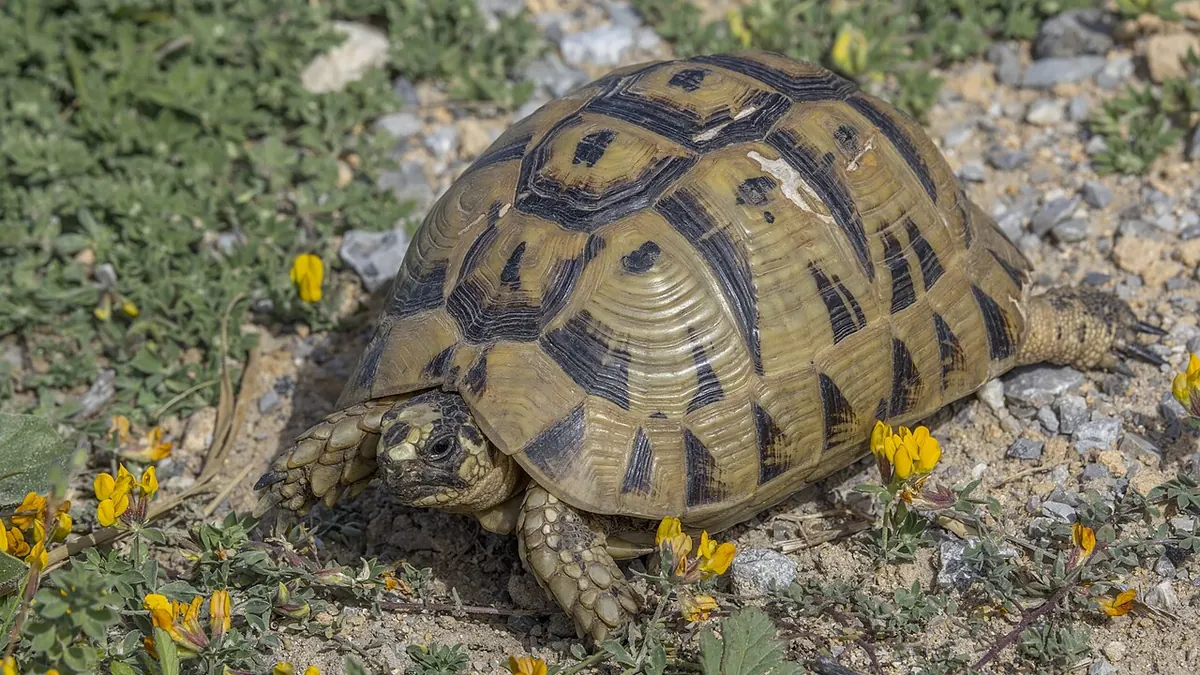
_male_Cap_Bon_2.jpg)
Greek tortoise : A rigid hay-lined box, neither oversized nor slippery, at mild temperature. French regulations require identification and paperwork: keep documents with the animal whenever it travels.
In our shop, for this use: 100 × 90 cm escape-proof net with 4 corner brackets for turtle tanks (€44.90) · the whole shop
Our products don’t ship to you yet, but the PDF practical guide is instant: Your First Terrarium: Leopard Gecko, Bearded Dragon, Corn Snake, Ball Python (€15)
In short: 20 to 25 cm as an adult, commonly over 50 years of lifespan, intermediate level. Close to Hermann's tortoise, peaceful and a grazer, it digs a little more and enjoys loose-soil areas. Learn its exact origin: some lines cope poorly with long, cold hibernation, but like all land tortoises its true home is a well-drained, south-facing OUTDOOR enclosure.
Transporting an ectotherm
A rigid, ventilated box in a snug format (the animal must not slide around), lined with paper or cloth, in darkness — a reptile that sees nothing travels calmly. In winter, a chemical heat pack wrapped and fixed OUT of direct contact: a Greek tortoise does not always feel a burn before the lesion.
Temperature: the journey’s only real constraint
Set a numeric goal: 22-25°C to 32-35°C inside the box, from departure to arrival. That means a car brought to temperature before the animal, no boot in summer, no extended stops in the sun. Long trips are planned for early morning in summer, midday in winter.
Paperwork and the legal framework
A protected species, CITES Appendix II and Annex A of EU Regulation 338/97: keeping 1 to 6 animals requires a prefectural declaration, and an identified animal plus an intra-Community certificate are mandatory at transfer. These documents accompany the animal on EVERY journey — a road check can demand them, and their absence exposes you to the animal’s seizure.
Frequently asked questions
How do you take a Greek tortoise to the vet?
A snug dark rigid box, temperature held between 22-25°C and 32-35°C, with a wrapped heat pack in winter — and the shortest possible trip.
What paperwork does a Greek tortoise require?
A protected species, CITES Appendix II and Annex A of EU Regulation 338/97: keeping 1 to 6 animals requires a prefectural declaration, and an identified animal plus an intra-Community certificate are mandatory at transfer.
The guides that apply to you
- Transporting a leopard gecko safely: what a study on caudal autotomy shows
A scientific review on caudal autotomy in lizards explains why handling a leopard gecko during transport calls for particular care around the tail.
- Ball python: does the transport container stress it more than handling does?
Manual restraint, gentle handling, or a closed container: not every transport method affects a ball python the same way. What a comparative study published in Applied Animal Behaviour Science reveals.
- Savannah monitor: what a study on handling heart rate changes about transport
A study measured an almost doubled heart rate in a large lizard handled for just one minute. Reason enough to limit restraint time during transport.
- Transporting a chameleon to the vet without stressing it out
Transporting a chameleon: which box to use, how to limit the stress of a highly handling-sensitive animal, and temperature precautions on the road.