Accessories for a Greek tortoise: thermostat, measurement and kit
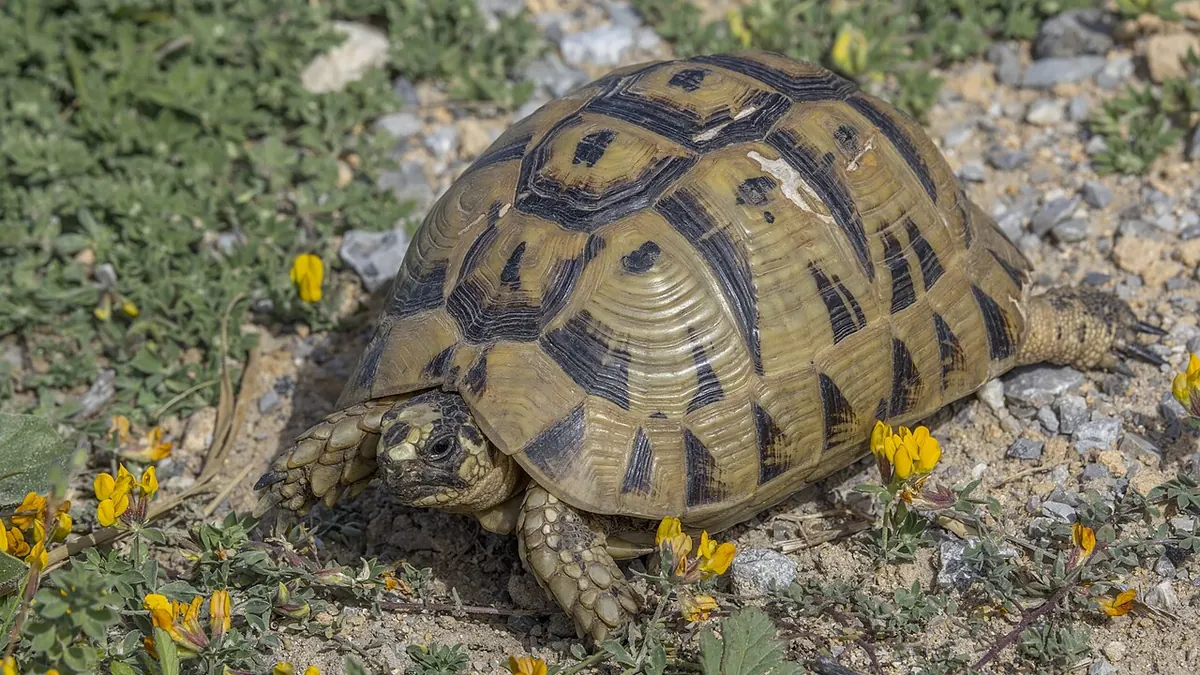
_male_Cap_Bon_2.jpg)
Greek tortoise : High-output UVB for indoor use, a basking lamp, an insulated outdoor shelter, a ground thermometer, cuttlebone and a scale. Typical equipment budget of 300 to 600 €, enclosure not included.
We don’t ship products to your country yet; our practical guide downloads anywhere: Your First Terrarium: Leopard Gecko, Bearded Dragon, Corn Snake, Ball Python (€15)
In short: 20 to 25 cm as an adult, commonly over 50 years of lifespan, intermediate level. Close to Hermann's tortoise, peaceful and a grazer, it digs a little more and enjoys loose-soil areas. Learn its exact origin: some lines cope poorly with long, cold hibernation, but like all land tortoises its true home is a well-drained, south-facing OUTDOOR enclosure.
The thermostat: accessory number one (non-negotiable)
Every enclosure heater runs through a thermostat (€30-60): without one, a lamp or heat mat can pass 50°C and burn the animal. Add two thermometers (one per pole: 32-35°C / 22-25°C) and a reliable hygrometer — in herpetoculture you only control what you measure.
The Greek tortoise kit
long feeding tongs; gram-accurate kitchen scales for the monthly weigh-in; a timer for the day-night cycle (about 12 h); a spare UVB tube marked on the calendar — it fades before it dies; a cuttlebone and a heavy shallow dish.
Full budget and starter-kit traps
A complete Greek tortoise setup: €400 to 800 (enclosure, thermostat-controlled heating, UVB, measurement, decor), then €15 to 40 a month. Beware pet-shop “complete kits”: undersized tank, thermostat-free lamp and a fanciful stick-on thermometer — the line-by-line detail is on the full Greek tortoise profile.
Frequently asked questions
What is the most important accessory for a Greek tortoise?
The thermostat: it stops the heating from injuring the animal and holds the basking spot at 32-35°C. Everything else comes second.
What budget to set up a Greek tortoise?
€400 to 800 for a serious, complete setup, then €15 to 40 a month — cheap starter kits get paid for twice.
The guides that apply to you
- Chinese water dragon: positioning heating and lighting for real thermal choice
A 1999 study on the Chinese water dragon in a naturalistic setting shows the animal doesn't just endure heat, it chooses it: how to equip the terrarium accordingly.
- Terrarium electricity bill: how much does it cost and how to cut it?
A terrarium uses 10 to 25 € of electricity per month. The line-by-line calculation and 6 practical levers to cut the bill safely.
- Panther chameleon: a study showing it adjusts its own UV exposure
A now-classic American study found that panther chameleons expose themselves to more UV when their diet is low in vitamin D3. Reason enough to rethink how you set up its UVB lamp.
- Green iguana: UVB or dietary vitamin D3, what a comparative study reveals
A study compared growth in young green iguanas given dietary vitamin D3, UVB exposure, or both, to settle whether full-spectrum lighting is truly necessary.