Feeding a Greek tortoise: diet, supplements, food refusals
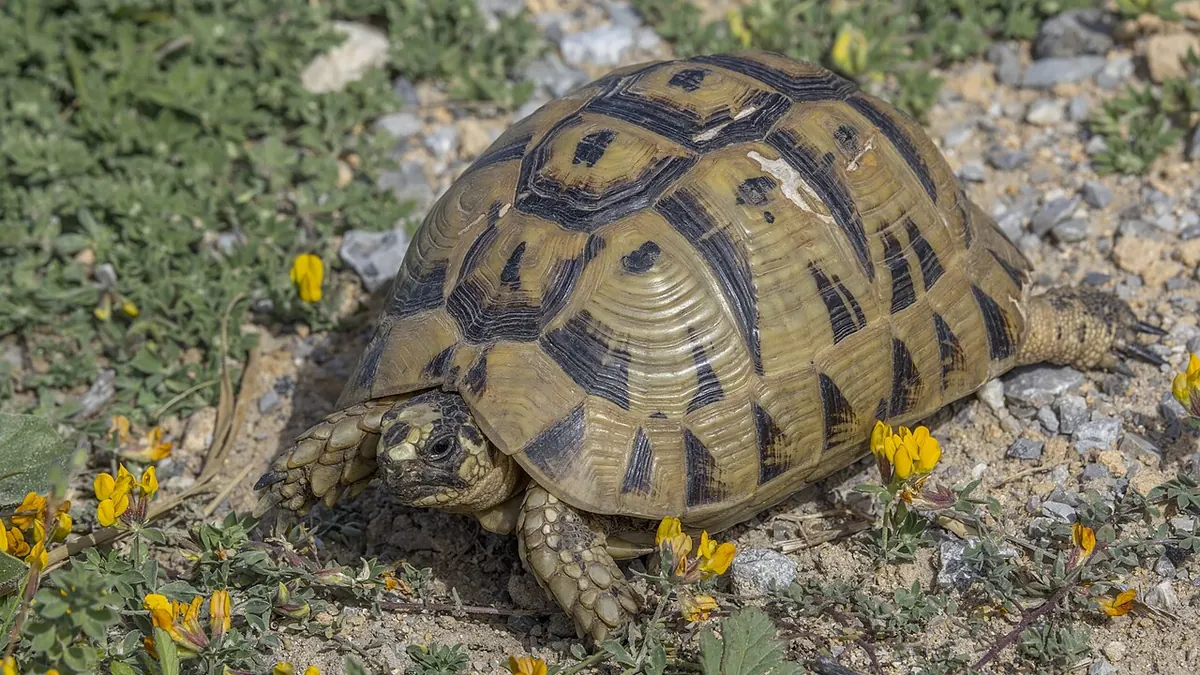
_male_Cap_Bon_2.jpg)
Greek tortoise : Strictly herbivorous, high in fibre and calcium: varied wild plants, endive, sedums, edible flowers, cuttlebone always available. Avoid iceberg lettuce, excess fruit and any dog or cat food.
Outside our shipping area? The downloadable practical guide: Your First Terrarium: Leopard Gecko, Bearded Dragon, Corn Snake, Ball Python (€15)
In short: 20 to 25 cm as an adult, commonly over 50 years of lifespan, intermediate level. Close to Hermann's tortoise, peaceful and a grazer, it digs a little more and enjoys loose-soil areas. Learn its exact origin: some lines cope poorly with long, cold hibernation, but like all land tortoises its true home is a well-drained, south-facing OUTDOOR enclosure.
The Greek tortoise diet, precisely
Strictly herbivorous, high in fibre and calcium: varied wild plants, endive, sedums, edible flowers and cuttlebone at will; avoid iceberg lettuce, excess fruit and any dog or cat food. Temperature governs digestion: a Greek tortoise kept below its 32-35°C basking spot digests poorly and eventually refuses food — faced with a refusing animal, check the thermometer before the menu.
Supplements and meal rhythm
Varied wild greens (dandelion, plantain, clover) beat any pellet: aim for a high calcium-to-phosphorus ratio and ban sugary fruit, lettuce and dog or cat food. A cuttlebone on hand tops up the calcium.
Water and hydration
A stable water dish changed daily, big enough for a soak if the animal wants one — many drink little but bathe before shedding. Dehydration shows in skin folds and sunken eyes: that means the exotics vet, not the mister alone. The full profile is on the full Greek tortoise profile.
Frequently asked questions
What does a Greek tortoise eat?
Strictly herbivorous, high in fibre and calcium: varied wild plants, endive, sedums, edible flowers and cuttlebone at will; avoid iceberg lettuce, excess fruit and any dog or cat food.
Why is my Greek tortoise refusing food?
Check temperatures first (basking spot at 32-35°C): too cold means no digestion. Then shedding and settling-in stress — but measured weight loss calls for the exotics vet.
The guides that apply to you
- Green iguana: why a hatchling eats an adult's droppings, according to a study
An adult green iguana digests grass thanks to bacteria it doesn't have at birth. A landmark study explains how a hatchling acquires them, and why.
- Blue-tongued skink: what a study on prey capture changes about how it eats
A study filmed slow-motion capture of mealworms and crickets in the blue-tongued skink: the tongue and jaws are not used the same way depending on the prey, a useful benchmark for varying feeding.
- Feeding a Greek tortoise: which wild plants to favour?
Dandelion, plantain, clover: the Greek tortoise is a strict herbivore that copes poorly with excess protein and fruit. What a wild-diet study reveals about feeding one in captivity.
- Feeding a Green Anole: Which Insects, and How Often?
Small live insects, prey size and feeding frequency: the complete guide to feeding a green anole, a strict insectivore and a tiny lizard.