Enrichment for a Greek tortoise: decor that does the work
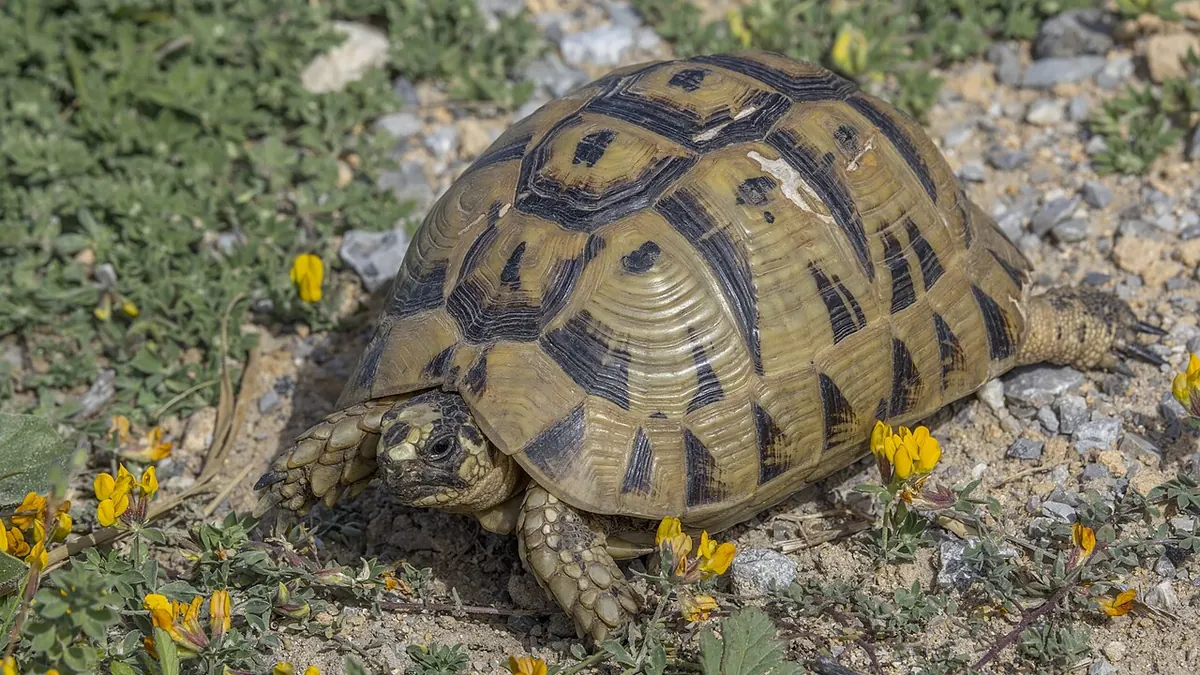
_male_Cap_Bon_2.jpg)
Greek tortoise : It digs more than Hermann's tortoise: provide loose soil areas, varied terrain, sun-warmed flat stones and edible vegetation to graze on.
We don’t ship products to your country yet; our practical guide downloads anywhere: Your First Terrarium: Leopard Gecko, Bearded Dragon, Corn Snake, Ball Python (€15)
In short: 20 to 25 cm as an adult, commonly over 50 years of lifespan, intermediate level. Close to Hermann's tortoise, peaceful and a grazer, it digs a little more and enjoys loose-soil areas. Learn its exact origin: some lines cope poorly with long, cold hibernation, but like all land tortoises its true home is a well-drained, south-facing OUTDOOR enclosure.
Enrichment, reptile-style
No balls, no toys: for a Greek tortoise, enrichment means environmental complexity. Climbable relief, digging zones and low obstacles: a tortoise in a varied enclosure explores for hours.
Varying the hunt and the exploration
Sow greens across the enclosure and slip some under foliage: a searching tortoise is a walking tortoise. Handling stays stressful for most reptiles: ten calm minutes beat a constrained hour.
What is useless (or harmful)
To strike off the Greek tortoise’s shopping list: the enclosure companion (a source of stress or injuries), toys designed for rodents, scented resin decor and a daily-handling programme. A Greek tortoise that explores, hunts and uses its whole volume is an enriched animal — the decor does the work, not you.
Frequently asked questions
How do you keep a Greek tortoise occupied?
A complex layout (hides, relief, diggable substrate) refreshed in small touches, plus food to find rather than served at the same spot.
Can you handle a Greek tortoise?
Sparingly: the species tolerates handling more than it enjoys it — favour observation.
The guides that apply to you
- Should you regularly rearrange the terrarium decor?
Rearranging terrarium decor: which reptiles benefit from it, how often to do it, and the precautions to take so you don't stress the animal.
- Greek tortoise: what a study on a cousin tortoise reveals about its learning ability
A study showed that a tortoise species considered largely unsocial can still learn a task by watching another individual, a finding that reshapes what enrichment might mean for the Greek tortoise.
- Box turtle: does an enriched enclosure really lower its stress?
Thirty-eight box turtles split between a barren and an enriched enclosure for a month: the enriched group showed a lower blood stress ratio and far less escape behaviour.
- Which plants should you choose for a bioactive terrarium?
Plants for a bioactive terrarium: which ones handle humidity, foot traffic and UVB light, and which ones to avoid altogether.