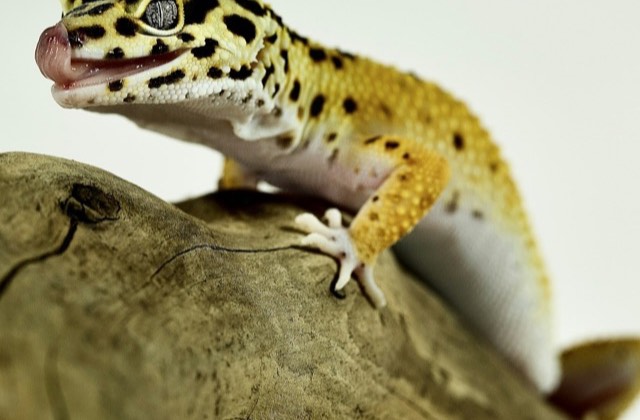
Transporting a leopard gecko safely: what a study on caudal autotomy shows
Published by Planète Pets · managing editor: Clément Lacaille · how our guides are written
A small, docile leopard gecko looks easy enough to carry by hand. All our travel and safety guides live in the reptile travel and safety section.
Contents · 5 sections
What a scientific review on caudal autotomy in lizards shows
A review by Philip Bateman and Patricia Fleming, published in 2009 in the Journal of Zoology, summarises decades of research on caudal autotomy — the ability of many lizards, including the leopard gecko, to voluntarily shed their tail under rough handling or intense stress (see the study). The review notes that this mechanism, while it saves the animal from a predator in the wild, carries a real physiological cost: loss of the fat reserves stored in the tail, energy spent on regrowth, and sometimes a lasting change in posture or balance.
Why this matters directly for transport
- Grabbing the tail remains the most common trigger for autotomy in captivity, including during quick handling to place the animal in a travel carrier.
- A stressful transport environment (noise, jolting, temperature change) can lower the trigger threshold even without direct handling of the tail.
- A regrown tail is never identical to the original, which makes prevention clearly preferable to dealing with the aftermath.
How to handle and transport a leopard gecko without risk
Always support the whole body from underneath, never by the tail or by pinching the hindquarters, and move the animal straight into a small, ventilated travel box lined with paper towel rather than carrying it in hand for long. A calm period in the terrarium before departure reduces the stress that lowers the autotomy threshold. Choosing a terrarium and substrate that already minimise unnecessary handling is covered in our guide to a complete leopard gecko setup and starting budget.
If the tail drops anyway
The wound should stay clean and dry, with no ointment or occlusive dressing; regrowth happens spontaneously over several weeks. Heavy bleeding or an infected wound calls for a prompt exotics vet visit, a sign to tell apart from a shed that simply went wrong, as covered in our guide to incomplete shedding in leopard geckos.
Frequently asked questions
Does the tail grow back exactly the same?
No, the scientific review confirms the regrown tail generally differs in colour, texture and sometimes shape from the original.
Can a leopard gecko lose its tail without being touched?
Yes, intense stress (a chaotic trip, a perceived predator, rough handling of a tankmate) can be enough, with no direct grab involved.
Should you avoid handling your gecko entirely before a trip?
No, but a firm hold under the whole body rather than by the hindquarters greatly reduces the risk. Find all our guides on the reptile hub and the leopard gecko profile.
See it in the Planète Pets shop: Ventilated clear box for feeder insects, transport and quarantine, 19 cm (€17.90) · the whole shop
This guide is part of Planète Pets’s Reptiles universe. Our advice is general in nature: for any health concern, your veterinarian remains the only reference.