Red-eared slider: gear and buying guides
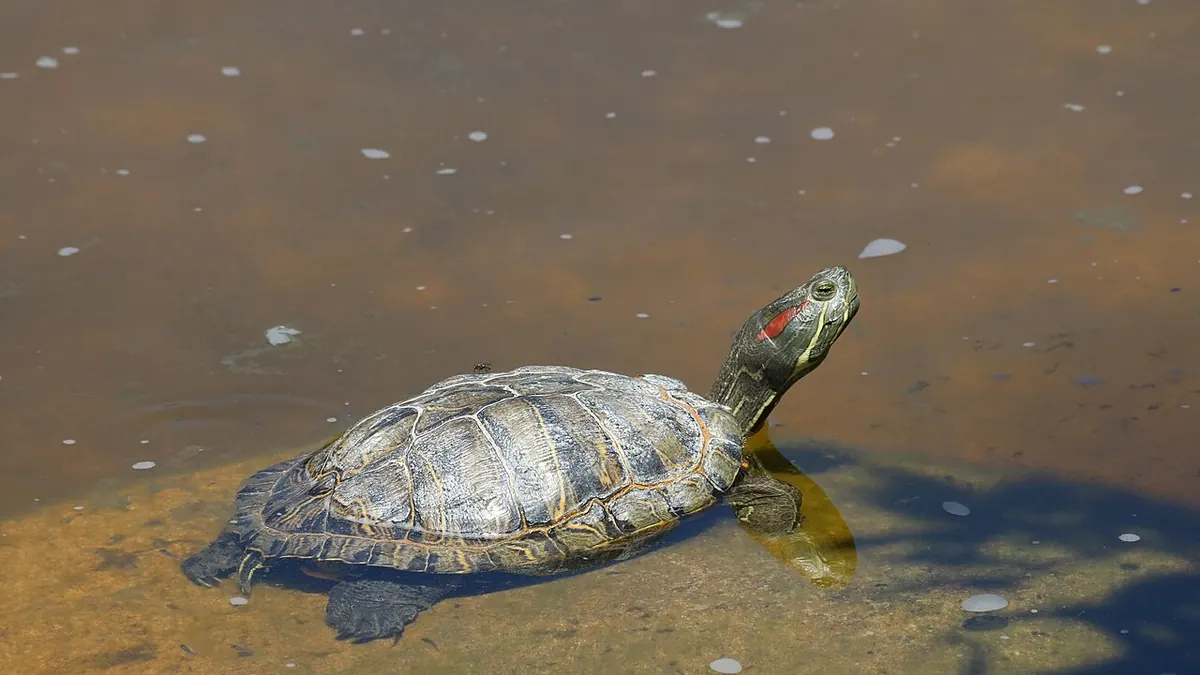

Lively and voracious, the red-eared slider is often bought small and underestimated: as an adult it demands an aquaterrarium of at least 300 L, oversized filtration, a heated basking platform with UVB and decades of care. Keeping one is also strictly regulated in France, so check the rules before any acquisition.
Profile : 20 to 30 cm of shell as an adult, 30 to 40 years of lifespan, intermediate level.
See it in the Planète Pets shop: Ventilated clear box for feeder insects, transport and quarantine, 19 cm (€17.90) · the whole shop
We don’t ship products to your country yet; our practical guide downloads anywhere: Your First Terrarium: Leopard Gecko, Bearded Dragon, Corn Snake, Ball Python (€15)
Species profile
- Lifespan
- 30 to 40 years
- Adult size
- 20 to 30 cm
- Basking spot
- 30 to 32 °C
- Humidity
- 60 to 80 %
- Minimum enclosure
- 120 × 50 × 50 cm
- Temperament
- Lively and voracious, it swims actively and proves far more demanding as an adult than at the time of purchase.
- Health watch
- soft shell from lacking UVB or calcium · shell rot and vitamin A deficiency (swollen eyes) linked to poor water quality
- Legal status
- An invasive alien species of Union concern (Regulation 1143/2014): purchase, sale and breeding are banned; keeping animals acquired before the ban is tolerated under conditions, and the animal must never be released into the wild.
🩺 Our hygiene and health advice stays general: it never substitutes for an examination by a veterinarian, the only person qualified to advise on your animal.
Red-eared slider gear, family by family
-
🍖
Food
An omnivore that grows more herbivorous with age: aquatic-turtle pellets, occasional whole fish, aquatic plants and greens. Feeding in a separate tub massively reduces water pollution.
-
🧴
Care & grooming
Water quality is everything: a filter rated for 2 to 3 times the actual volume, regular partial water changes and checks for shell algae. A soft shell signals lacking UVB or calcium.
-
🎾
Toys & enrichment
It swims actively and enjoys deep water with currents, submerged hides, occasional live prey (worms, gammarus) and plants to shred.
-
🏠
Bedding & habitat
An aquaterrarium of 300 L or more for an adult, water at 22-26 °C, a dry basking platform under a heat lamp (30-32 °C) and a UVB tube. A secure outdoor pond in summer is an excellent addition, but never release the animal into the wild.
-
🧳
Travel & safety
Transport dry in a rigid box with a damp cloth, never in a volume of water. The species is regulated in France: keep its paperwork and never consider release or informal rehoming.
-
🧰
Accessories
A powerful external filter, a guarded water heater, basking and UVB lamps, a sturdy floating platform, a net and water conditioner. A full setup often exceeds 500 to 800 €.
🧰 Accessories for a Red-eared slider: thermostat, measurement and kit
The thermostat: accessory number one (non-negotiable)
Every enclosure heater runs through a thermostat (€30-60): without one, a lamp or heat mat can pass 50°C and burn the animal. Add two thermometers (one per pole: 30-32°C / 22-26°C) and a reliable hygrometer — in herpetoculture you only control what you measure.
The Red-eared slider kit
long feeding tongs; gram-accurate kitchen scales for the monthly weigh-in; a timer for the day-night cycle (about 12 h); a pressure sprayer or automatic mister, plus sphagnum for the humid hide; a spare UVB tube marked on the calendar — it fades before it dies; an oversized filter and water conditioner.
Full budget and starter-kit traps
A complete Red-eared slider setup: €400 to 800 (enclosure, thermostat-controlled heating, UVB, measurement, decor), then €15 to 40 a month. Beware pet-shop “complete kits”: undersized tank, thermostat-free lamp and a fanciful stick-on thermometer — the line-by-line detail is on the full Red-eared slider profile.
Quick answers
- What is the most important accessory for a Red-eared slider?
- The thermostat: it stops the heating from injuring the animal and holds the basking spot at 30-32°C. Everything else comes second.
- What budget to set up a Red-eared slider?
- €400 to 800 for a serious, complete setup, then €15 to 40 a month — cheap starter kits get paid for twice.
Outside our shipping area? The downloadable practical guide: Your First Terrarium: Leopard Gecko, Bearded Dragon, Corn Snake, Ball Python (€15)
Guides to read
- Vertical terrarium for a crested gecko: height, ventilation and humidityBedding & habitat
Vertical terrarium for a crested gecko: why height matters more than floor space, what size fits each age, and how to manage the humidity cycle.
- Feeding a crested gecko: CGD powder, fruit and occasional insectsFood
Feeding a crested gecko: why complete CGD powder remains the base diet, when to add insects, and how often to feed by age.
- Tail loss in crested geckos: why you should never grab one by the tailCare & grooming
Tail loss (autotomy) in crested geckos: why the tail never grows back in this species, what handling mistakes to avoid, and what to do if it drops.
- Terrarium enrichment for a crested gecko: branches, hides and climbing supportsToys & enrichment
Terrarium enrichment for a crested gecko: why climbing supports matter as much as décor, what hides to provide, and whether to rotate the layout.
- Transporting a Green Iguana to the Vet: Carrier, Heat and StressTravel & safety
Rigid carrier, keeping the animal warm on the road, and grips to avoid with the tail: how to transport a green iguana to the vet without adding to its stress.
- Humidity and Shedding in the Chinese Water Dragon: Avoiding Skin ProblemsCare & grooming
Why the Chinese water dragon needs high humidity, how to maintain it without stagnation, and the early signs of an incomplete shed.
- Feeding a Green Anole: Which Insects, and How Often?Food
Small live insects, prey size and feeding frequency: the complete guide to feeding a green anole, a strict insectivore and a tiny lizard.
- Handling and Transporting a Pacman Frog: Limiting Stress and ContactTravel & safety
Why the Pacman frog's permeable skin means handling should stay minimal, and how to transport it safely for a vet visit.