Transporting a Red-eared slider: box, temperature and paperwork
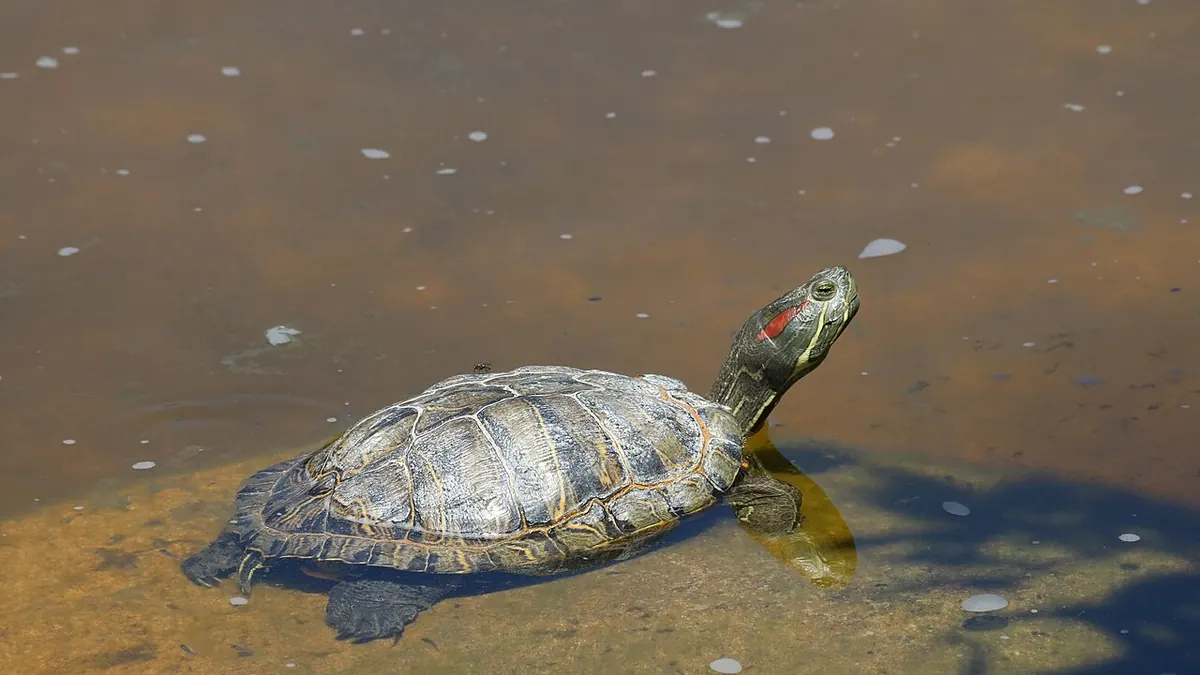

Red-eared slider : Transport dry in a rigid box with a damp cloth, never in a volume of water. The species is regulated in France: keep its paperwork and never consider release or informal rehoming.
An accessory from our shop for this use: Ventilated clear box for feeder insects, transport and quarantine, 19 cm (€17.90) · the whole shop
Our products don’t ship to you yet, but the PDF practical guide is instant: Your First Terrarium: Leopard Gecko, Bearded Dragon, Corn Snake, Ball Python (€15)
In short: 20 to 30 cm of shell as an adult, 30 to 40 years of lifespan, intermediate level. Lively and voracious, it swims actively and proves far more demanding as an adult than at the time of purchase. It is aquatic: it needs an aquaterrarium of 300 L or more, oversized-filtered water at 22-26 °C and a heated dry basking dock under UVB — never a plain water tub.
Transporting an ectotherm
A rigid, ventilated box in a snug format (the animal must not slide around), lined with paper or cloth, in darkness — a reptile that sees nothing travels calmly. An aquatic turtle travels DRY on a damp cloth, never in water that would toss and chill it.
Temperature: the journey’s only real constraint
Set a numeric goal: 22-26°C to 30-32°C inside the box, from departure to arrival. That means a car brought to temperature before the animal, no boot in summer, no extended stops in the sun. Long trips are planned for early morning in summer, midday in winter.
Paperwork and the legal framework
An invasive alien species of Union concern (Regulation 1143/2014): purchase, sale and breeding are banned; keeping animals acquired before the ban is tolerated under conditions, and the animal must never be released into the wild. These documents accompany the animal on EVERY journey — a road check can demand them, and their absence exposes you to the animal’s seizure.
Frequently asked questions
How do you take a Red-eared slider to the vet?
In a dark rigid box sized to fit, holding the 22-26°C-30-32°C range (dry, on a damp cloth), and keeping the trip to a minimum.
What paperwork does a Red-eared slider require?
An invasive alien species of Union concern (Regulation 1143/2014): purchase, sale and breeding are banned; keeping animals acquired before the ban is tolerated under conditions, and the animal must never be released into the wild.
The guides that apply to you
- Ball python: does the transport container stress it more than handling does?
Manual restraint, gentle handling, or a closed container: not every transport method affects a ball python the same way. What a comparative study published in Applied Animal Behaviour Science reveals.
- Transporting a Bearded Dragon to the Vet or on a Trip Without Stress
How do you transport a bearded dragon? A suitable box, keeping it warm, a calm journey and gentle re-acclimation to limit the reptile's stress.
- The ball python detects heat up to 30 cm, no further: what the study measures
We picture snakes spotting a heat source from a distance. The only threshold study run on the ball python gives a far shorter range than people assume.
- Transporting a Chinese water dragon without stress: the right gear
A rigid, dark, padded box, never a clear container: how to move a nervous, bolting lizard like the Chinese water dragon without injury or panic.