Enrichment for a Red-eared slider: decor that does the work
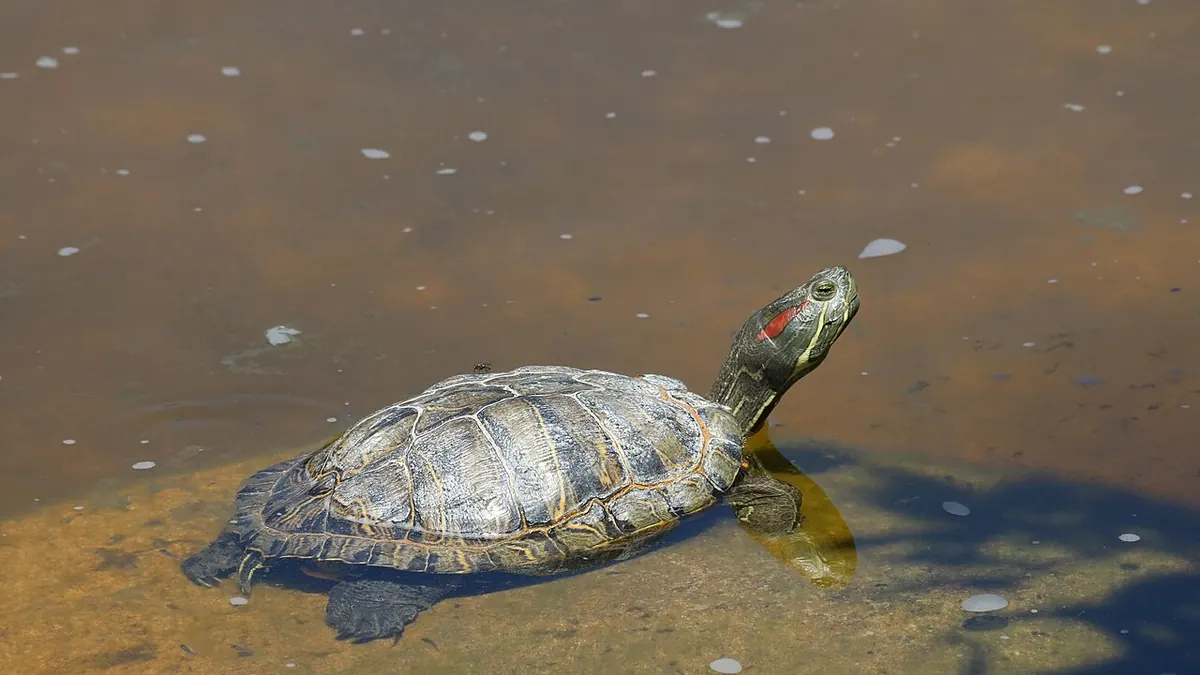

Red-eared slider : It swims actively and enjoys deep water with currents, submerged hides, occasional live prey (worms, gammarus) and plants to shred.
Our products don’t ship to you yet, but the PDF practical guide is instant: Your First Terrarium: Leopard Gecko, Bearded Dragon, Corn Snake, Ball Python (€15)
In short: 20 to 30 cm of shell as an adult, 30 to 40 years of lifespan, intermediate level. Lively and voracious, it swims actively and proves far more demanding as an adult than at the time of purchase. It is aquatic: it needs an aquaterrarium of 300 L or more, oversized-filtered water at 22-26 °C and a heated dry basking dock under UVB — never a plain water tub.
Enrichment, reptile-style
Forget the notion of toys: for a Red-eared slider, enrichment means living in a complex environment to explore. Give it terrain: mounds to climb, loose soil to dig, low obstacles to negotiate — a well-housed tortoise patrols its enclosure for hours.
Varying the hunt and the exploration
Split the greens ration across several stations, some hidden under leaves: the food quest keeps it walking and busy for hours. Handling stays stressful for most reptiles: ten calm minutes beat a constrained hour.
What is useless (or harmful)
To strike off the Red-eared slider’s shopping list: the enclosure companion (a source of stress or injuries), toys designed for rodents, scented resin decor and a daily-handling programme. A Red-eared slider that explores, hunts and uses its whole volume is an enriched animal — the decor does the work, not you.
Frequently asked questions
How do you keep a Red-eared slider occupied?
A complex layout (hides, relief, diggable substrate) refreshed in small touches, plus food to find rather than served at the same spot.
Can you handle a Red-eared slider?
Sparingly: the species tolerates handling more than it enjoys it — favour observation.
The guides that apply to you
- Terrarium hides and decor: the enrichment that transforms your reptile’s life
Warm, cool and humid hides, branches, backgrounds: how to set up a stimulating terrarium for a leopard gecko, bearded dragon or corn snake.
- Savannah monitor: what a study on its exercise metabolism changes about enrichment
A study measured an oxygen consumption more than eight times higher during activity in the savannah monitor. Reason enough to rethink the space and activity offered in captivity.
- Chinese water dragon enrichment: branches, plants and a diving basin
Sturdy angled branches, planted walls, a large basin to dive into: how to set up a terrarium that welcomes the water dragon's natural behaviours instead of frustrating them.
- Enriching a ratsnake's terrarium reshapes its behaviour, lastingly
In ratsnakes (genus Elaphe), adding enrichment elements shifts the animal's overall behavioural profile, not just its momentary interest in one object.