Terrarium hides and decor: the enrichment that transforms your reptile’s life
Published by Planète Pets · managing editor: Clément Lacaille · how our guides are written
A bare terrarium with a bowl and a heat mat keeps a reptile alive; it does not let it live. Hides, climbing features and decor elements are not aesthetic gadgets: they reduce stress, encourage natural exploring and hunting behaviours, and contribute directly to the animal’s health, sheds included. Here is how to furnish intelligently, without turning the terrarium into a cluttered display case.
Contents · 5 sections
The three-hide rule
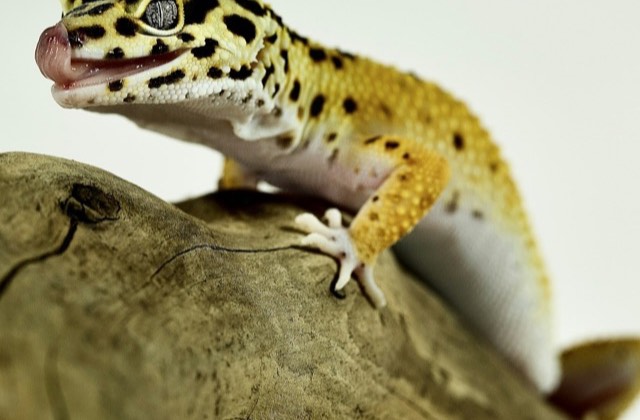
A reptile needs to feel invisible in order to relax. The standard, valid for the leopard gecko as for the corn snake:
- One hide at the warm spot, to thermoregulate under cover.
- One hide in the cool zone, to cool down without being exposed.
- One humid hide lined with sphagnum moss or coconut fibre, essential for successful sheds.
A simple opaque plastic box with a hole cut in it does the job perfectly, but commercial resin caves (10 to 30 € from Exo Terra, Zoo Med and others) are stable, easy to clean and better-looking. A hide should be snug: the animal likes to feel the walls against its body.
Climbing and terrain: each species its own decor
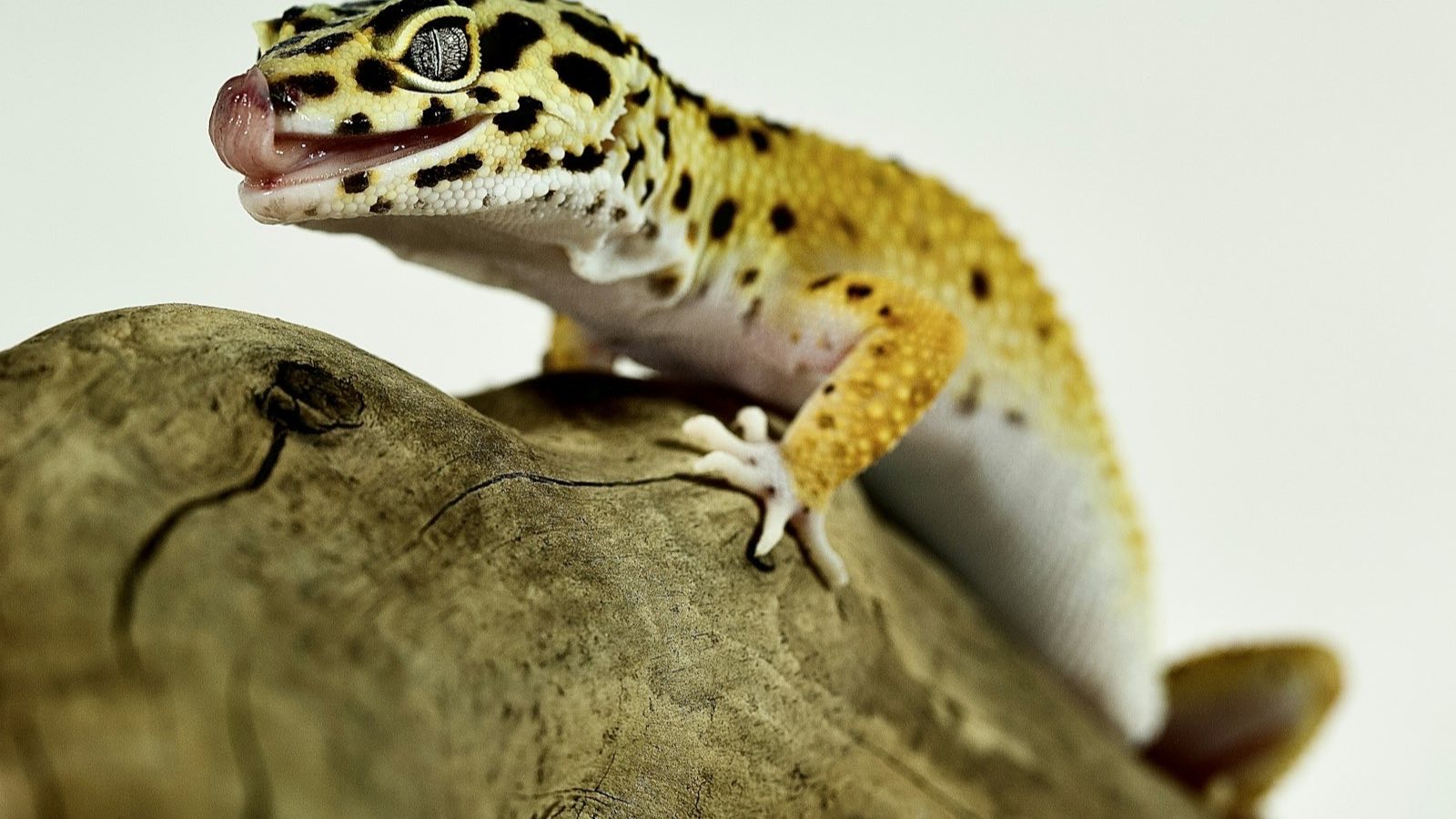
The bearded dragon is semi-arboreal: give it one sturdy main branch or a stump under the basking spot and it will spend its days there. The corn snake readily climbs on securely fixed branches. The leopard gecko, a ground dweller, appreciates flat rocks that are stacked and glued together (never simply resting on the substrate, under which it could dig and trigger a collapse). Slate, cork and driftwood are safe bets; anything collected outdoors must be cleaned and baked in the oven or scalded in boiling water.
Backgrounds and plants: useful or superfluous?
A textured 3D background (20 to 60 €) multiplies the usable vertical surface and reassures the animal by visually closing off the back of the terrarium. Artificial plants create shaded areas with zero upkeep; hardy live plants (sansevieria for dry setups, pothos in humid ones) are possible provided they are untreated and suited to the climate of the terrarium.
Enrichment needs refreshing
Moving a branch, relocating a hide, scattering insects rather than serving them in a dish, hiding part of the food: these micro-changes stimulate exploration and hunting. In bearded dragons, you quickly notice a surge in activity. Just be sure never to touch the vital landmarks (basking spot, water bowl, humid hide) during a shed or egg-laying period.
A word from Planète Pets
Start with the three hides and a suitable branch, then build on what you observe. Our comparisons of caves, backgrounds and decor are gathered in the enrichment section of the reptile hub.
See it in the Planète Pets shop: Stick-on digital thermometer for aquarium and terrarium glass (€18.90) · the whole shop
This guide is part of Planète Pets’s Reptiles universe. Our advice is general in nature: for any health concern, your veterinarian remains the only reference.