Feeding a Red-eared slider: diet, supplements, food refusals
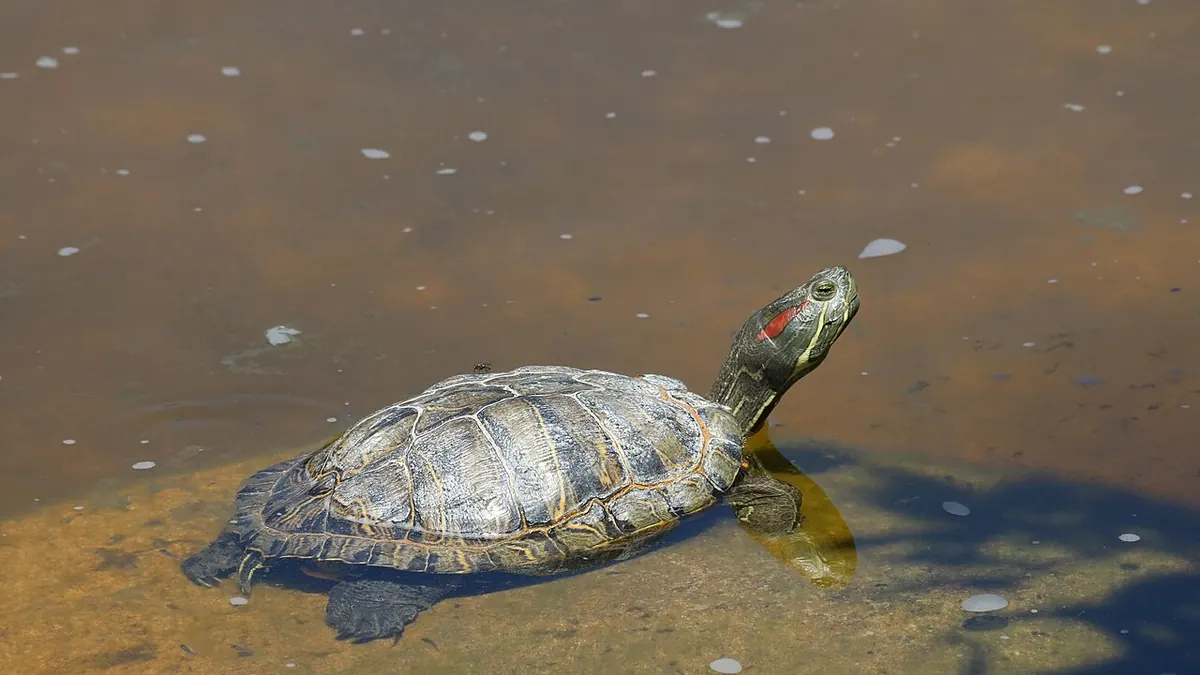

Red-eared slider : An omnivore that grows more herbivorous with age: aquatic-turtle pellets, occasional whole fish, aquatic plants and greens. Feeding in a separate tub massively reduces water pollution.
Outside our shipping area? The downloadable practical guide: Your First Terrarium: Leopard Gecko, Bearded Dragon, Corn Snake, Ball Python (€15)
In short: 20 to 30 cm of shell as an adult, 30 to 40 years of lifespan, intermediate level. Lively and voracious, it swims actively and proves far more demanding as an adult than at the time of purchase. It is aquatic: it needs an aquaterrarium of 300 L or more, oversized-filtered water at 22-26 °C and a heated dry basking dock under UVB — never a plain water tub.
The Red-eared slider diet, precisely
An omnivore that grows more herbivorous with age: aquatic-turtle pellets, occasional whole fish, aquatic plants and greens; feeding in a separate tub greatly reduces water pollution. Temperature governs digestion: a Red-eared slider kept below its 30-32°C basking spot digests poorly and eventually refuses food — faced with a refusing animal, check the thermometer before the menu.
Supplements and meal rhythm
Varied wild greens (dandelion, plantain, clover) beat any pellet: aim for a high calcium-to-phosphorus ratio and ban sugary fruit, lettuce and dog or cat food. A cuttlebone on hand tops up the calcium.
Water and hydration
The 60 to 80% humidity is part of hydration: regular misting alongside a clean water dish changed daily. Dehydration shows in skin folds and sunken eyes: that means the exotics vet, not the mister alone. The full profile is on the full Red-eared slider profile.
Frequently asked questions
What does a Red-eared slider eat?
An omnivore that grows more herbivorous with age: aquatic-turtle pellets, occasional whole fish, aquatic plants and greens; feeding in a separate tub greatly reduces water pollution.
Why is my Red-eared slider refusing food?
Check temperatures first (basking spot at 30-32°C): too cold means no digestion. Then shedding and settling-in stress — but measured weight loss calls for the exotics vet.
The guides that apply to you
- Feeding a bearded dragon: the right insect-to-greens ratio by age
Very carnivorous when young, more herbivorous as an adult: the bearded dragon changes diet as it grows. How to adjust the insect and plant share from juvenile to adult to avoid deficiencies and obesity.
- Day gecko: why nectar colour matters more than taste, according to a study
A South African study tested the artificial nectar preferences of the giant day gecko. Colour carries more weight than expected, and a trace of toxin does not always put it off.
- Blue-tongued skink: what a study on prey capture changes about how it eats
A study filmed slow-motion capture of mealworms and crickets in the blue-tongued skink: the tongue and jaws are not used the same way depending on the prey, a useful benchmark for varying feeding.
- Probiotics in red-eared sliders: what real effect on the shell, according to a study
A Polish study tested probiotics in young red-eared sliders over 20 weeks, measuring gut microbiota, intestinal histology and shell mineralization.