Chinese water dragon enrichment: branches, plants and a diving basin
Published by Planète Pets · managing editor: Clément Lacaille · how our guides are written
For the Chinese water dragon (Physignathus cocincinus), enrichment isn't a decorative extra: it's what lets the animal climb, dive and hide instead of developing stereotyped agitation. A widely cited synthesis on environmental enrichment in reptiles and amphibians notes that the cognitive and behavioural richness of these species was long underestimated, with measurable welfare benefits from a stimulating setup (see the study). Find our other pointers in the toys and enrichment section.
Contents · 5 sections
Sturdy angled branches to climb
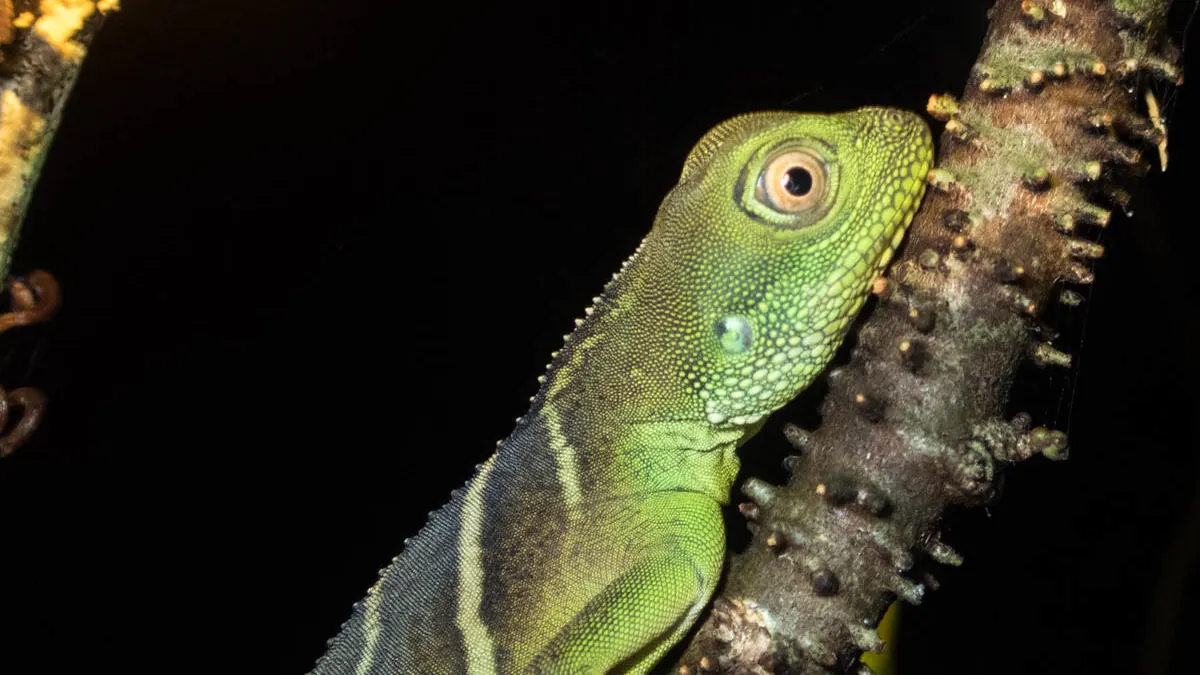
The water dragon spends most of its time in the branches. They should be sturdy, of varied diameters and set diagonally to offer real routes between the basking spot, shaded areas and the basin. A perch-poor setup pushes the animal to stay on the ground, against its arboreal nature.
Masked walls, not just for looks
Dense planting (real or sturdy artificial plants) along the glass breaks the mirror effect that triggers escape attempts. That's both a visual enrichment and a way to prevent snout injuries, covered in our article on terrarium size and setup.

The basin, an enrichment in its own right
Diving from a branch is a natural escape and thermoregulation behaviour in this species: a wide, deep basin, maintained very regularly, lets it express this fully. A basin that's too small or too dirty deprives the animal of this essential reflex and can favour skin problems.
Vary hides and feeding spots
Alternating feeding locations and offering several hides at different heights encourages exploration. See our Chinese water dragon profile for its full needs and our article on feeding to vary prey alongside feeding spots.
Frequently asked questions
Why does my water dragon stay on the ground?
Often from a lack of sturdy, well-placed branches. A rich arboreal setup encourages it to climb, its natural behaviour.
Is the basin only for drinking?
No: it's a diving and natural-escape space, essential to its behavioural balance, not just a water point.
How do I enrich without complicating upkeep?
Varying feeding spots and hides takes little effort and noticeably boosts activity, without adding to the cleaning routine.
This guide is part of Planète Pets’s Reptiles universe. Our advice is general in nature: for any health concern, your veterinarian remains the only reference.