Ball python: gear and buying guides
.jpg)
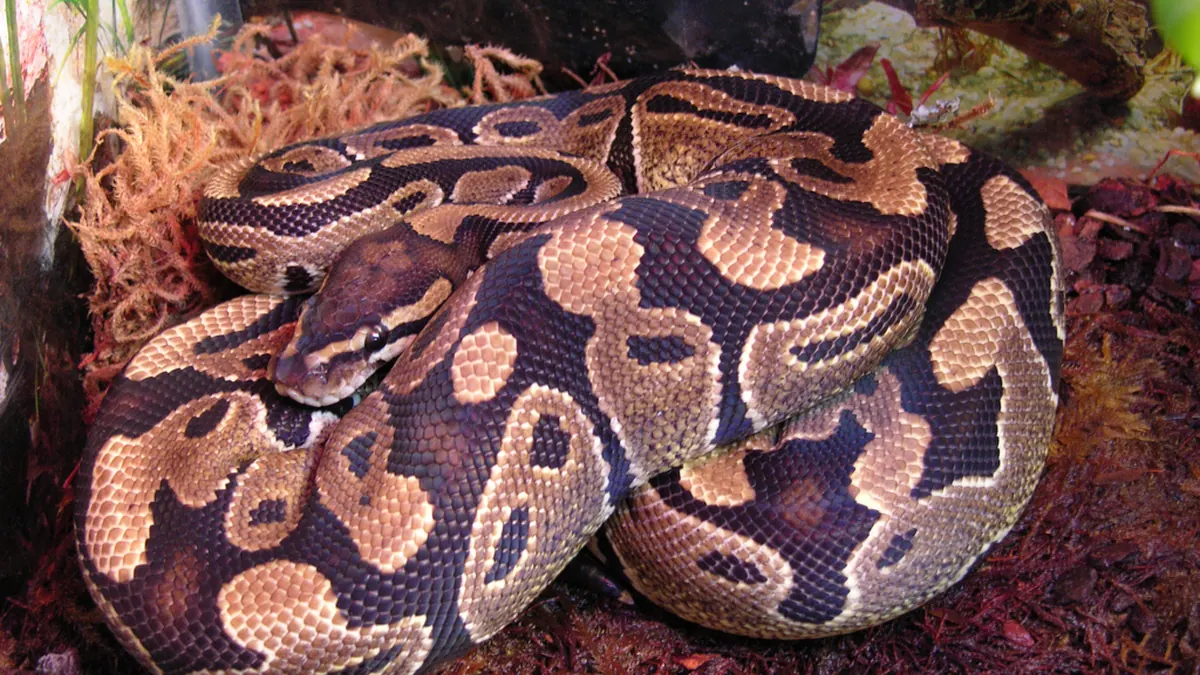
The ball python is a placid snake that curls into a ball rather than biting, valued for its moderate size and calm nature. It does require stable 50 to 60% humidity, a 31-33 °C warm spot and a patient keeper: fasting periods of several weeks are common and usually harmless.
Profile : 100 to 150 cm as an adult, 20 to 30 years of lifespan, suited to well-informed beginners.
In our shop, for this use: Stump-effect resin islet and hide for young aquatic turtles (€21.90) · the whole shop
Outside our shipping area? The downloadable practical guide: Your First Terrarium: Leopard Gecko, Bearded Dragon, Corn Snake, Ball Python (€15)
Species profile
- Lifespan
- 20 to 30 years
- Adult size
- 100 to 150 cm
- Basking spot
- 31 to 33 °C
- Humidity
- 50 to 60 %
- Minimum enclosure
- 120 × 60 × 45 cm
- Temperament
- Placid, it curls into a ball rather than biting and tolerates short, regular handling well.
- Health watch
- respiratory infection triggered by keeping it too cold or too damp · stomatitis (mouth rot) and snake mite infestation
- Legal status
- Listed on CITES Appendix II and Annex B of EU Regulation 338/97: when buying, require proof of legal origin (a CITES number or captive-breeding certificate).
🩺 Our hygiene and health advice stays general: it never substitutes for an examination by a veterinarian, the only person qualified to advise on your animal.
Ball python gear, family by family
-
🍖
Food
Frozen-thawed rodents (mice, then small rats) every 7 to 14 days depending on age. Seasonal fasting is classic in adults: track weight rather than the calendar before worrying.
-
🧴
Care & grooming
Keep humidity at 50 to 60%, raised to 65-70% during shedding, with a humid hide as backup. Regularly inspect the labial pits and mouth, and disinfect the water bowl weekly.
-
🎾
Toys & enrichment
This secretive snake values security: snug hides, cork tunnels and sturdy branches. Short, regular handling sessions build tolerance without stress.
-
🏠
Bedding & habitat
A terrarium of roughly 120 x 60 cm for an adult, a 31-33 °C warm spot, a cool zone around 26 °C and moisture-retaining substrate (coco, cypress). At least two opaque hides, one per thermal zone.
-
🧳
Travel & safety
Fabric snake bag inside an insulated (not refrigerated) cooler: ball pythons suffer below 20 °C. Add a wrapped heat pack for winter journeys.
-
🧰
Accessories
A quality thermostat, reliable hygrometer, main heat source plus optional ceramic heater, and a hand mister. Typical setup budget: 300 to 500 €.
🧴 Caring for a Ball python: shedding, enclosure hygiene, prevention
Shedding: the health barometer
Watch the Ball python’s shed as an indicator: regular and complete means good husbandry; fragmented and dragging means humidity has most likely left its 50 to 60% range. A humid hide (sphagnum) added at shedding time is enough in a dry setup. Never pull skin off by hand — retained shed on the extremities is treated with lukewarm soaks.
Enclosure hygiene: real preventive medicine
The Ball python enclosure routine: droppings out as soon as seen, daily water, a full disinfecting clean each month (white vinegar or a reptile-safe product, nothing scented) — and 60 days of quarantine for any new individual. In dry setups, the reverse trap: substrate soiled and damp at depth becomes an invisible bacterial nest.
The Ball python’s health: the signals that matter
In the Ball python, watch in particular for: respiratory infection triggered by keeping it too cold or too damp and stomatitis (mouth rot) and snake mite infestation — plus the signals valid for every reptile: unusual lethargy, open-mouth breathing, lastingly altered behaviour. Over a 20 to 30 year lifespan, an exotics vet identified before the emergency saves critical days.
Quick answers
- My Ball python sheds in patches — is it serious?
- It signals insufficient humidity (aim for 50 to 60%): a humid hide and misting fix most of it. Persistent shed on toes or tail tip warrants lukewarm soaks, then a vet if nothing lifts.
- Which products for cleaning a Ball python enclosure?
- Diluted white vinegar or a reptile-safe disinfectant, rinsed thoroughly — never unrinsed bleach or scented products, toxic in a confined volume.
Outside our shipping area? The downloadable practical guide: Your First Terrarium: Leopard Gecko, Bearded Dragon, Corn Snake, Ball Python (€15)
🎾 Enrichment for a Ball python: decor that does the work
Enrichment, reptile-style
The toy aisle is irrelevant to a Ball python: its enrichment is built into the enclosure’s very architecture. Its nocturnal playground is prepared by day: several hides, a worked background and a substrate layer to dig in.
Varying the hunt and the exploration
Vary feeding spots and move one decor element a month: measured novelty stimulates without stressing. Watch it on its own schedule: a very dim LED moonlight reveals the Ball python’s nocturnal activity without disturbing it.
What is useless (or harmful)
The list of false good ideas is well known: providing an enclosure “buddy” (cohabitation stresses or injures most species), recycling rodent toys, installing scented resin decor, imposing daily handling. A Ball python that explores, hunts and uses its whole volume is an enriched animal — the decor does the work, not you.
Quick answers
- How do you keep a Ball python occupied?
- A complex layout (hides, relief, diggable substrate) refreshed in small touches, plus food to find rather than served at the same spot.
- Can you handle a Ball python?
- Sparingly: the species tolerates handling more than it enjoys it — favour observation.
Our products don’t ship to you yet, but the PDF practical guide is instant: Your First Terrarium: Leopard Gecko, Bearded Dragon, Corn Snake, Ball Python (€15)
🧰 Accessories for a Ball python: thermostat, measurement and kit
The thermostat: accessory number one (non-negotiable)
Every enclosure heater runs through a thermostat (€30-60): without one, a lamp or heat mat can pass 50°C and burn the animal. Add two thermometers (one per pole: 31-33°C / 26-28°C) and a reliable hygrometer — in herpetoculture you only control what you measure.
The Ball python kit
long feeding tongs; gram-accurate kitchen scales for the monthly weigh-in; a timer for the day-night cycle (about 12 h).
Full budget and starter-kit traps
A complete Ball python setup: €400 to 800 (enclosure, thermostat-controlled heating, measurement, decor), then €15 to 40 a month. Beware pet-shop “complete kits”: undersized tank, thermostat-free lamp and a fanciful stick-on thermometer — the line-by-line detail is on the full Ball python profile.
Quick answers
- What is the most important accessory for a Ball python?
- The thermostat: it stops the heating from injuring the animal and holds the basking spot at 31-33°C. Everything else comes second.
- What budget to set up a Ball python?
- €400 to 800 for a serious, complete setup, then €15 to 40 a month — cheap starter kits get paid for twice.
We don’t ship products to your country yet; our practical guide downloads anywhere: Your First Terrarium: Leopard Gecko, Bearded Dragon, Corn Snake, Ball Python (€15)
Guides to read
- Vertical terrarium for a crested gecko: height, ventilation and humidityBedding & habitat
Vertical terrarium for a crested gecko: why height matters more than floor space, what size fits each age, and how to manage the humidity cycle.
- Feeding a crested gecko: CGD powder, fruit and occasional insectsFood
Feeding a crested gecko: why complete CGD powder remains the base diet, when to add insects, and how often to feed by age.
- Tail loss in crested geckos: why you should never grab one by the tailCare & grooming
Tail loss (autotomy) in crested geckos: why the tail never grows back in this species, what handling mistakes to avoid, and what to do if it drops.
- Terrarium enrichment for a crested gecko: branches, hides and climbing supportsToys & enrichment
Terrarium enrichment for a crested gecko: why climbing supports matter as much as décor, what hides to provide, and whether to rotate the layout.
- Transporting a Green Iguana to the Vet: Carrier, Heat and StressTravel & safety
Rigid carrier, keeping the animal warm on the road, and grips to avoid with the tail: how to transport a green iguana to the vet without adding to its stress.
- Humidity and Shedding in the Chinese Water Dragon: Avoiding Skin ProblemsCare & grooming
Why the Chinese water dragon needs high humidity, how to maintain it without stagnation, and the early signs of an incomplete shed.
- Feeding a Green Anole: Which Insects, and How Often?Food
Small live insects, prey size and feeding frequency: the complete guide to feeding a green anole, a strict insectivore and a tiny lizard.
- Handling and Transporting a Pacman Frog: Limiting Stress and ContactTravel & safety
Why the Pacman frog's permeable skin means handling should stay minimal, and how to transport it safely for a vet visit.