Housing a Ball python: 120 × 60 × 45 cm, 31-33°C basking
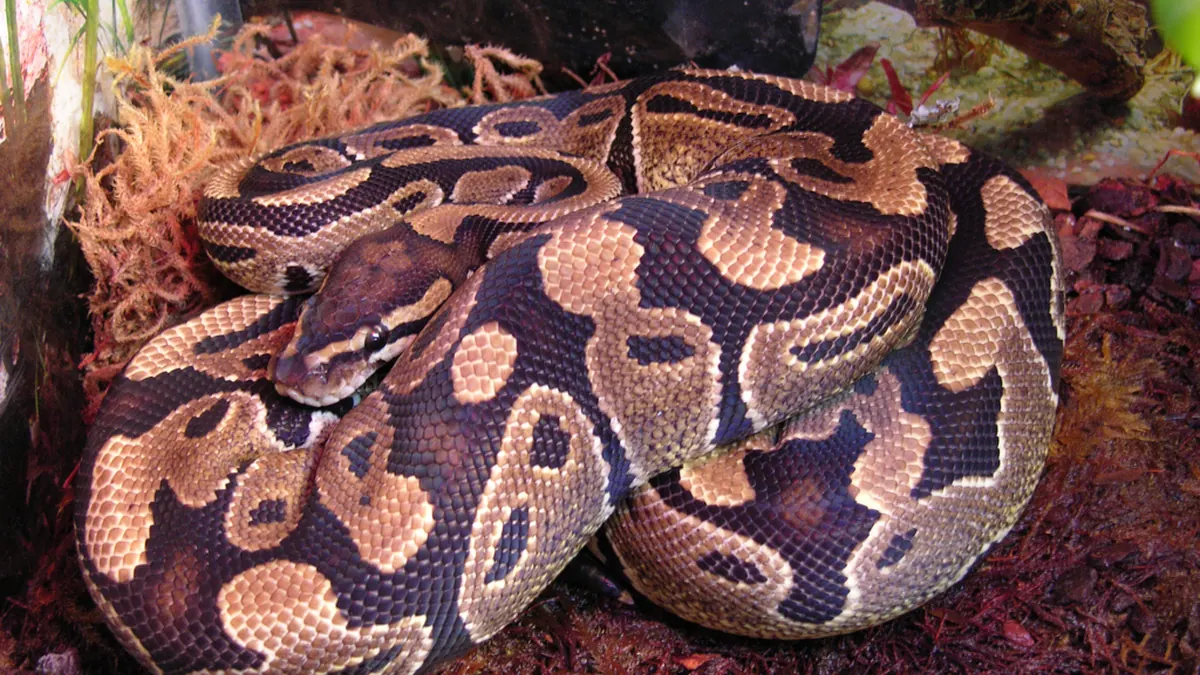

Ball python: A terrarium of roughly 120 x 60 cm for an adult, a 31-33 °C warm spot, a cool zone around 26 °C and moisture-retaining substrate (coco, cypress). At least two opaque hides, one per thermal zone.
To go further, our PDF practical guides: Reptile and Terrarium Bundle: First Terrarium, Tortoise, Taming and Green Anole Breeding — 4 PDF guides (187 pages in English (198 in French)), in English and French, instant download. Get my bundle — €49
In short: 100 to 150 cm as an adult, 20 to 30 years of lifespan, suited to well-informed beginners. Placid, it curls into a ball rather than biting and tolerates short, regular handling well. Its multi-week feeding refusals, usually harmless, unsettle beginners: patience, not force-feeding, resolves most cases.
120 × 60 × 45 cm and a strict thermal gradient
For an adult Ball python: 120 × 60 × 45 cm minimum, with a basking spot at 31-33°C and a cool zone at 26-28°C. That gradient is not comfort: it is how a reptile regulates temperature, by moving. No cool zone means overheating; no hot spot means no digestion.
Heating, UVB, humidity: the technical trio
Heating ALWAYS runs through a thermostat — the least negotiable equipment in herpetoculture — with thermometers at both ends. On light: no mandatory UVB for this species, though a weak tube remains a plus according to recent references. Humidity held at 50 to 60% — excess humidity harms as much as a deficit in a dry biotope, checked with a hygrometer, not by feel.
Substrate and layout
A dry, diggable substrate (packed soil mix, never calcium sand), two hides minimum — one warm, one cool — and a structured background for security. Place the enclosure somewhere calm: the species sleeps by day and hates vibrations.
Frequently asked questions
What enclosure size for a Ball python?
120 × 60 × 45 cm minimum for an adult — sized for the adult from day one; a juvenile does fine in it with extra hides.
What temperatures for a Ball python?
Basking spot at 31-33°C, cool zone at 26-28°C, all on a thermostat with a natural night-time drop. Humidity sits at 50 to 60%.
The guides that apply to you
- Red-eared slider grown too big: the mistakes to never make
An undersized tank, releasing it into the wild: the classic mistakes once a red-eared slider outgrows its setup, and what a 2017 study reveals.
- Pacman frog terrarium: how deep should the substrate be for burrowing?
5 to 10 cm isn't always enough: what a study on pacman frog estivation reveals about the risks of substrate that's too dry or too shallow.
- Green anoles: what an incubation temperature study changes about raising juveniles
Green anole eggs incubated at three temperatures produced hatchlings you could not tell apart. The growth gap only shows up eight weeks later.
- Green anole breeding: egg-laying, incubation and hatchling care
Green anole breeding: one egg per clutch all season, collecting eggs from the substrate, incubation on damp vermiculite at about 28 °C and hatchling care.