Caring for a Green anole: shedding, enclosure hygiene, prevention
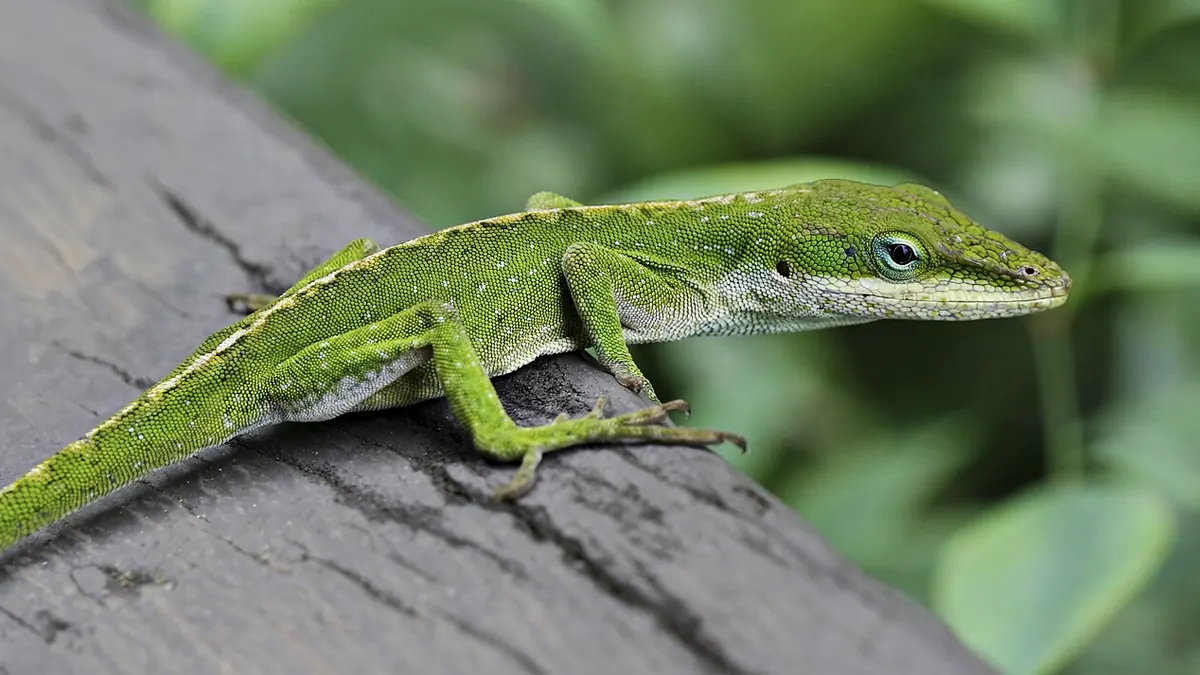

Green anole : Two daily mistings cover hydration and 60 to 70% humidity. An anole that stays brown and loses weight is stressed or unwell and needs prompt attention.
We don’t ship products to your country yet; our practical guide downloads anywhere: Your First Terrarium: Leopard Gecko, Bearded Dragon, Corn Snake, Ball Python (€15)
🩺 Our hygiene and health advice stays general: it never substitutes for an examination by a veterinarian, the only person qualified to advise on your animal.
In short: 15 to 20 cm including tail as an adult, around 4 to 6 years of lifespan, beginner to intermediate level. A small, quick and territorial diurnal lizard, stunning in a planted terrarium but too fast and fragile to handle: a display species. Males display by extending their pink dewlap, but two males are NEVER housed together: fighting and chronic stress are guaranteed.
Shedding: the health barometer
Watch the Green anole’s shed as an indicator: regular and complete means good husbandry; fragmented and dragging means humidity has most likely left its 60 to 80% range. Keep a humid hide (sphagnum) permanently, with extra misting at shedding time. Never pull skin off by hand — retained shed on the extremities is treated with lukewarm soaks.
Enclosure hygiene: real preventive medicine
Droppings removed on sight, water changed daily, a full monthly disinfection (white vinegar or reptile-safe disinfectant, never scented products), and a systematic 60-day quarantine for any newcomer. In humid setups, ventilation separates “tropical” from “mouldy”: two vents are a minimum.
The Green anole’s health: the signals that matter
The Green anole watch-list: metabolic bone disease and dehydration from insufficient misting and chronic stress (permanent brown colour and weight loss) needing prompt attention. Add herpetoculture’s universal alarms — abnormal lethargy, resting with the mouth open, behaviour changes that persist. Over a 4 to 6 year lifespan, an exotics vet identified before the emergency saves critical days.
Frequently asked questions
My Green anole sheds in patches — is it serious?
It signals insufficient humidity (aim for 60 to 80%): a humid hide and misting fix most of it. Persistent shed on toes or tail tip warrants lukewarm soaks, then a vet if nothing lifts.
Which products for cleaning a Green anole enclosure?
Diluted white vinegar or a reptile-safe disinfectant, rinsed thoroughly — never unrinsed bleach or scented products, toxic in a confined volume.
The guides that apply to you
- Terrarium misting: hand sprayer or automatic system?
Hand sprayer, automatic misting system or fogger: how to manage terrarium humidity, at what price, and the mistakes that encourage mould.
- Red-eared slider: why a too-cold basking spot weakens its immune system
A 2020 study on the red-eared slider's immune response to a virus shows just how much basking temperature shapes its ability to fight disease.
- Deworming a Greek tortoise: why regular vet checks matter
Pinworms, roundworms, protozoa: Greek tortoises very often carry intestinal parasites, even when they look perfectly healthy. What a Moroccan prevalence study shows.
- Tokay gecko: what a study on its distress calls changes about daily care
A study recorded the calls a Tokay gecko makes during routine handling, revealing three call types tied to its larynx. Reason enough to rethink how often it's restrained.