Feeding a Green anole: diet, supplements, food refusals
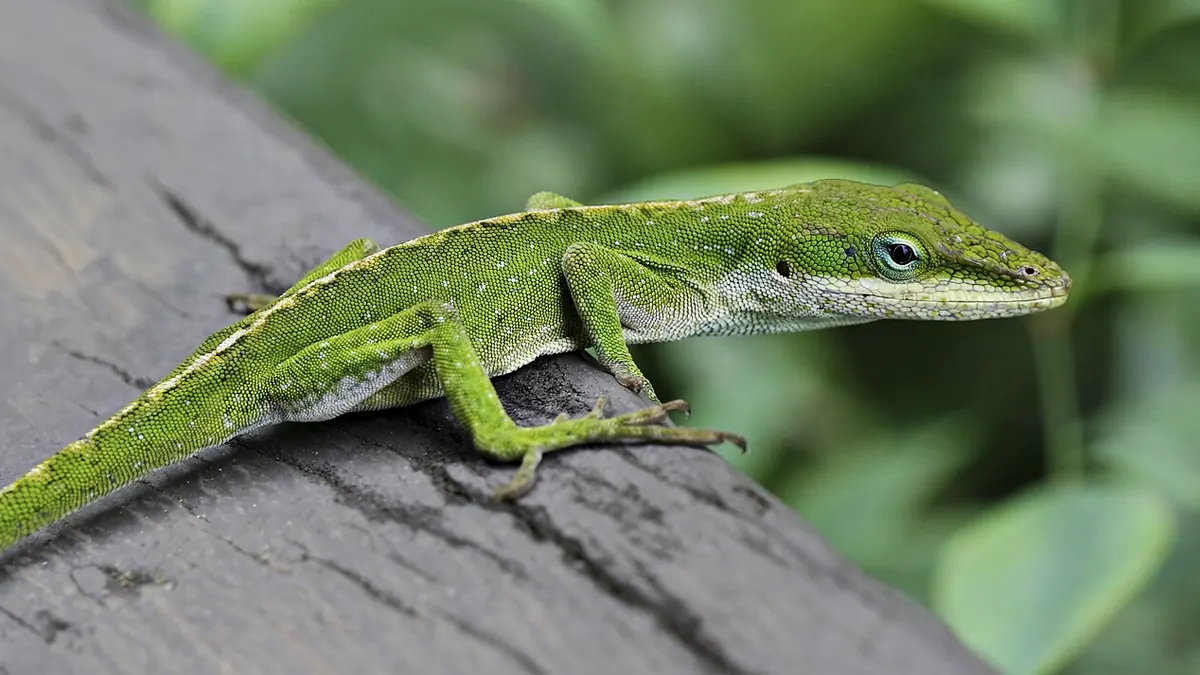

Green anole : Insectivorous: small crickets, fruit flies and micro roaches sized to its small mouth, dusted with calcium. It drinks droplets from leaves and rarely from a dish.
Outside our shipping area? The downloadable practical guide: Your First Terrarium: Leopard Gecko, Bearded Dragon, Corn Snake, Ball Python (€15)
In short: 15 to 20 cm including tail as an adult, around 4 to 6 years of lifespan, beginner to intermediate level. A small, quick and territorial diurnal lizard, stunning in a planted terrarium but too fast and fragile to handle: a display species. Males display by extending their pink dewlap, but two males are NEVER housed together: fighting and chronic stress are guaranteed.
The Green anole diet, precisely
Insectivorous: small crickets, fruit flies and micro roaches sized to its small mouth, dusted with calcium; it drinks droplets from leaves and rarely from a dish. Temperature governs digestion: a Green anole kept below its 29-32°C basking spot digests poorly and eventually refuses food — faced with a refusing animal, check the thermometer before the menu.
Gut-loading and supplements: the invisible part
A cricket is only worth what it ate: feed your insects for 24-48 h (fresh vegetables, bran) before offering them — that is gut-loading. Add calcium dusting at nearly every juvenile meal, every other one for adults, plus a calcium dish available at all times.
Water and hydration
The 60 to 80% humidity is part of hydration: regular misting — the species drinks droplets off leaves, rarely from a still dish. Dehydration shows in skin folds and sunken eyes: that means the exotics vet, not the mister alone. The full profile is on the full Green anole profile.
Frequently asked questions
What does a Green anole eat?
Insectivorous: small crickets, fruit flies and micro roaches sized to its small mouth, dusted with calcium; it drinks droplets from leaves and rarely from a dish.
Why is my Green anole refusing food?
Check temperatures first (basking spot at 29-32°C): too cold means no digestion. Then shedding and settling-in stress — but measured weight loss calls for the exotics vet.
The guides that apply to you
- Uromastyx: what a study on microbial digestion changes about its fiber-rich plate
An Israeli study measured how a uromastyx digests cellulose thanks to gut bacteria. Reason enough to rethink dry fiber versus waterlogged salad greens.
- Ball python: what a python digestion study changes about feeding frequency
A landmark study showed that pythons' digestive organs remodel dramatically after every meal, a mechanism that explains why spacing out prey matters so much for the ball python.
- Feeding a Green Anole: Which Insects, and How Often?
Small live insects, prey size and feeding frequency: the complete guide to feeding a green anole, a strict insectivore and a tiny lizard.
- The leopard gecko is nocturnal, but it still makes vitamin D3 from UVB
A 2020 study measures serum vitamin D3 in young leopard geckos exposed or not to low-level UVB. The result nuances the idea that a nocturnal species only needs dietary supplementation.