Caring for a Chinese water dragon: shedding, enclosure hygiene, prevention
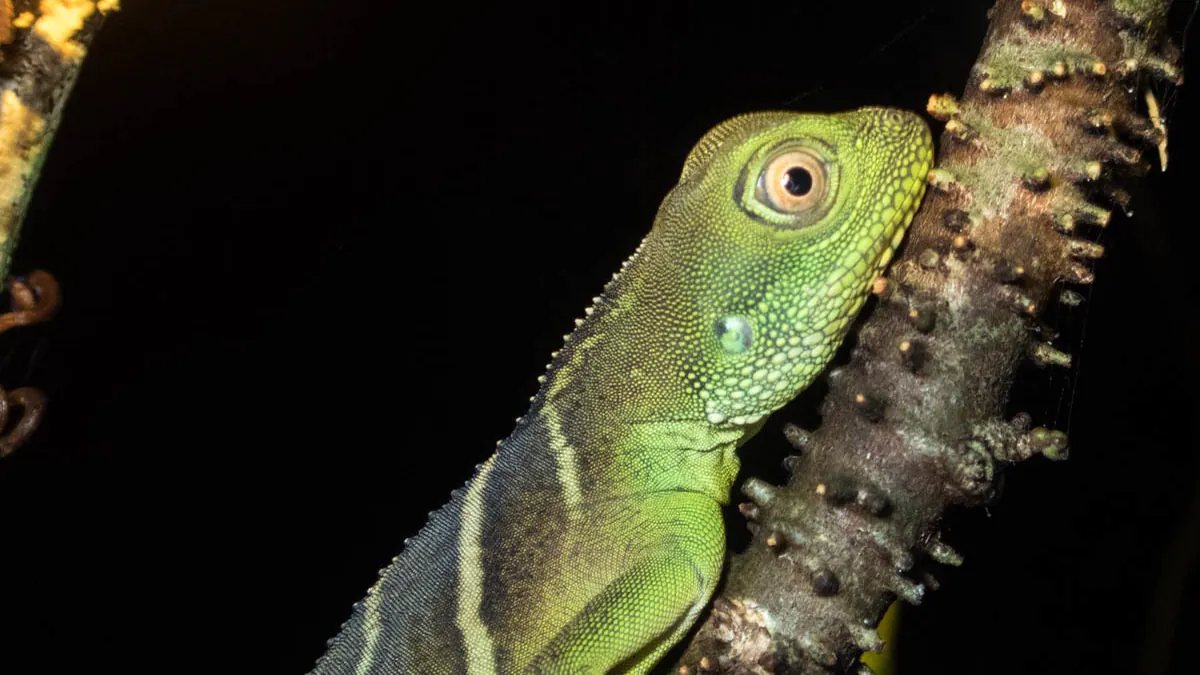

Chinese water dragon : Regularly inspect the snout and chin: rubbing against enclosure walls causes frequent lesions. Swimming water must be filtered or changed very often, as it readily defecates in it.
We don’t ship products to your country yet; our practical guide downloads anywhere: Your First Terrarium: Leopard Gecko, Bearded Dragon, Corn Snake, Ball Python (€15)
🩺 This health information is general in nature and does not replace a consultation: at the slightest doubt about your animal’s condition, talk to your vet.
In short: 80 to 100 cm including tail for an adult male, 10 to 15 years of lifespan, intermediate level. A bright green arboreal lizard, lively and endearing but nervous, it dives into water from its branches whenever it feels threatened. Being nervous, it easily injures its snout on glass when cramped: planted walls, a large volume and a real swimming basin prevent these rostral lesions.
Shedding: the health barometer
Watch the Chinese water dragon’s shed as an indicator: regular and complete means good husbandry; fragmented and dragging means humidity has most likely left its 70 to 80% range. Keep a humid hide (sphagnum) permanently, with extra misting at shedding time. Never pull skin off by hand — retained shed on the extremities is treated with lukewarm soaks.
Enclosure hygiene: real preventive medicine
Droppings removed on sight, water changed daily, a full monthly disinfection (white vinegar or reptile-safe disinfectant, never scented products), and a systematic 60-day quarantine for any newcomer. In humid setups, ventilation separates “tropical” from “mouldy”: two vents are a minimum.
The Chinese water dragon’s health: the signals that matter
In the Chinese water dragon, watch in particular for: snout lesions (rostral abrasions) from rubbing against the walls and metabolic bone disease and infections favoured by fouled swimming water — plus the signals valid for every reptile: unusual lethargy, open-mouth breathing, lastingly altered behaviour. Over a 10 to 15 year lifespan, an exotics vet identified before the emergency saves critical days.
Frequently asked questions
My Chinese water dragon sheds in patches — is it serious?
It signals insufficient humidity (aim for 70 to 80%): a humid hide and misting fix most of it. Persistent shed on toes or tail tip warrants lukewarm soaks, then a vet if nothing lifts.
Which products for cleaning a Chinese water dragon enclosure?
Diluted white vinegar or a reptile-safe disinfectant, rinsed thoroughly — never unrinsed bleach or scented products, toxic in a confined volume.
The guides that apply to you
- Tokay gecko: what a study on its distress calls changes about daily care
A study recorded the calls a Tokay gecko makes during routine handling, revealing three call types tied to its larynx. Reason enough to rethink how often it's restrained.
- Stressed green anole: reading the signs of stress and good health
Colour turning brown, throat fan flaring, an animal permanently hidden: in the green anole, colour and behaviour reveal its state. The signals to read so you can react in time.
- Green anole: what happens if it loses its tail — does it grow back?
Unlike the crested gecko, the green anole can regenerate part of a lost tail. What a landmark review on lizard caudal autotomy reveals, and why the new tail is never quite the same.
- Tokay gecko: what a study on handler recognition changes about handling
A study tested whether Tokay geckos respond differently to a familiar handler versus a stranger, with results that shed light on day-to-day handling of this notoriously difficult species.