Feeding a Chinese water dragon: diet, supplements, food refusals
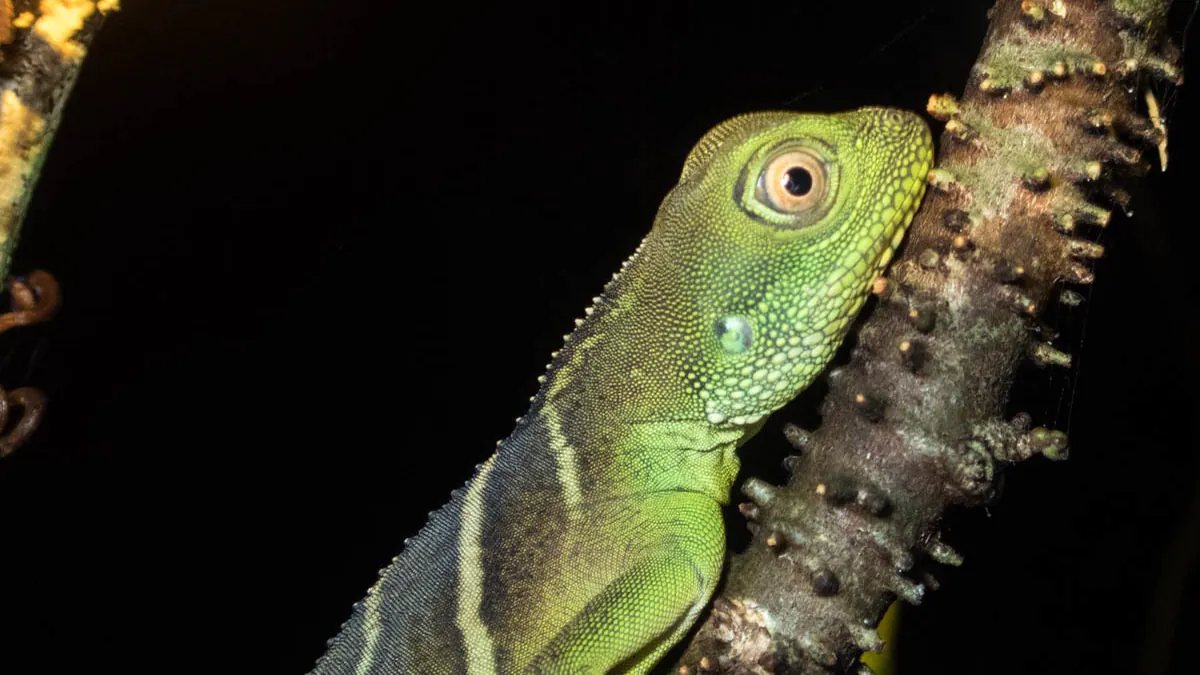

Chinese water dragon : Mainly insectivorous: crickets, roaches and worms, supplemented in adults with a little fish and some greens. Regular calcium-D3 dusting and varied prey prevent food boredom.
Outside our shipping area? The downloadable practical guide: Your First Terrarium: Leopard Gecko, Bearded Dragon, Corn Snake, Ball Python (€15)
In short: 80 to 100 cm including tail for an adult male, 10 to 15 years of lifespan, intermediate level. A bright green arboreal lizard, lively and endearing but nervous, it dives into water from its branches whenever it feels threatened. Being nervous, it easily injures its snout on glass when cramped: planted walls, a large volume and a real swimming basin prevent these rostral lesions.
The Chinese water dragon diet, precisely
Mainly insectivorous: crickets, roaches and worms, supplemented in adults with a little fish and some greens, plus regular calcium-D3 dusting and varied prey. Temperature governs digestion: a Chinese water dragon kept below its 32-35°C basking spot digests poorly and eventually refuses food — faced with a refusing animal, check the thermometer before the menu.
Gut-loading and supplements: the invisible part
A cricket is only worth what it ate: feed your insects for 24-48 h (fresh vegetables, bran) before offering them — that is gut-loading. Add calcium dusting at nearly every juvenile meal, every other one for adults, plus a calcium dish available at all times.
Water and hydration
The 70 to 80% humidity is part of hydration: regular misting alongside a clean water dish changed daily. Dehydration shows in skin folds and sunken eyes: that means the exotics vet, not the mister alone. The full profile is on the full Chinese water dragon profile.
Frequently asked questions
What does a Chinese water dragon eat?
Mainly insectivorous: crickets, roaches and worms, supplemented in adults with a little fish and some greens, plus regular calcium-D3 dusting and varied prey.
Why is my Chinese water dragon refusing food?
Check temperatures first (basking spot at 32-35°C): too cold means no digestion. Then shedding and settling-in stress — but measured weight loss calls for the exotics vet.
The guides that apply to you
- Feeding a bearded dragon: the right insect-to-greens ratio by age
Very carnivorous when young, more herbivorous as an adult: the bearded dragon changes diet as it grows. How to adjust the insect and plant share from juvenile to adult to avoid deficiencies and obesity.
- Ball python refusing to eat: seasonal fasting or a real problem?
Understanding ball python (Python regius) fasting: the physiology behind it, common triggers for feeding refusal, and the signs that warrant concern.
- Does a tokay gecko prefer bigger prey? What a two-choice study found
Small cricket or large one: a study placed tokay geckos in front of a prey-size choice. The result nuances the idea of a predator that always calculates the best meal.
- Green iguana: why a hatchling eats an adult's droppings, according to a study
An adult green iguana digests grass thanks to bacteria it doesn't have at birth. A landmark study explains how a hatchling acquires them, and why.