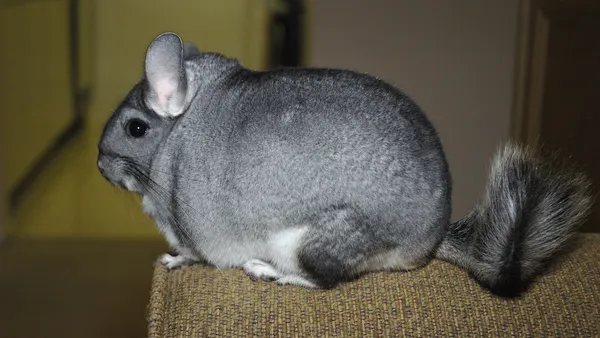
Chinchillas can't dissipate heat well, a Chilean study confirms: why they struggle so much in warm weather
Published by Planète Pets · managing editor: Clément Lacaille · how our guides are written
Native to the cold, dry heights of the Andes, the chinchilla's fur is built to hold heat in, not let it out. A Chilean study on its metabolism helps explain why it copes so poorly with high temperatures. Find our daily care guidance in the rodent care and grooming section.
A Chilean study on chinchilla energy metabolism
Cortés, Tirado, and Rosenmann published a study on energy metabolism and thermoregulation in the short-tailed chinchilla in the journal Comparative Biochemistry and Physiology Part A in 2003 (see the study). The researchers measured a basal metabolic rate and thermal conductance well below what would be expected for the animal's size — an efficient adaptation for limiting heat loss at altitude, but one that leaves it poorly equipped to shed excess heat.
What this means in practice for a pet chinchilla
This physiological limit, measured in the lab, confirms what many owners learn the hard way each summer: a chinchilla doesn't sweat, can't pant efficiently, and can't shed its dense coat. A room that feels tolerable to a person can already pose a real risk to a chinchilla, well before temperatures reach heatwave levels.
- Keep the room below 24°C (75°F) whenever possible, with extra vigilance above 27°C (80°F).
- Keep the cage away from any direct heat source (a sunny window, a radiator, electronics) rather than relying on ventilation alone.
- Offer a cool stone or marble slab the animal can lie on if the temperature climbs.
This vulnerability rounds out the guidance covered in the chinchilla profile and on the chinchilla care and grooming page. Our article on keeping a chinchilla's room cool covers setting up the space, and our guide to heatstroke in small rodents covers the emergency signs to watch for.
Frequently asked questions
Is a fan enough to protect a chinchilla in summer?
It helps circulate air, but it's no substitute for a genuinely cool room; a fan pointed straight at the cage can even stress the animal without really cooling it down.
Do chinchillas handle cold better than heat?
Yes, the study confirms an efficient adaptation to Andean cold; it's heat, not moderate cold, that poses the main risk for this species.
Should a chinchilla be shaved in summer to help it cope with heat?
No, this isn't recommended and can permanently damage its coat; managing room temperature remains the only safe solution. Find all our guides on the rodent hub.
An accessory from our shop for this use: Hanging chew garland for rabbits and rodents (€17.90) · the whole shop
This guide is part of Planète Pets’s Rodents universe. Our advice is general in nature: for any health concern, your veterinarian remains the only reference.