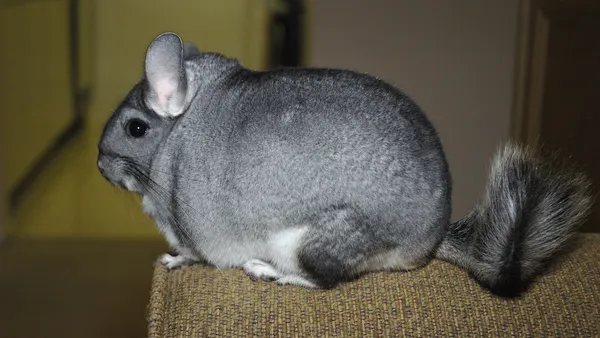
Chinchilla housing: a large, cool aviary cage above all
Published by Planète Pets · managing editor: Clément Lacaille · how our guides are written
Chinchilla housing rests on two non-negotiable requirements: a tall aviary cage of at least 100 × 60 × 120 cm for this outstanding jumper, and a cool room, below 22 °C all year round. Native to the Andes, the chinchilla copes very poorly with heat: above 26 °C, heatstroke can be fatal.

Contents · 5 sections
Why a tall aviary cage rather than a conventional cage?
Chinchillas move in leaps and can jump more than a metre. They need height and staggered solid-wood platforms, spaced 30 to 40 cm apart, to bounce from one to the next. A low cage condemns them to inactivity and obesity. Suitable aviary cages (Savic Royal Suite, Ferplast) cost 200 to 400 €; buying second-hand often halves the bill.
What should go inside the cage?
- Platforms and shelves in untreated wood: never plastic, which they gnaw and swallow.
- A wooden house for daytime sleep (chinchillas are crepuscular).
- A sand bath tray offered 15 to 20 minutes a day.
- Unlimited hay and branches to gnaw (apple, hazel).
- A solid wheel 35 to 40 cm in diameter, optional but appreciated.
What temperature does a chinchilla need?
The ideal range is 15 to 20 °C, with moderate humidity. In summer, the room must stay below 24 °C: see our guide to heatwaves and rodents for practical solutions (north-facing room, tiled floors, cooling plates). If your chinchilla suddenly becomes listless in hot weather, rush to an exotics vet: it is a life-threatening emergency.
Where should the cage go in your home?
In the coolest, calmest room of the house, out of direct sunlight, away from radiators and the television. Chinchillas sleep during the day: avoid noisy, high-traffic rooms. Find all our guides in the bedding and habitat category.
Frequently asked questions
Can a chinchilla live alone?
It naturally lives in groups: a duo (two females, or a neutered male with a female) is strongly recommended. A single animal requires a great deal of daily interaction.
What is the total housing budget?
Plan on 250 to 500 €: aviary cage (200 to 400 €), wooden platforms (30 to 60 €), house, sand bath tray and accessories. It is by far the biggest expense.
Is air conditioning compulsory?
Not systematically, but if your home regularly exceeds 25 °C in summer, an air conditioner or evaporative cooler becomes essential to its survival.
In our shop, for this use: Natural loofah chew carrot for rabbits and rodents, 20 cm (€17.90) · the whole shop
In our shop, for this use: Rolling 4-level ferret and chinchilla cage with hammock ($159.90, ships from the US) · the US shop
This guide is part of Planète Pets’s Rodents universe. Our advice is general in nature: for any health concern, your veterinarian remains the only reference.