Introducing two adult gerbils: the step-by-step method
Published by Planète Pets · managing editor: Clément Lacaille · how our guides are written
Introducing two adult gerbils that have never met is possible, but it is the trickiest situation: an established group or pair rarely accepts a stranger. You need neutral territory, short supervised sessions, and the ability to spot a real fight in time. This page covers that specific case, most often after one gerbil of a pair has died; to choose and set up a pair from the start, see our guide to gerbils in pairs: which duo to choose.

Contents · 5 sections
Why a direct introduction often fails
Putting an unfamiliar gerbil into the tank of a settled one amounts to bringing an intruder into marked, defended territory. Fights can be violent, even causing serious injury. A pair bond makes this worse: Razzoli and Valsecchi showed in 2006, in Ethology Ecology & Evolution, that females’ aggression towards an intruder, very low before pairing, rose sharply once they were paired with a male (see the study). Our article on gerbil aggression after pairing explains this finding.
Giving it the best chance
The RSPCA notes that established groups are unlikely to accept new animals, with one possible exception: a youngster under five weeks old. An adult gerbil left on its own therefore often has a better chance of accepting a very young companion than another adult. In that case, the RSPCA advises housing the animals separately but side by side for about a week, and swapping some used bedding between the two homes to mix their scents.
The neutral-territory method, step by step
- Prepare a tub that is new to both: a clean plastic box with fresh bedding, smelling of neither gerbil.
- Run short, supervised sessions, a few minutes at first, staying close by with a thick glove or a piece of card to hand to separate them without getting bitten.
- Watch their postures: sniffing, brief chases and foot drumming are common; mutual grooming and nose-to-nose contact are, according to the RSPCA, signs that the animals are bonding.
- Separate them at once if they roll in a ball, bite hard or draw blood, and try again a few days later.
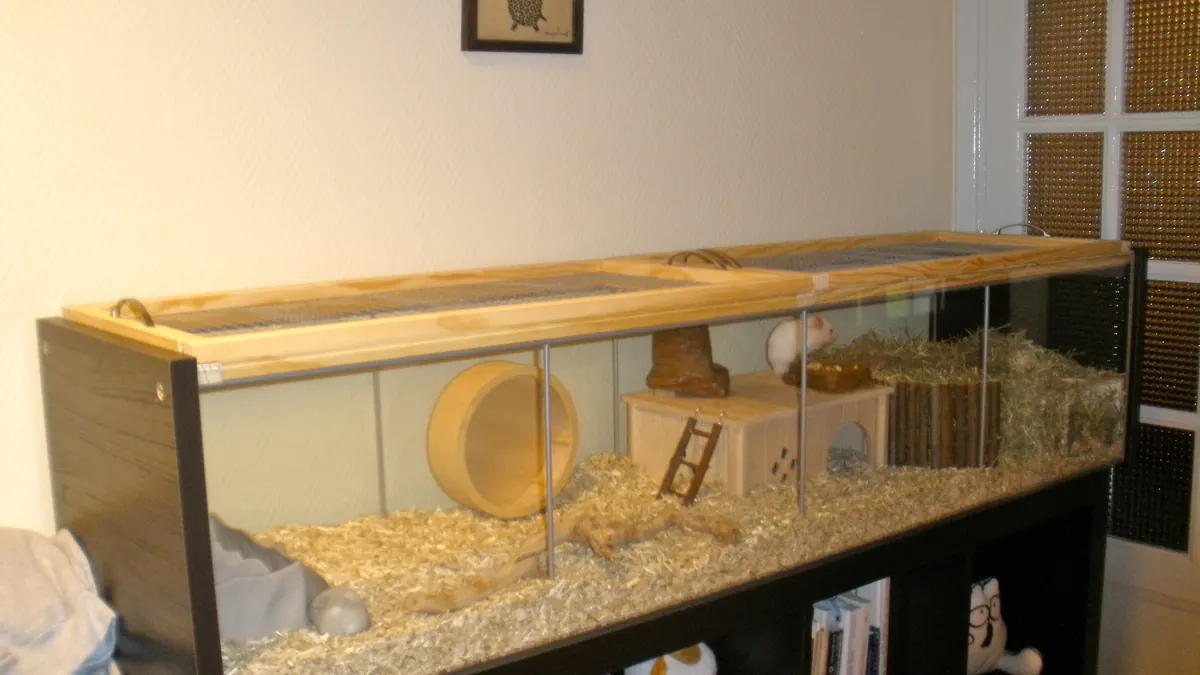
- Move the pair into a fully redone tank once they get along: fresh deep bedding, rearranged furniture, so that neither feels it is on home ground.
Our guide to gerbil tank setup gives the size and substrate depth for two adults.
After the introduction: stay watchful
For the first weeks, check every day for wounds, especially on the tail and rump, and that each gerbil eats and drinks. A gerbil that is injured or losing weight should be seen by an exotic-pet vet. The RSPCA also advises against keeping two unfamiliar adults in neighbouring enclosures for long with no plan to introduce them: they find it stressful.
Frequently asked questions
How long does a successful introduction take?
From a few days to several weeks depending on the individuals; patience and not rushing remain the best allies.
Can two adult male gerbils be paired?
It is the same challenge as with two adult females: the neutral-territory method is essential, and it may fail. Two males from the same litter, put together young, cause far fewer problems.
Should I give up if the two gerbils fight on the first try?
Not necessarily: separate them, wait a few days, then resume short sessions. If fights keep happening, keep them apart and talk to an exotic-pet vet.
This guide is part of Planète Pets’s Rodents universe. Our advice is general in nature: for any health concern, your veterinarian remains the only reference.