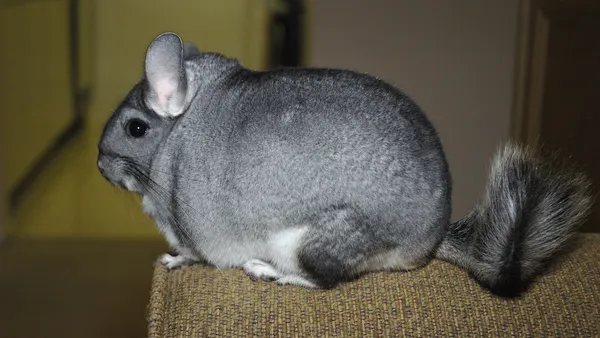
Pet chinchillas: what a survey reveals about the most common housing mistakes
Published by Planète Pets · managing editor: Clément Lacaille · how our guides are written
A chinchilla kept alone in a cage that's too small is still a common case, revealed by a large survey conducted directly among owners. Find our setup guidance in the rodent bedding and habitat section.
A large-scale survey on captive welfare
Gilhofer, Hebesberger, Waiblinger, Künzel, Rouha-Mülleder, Mariti, and Windschnurer published an online survey on housing conditions, health, and behavioral welfare indicators in pet chinchillas in the journal Animals in 2024. While basic needs — access to water, hay, and dust baths — were largely covered among respondents, the authors note that solitary housing and undersized cages remain common welfare issues that many owners underestimate.
What this means for the setup
A chinchilla is a social species by nature: keeping it alone long-term, even with plenty of human attention, doesn't replace the company of another chinchilla. Cage size matters just as much, since this species naturally climbs and jumps to great heights in the wild.
- Favor housing chinchillas in pairs whenever possible, rather than long-term solitary housing.
- Choose a tall, multi-level cage rather than a wide but low one, to match its natural need to climb.
- Keep daily access to a dust bath, one of the simplest welfare measures to provide and one of the most often overlooked.
Exact sizing guidelines are covered in the chinchilla profile. Our page on chinchilla bedding and habitat shows setup examples that match these recommendations.
Frequently asked questions
Can a chinchilla live happily alone?
It's possible with plenty of attention, but the survey confirms that the company of another chinchilla remains preferable for this social species' long-term welfare.
What's the minimum cage size to aim for?
A tall cage with several platforms and at least a meter of height suits the species' natural needs better than a wide but low one.
Is a dust bath really essential?
Yes, it remains one of the simplest and most effective welfare measures for this species, offered several times a week at minimum. Find all our guides on the rodent hub.
An accessory from our shop for this use: Natural loofah chew carrot for rabbits and rodents, 20 cm (€17.90) · the whole shop
An accessory from our shop for this use: Rolling 4-level ferret and chinchilla cage with hammock ($159.90, ships from the US) · the US shop
This guide is part of Planète Pets’s Rodents universe. Our advice is general in nature: for any health concern, your veterinarian remains the only reference.