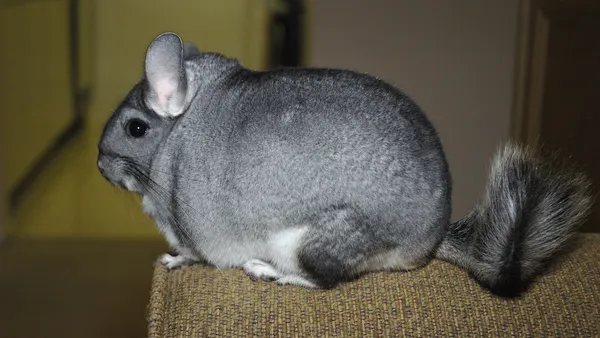
Sand Baths for Chinchillas and Gerbils: Which Sand, How Often, Best Practice
Published by Planète Pets · managing editor: Clément Lacaille · how our guides are written
No water for washing a chinchilla or a gerbil: their grooming happens in a sand bath. By rolling in very fine sand, the animal soaks up excess sebum and moisture from its coat. For the chinchilla, whose ultra-dense fur barely dries at all, it’s an outright necessity: a water bath can lead to fungal infections and hypothermia. This guide complements our rodent care and grooming section.
Contents · 4 sections
Which sand should you use?
Not all sands are equal, and some are dangerous:
- Dedicated chinchilla bathing sand (sepiolite or fine bathing dust): the gold standard, 4 to 10 € per kilo, highly absorbent.
- Sand for gerbils and hamsters: fine natural sand, sieved and dust-extracted.
- Off limits: builders’ or beach sand, abrasive and unhygienic — and above all any very dusty crushed-quartz powder, which irritates the airways.
- Mineral cat litter: never, and no scented dusts either.
How often should you offer the bath?
For a chinchilla, offer the sand bath 2 to 4 times a week, for about fifteen minutes, ideally in the evening at its activity peak. Left in permanently, the bath ends up used as a toilet and dries out the skin. For a gerbil, more frequent access — even a permanent corner of the habitat — is fine as long as the sand stays clean. Hamsters also enjoy a sand corner, which often doubles as their toilet: clean it daily in that case.
What container should you choose?
The bath must be big enough for the animal to roll over completely: about 20 cm across for a gerbil, 30 cm or more for a chinchilla, with 3 to 5 cm of sand at the bottom. Ceramic or glass bath houses (10 to 25 €) contain the flying sand and shrug off teeth, unlike plastic, whose risks we detail in our guide to hideouts and houses. Sift the sand every couple of days to remove droppings and hair, and replace it completely every week.
When should you worry?
A coat that stays greasy or ruffled despite regular baths, bald patches, redness or persistent scratching can signal a skin problem or parasites: see an exotics vet rather than piling on more baths. And to enrich your little companion’s days beyond grooming, browse our toy and enrichment ideas on Planète Pets.
See it in the Planète Pets shop: Ceramic hideout for hamsters and small rodents (11.5 × 9 × 8.5 cm) (€24.90) · the whole shop
This guide is part of Planète Pets’s Rodents universe. Our advice is general in nature: for any health concern, your veterinarian remains the only reference.