Hay or pellets as base bedding: the real answer
Published by Planète Pets · managing editor: Clément Lacaille · how our guides are written
Hay or pellets as base bedding? Neither as the main layer: hay is food, not an absorbent, and pressed wood pellets are too hard on the feet. The right architecture: an absorbent base (hemp, flax or paper), hay in a rack, and pellets — if you like — under a thin comfort layer. Our detailed comparisons are in the care and grooming category.
Contents · 5 sections
Why is hay a poor bedding choice?
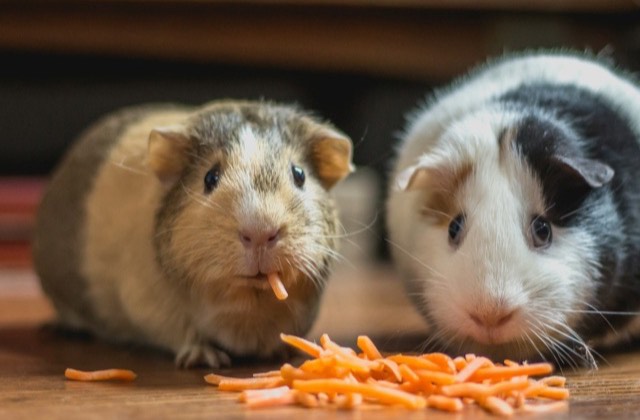
Hay absorbs almost nothing: soaked with urine, it moulds within 48 hours and turns into a nest of spores dangerous for the airways. For guinea pigs, which eat hay off the floor, soiled bedding and food end up mixed together. Keep hay in the rack and refresh it daily: it belongs in the food budget, not the bedding budget.
Are pellets suitable for rodent feet?
On their own, no. Pressed wood pellets absorb extremely well (ideal in a rabbit litter tray), but their hard, uneven surface punishes the pads of small rodents, with a bumblefoot risk comparable to wire flooring under the feet. As a 2 cm underlayer beneath 5 cm of soft bedding, however, they become an excellent moisture trap.
So which base bedding should you choose?
- Hemp: soft, low-dust, 10 to 15 € per 20 litres — the standard.
- Flax: equivalent to hemp, often locally produced and slightly cheaper.
- Pressed paper: highly absorbent, perfect for rats and mice, 12 to 18 € per 20 litres.
- Avoid: undusted softwood shavings, scented litters, clumping mineral cat litter.
Which setup costs the least per month?
The “pellets underneath + hemp on top” combo cuts the frequency of full changes by a third: around 8 to 12 € per month for a guinea pig, versus 12 to 18 € with hemp alone. The full figures are in our article on the true cost of bedding.
Frequently asked questions
Can straw replace hay?
No: hollow and rigid, it injures eyes and absorbs nothing. Its only place is in an outdoor shelter, as insulation under the bedding.
My rodent eats its hemp bedding — is that serious?
Occasional nibbling is harmless. Massive ingestion warrants a visit to an exotics vet.
How deep should the bedding be?
5 cm minimum for a guinea pig or a rat, 25 cm for a burrowing hamster, 30 cm for gerbils.
An accessory from our shop for this use: Double-layer plush hammock for rats, squirrels or ferrets (€18.90) · the whole shop
This guide is part of Planète Pets’s Rodents universe. Our advice is general in nature: for any health concern, your veterinarian remains the only reference.