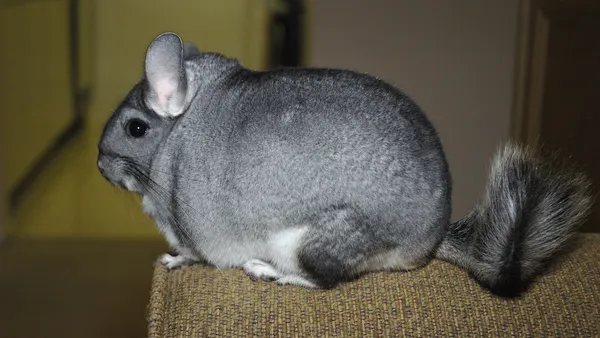
Why the chinchilla became a research model for hearing, and what that means at home
Published by Planète Pets · managing editor: Clément Lacaille · how our guides are written
It's no accident that the chinchilla was long the go-to lab animal for acoustic research: its hearing curve is strikingly close to a human's. Find all our daily care tips in the rodent care and grooming section.

A historic benchmark in hearing research
Miller published a landmark measurement of the chinchilla's audibility curve using behavioral conditioning in the Journal of the Acoustical Society of America in 1970 (see the study). The animals, trained to respond to pure tones, showed peak sensitivity between roughly 0.6 and 6 kHz, with extremely low thresholds — a range and precision that overlap heavily with the human ear. That very closeness is why the chinchilla became, for decades, one of the preferred animal models for studying hearing loss and testing ear treatments.
What this sensitivity means at home
An animal whose ear is tuned to pick up nuances as fine as ours is, logically, also more vulnerable to harsh sound environments: loud music, a vacuum cleaner near the cage, a TV running constantly, or a bluetooth speaker sitting right next to it. Chronic noise-related stress is hard to spot in such a discreet animal, which makes prevention more useful than diagnosis.
- Keep the cage away from repetitive noise sources: appliances, speakers, a door that slams frequently.
- Avoid sudden sound spikes near the habitat, more stressful than a stable, predictable background noise.
- Watch for signs of excessive vigilance: repeated startling, prolonged stillness with ears pinned back, systematic retreat to the hideout.
The room's overall setup matters just as much as the noise itself: our guide on the chinchilla's cool habitat covers what to look for in a suitable room. The species' naturally wary temperament, rooted in its native environment, is also covered in our article on the chinchilla's wild rocky habitat.
Frequently asked questions
Does the chinchilla really hear better than other rodents?
Its sensitivity range is comparable to a human's rather than exceptionally broad; it's mainly that closeness to our own hearing that made it a sought-after research model.
Should music be avoided entirely around a chinchilla?
Music at a moderate volume isn't a problem; it's mainly loud, sustained volumes or repeated sudden noises that cause issues.
How can I tell if my chinchilla is stressed by ambient noise?
Frequent startling, noticeably retreating to the hideout, or losing appetite after a noisy stretch are signs worth taking seriously. Find all our guides on the rodent hub.
See it in the Planète Pets shop: Natural loofah chew carrot for rabbits and rodents, 20 cm (€17.90) · the whole shop
This guide is part of Planète Pets’s Rodents universe. Our advice is general in nature: for any health concern, your veterinarian remains the only reference.