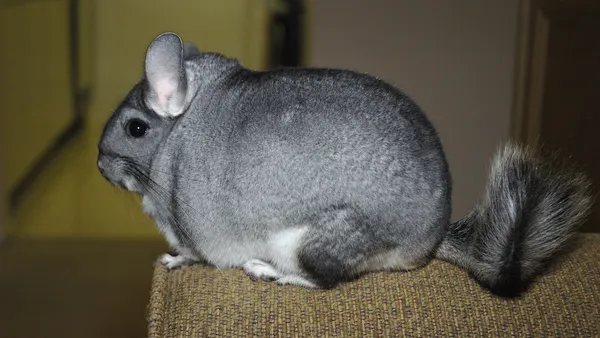
Chinchilla diet: hay, pellets, and foods to avoid
Published by Planète Pets · managing editor: Clément Lacaille · how our guides are written
The chinchilla is a strict herbivore with a highly specialised digestive system, inherited from its origins on the arid high plateaus of the Andes. A diet that is too rich or poorly balanced is among the leading reasons for vet visits in this species. Our diet guides are gathered in the rodent food section.
Contents · 5 sections
Hay, the essential, permanent base
Hay should make up nearly the entire volume eaten, available continuously without interruption. It supplies the long fibre essential for gut motility and for wearing down continuously growing teeth. Good-quality grass hay, neither dusty nor damp, as detailed in our hay guide for guinea pigs and chinchillas, takes priority over every other food.
What the research on diet-related dental disease shows
A study by Jekl, Hauptman, and Knotek, published in 2008 in the journal Veterinary Record on intraoral lesions observed in one hundred and eighty chinchillas, found that a very high proportion of animals presented for examination had malocclusion and dental spurs, lesions closely linked to a diet low in long, abrasive fibre. This finding confirms that unlimited hay is not one option among several, but a physiological necessity for this species.
Pellets, a measured supplement
Extruded pellets formulated specifically for chinchillas complement hay in a small, measured amount, typically one to two tablespoons a day depending on the animal's weight. Colourful seed mixes are best avoided, since a chinchilla will pick out the sweetest pieces and leave the fibre-rich ones behind, a selective habit that quickly unbalances the diet.
Fruit and vegetables: the exception, not the rule
A chinchilla's digestive system tolerates sugar and moisture very poorly. A tiny, occasional piece of fresh fruit poses no danger on its own, but regular feeding risks bloating, gut dysbiosis, or even potentially fatal gut stasis. Dried fruit, concentrated in sugar and often sold as treats, should stay a rare exception. Our article on toxic foods for rodents lists the plants to avoid entirely.
Frequently asked questions
Can a chinchilla eat fresh vegetables every day?
No, unlike a guinea pig, a chinchilla does perfectly well on hay and pellets alone; fresh vegetables should stay an occasional treat in small amounts.
How long without hay is dangerous?
An interruption of just a few hours can be enough to slow gut transit in a sensitive animal; hay should stay available around the clock.
How can you spot poor-quality hay?
A musty smell, a brownish colour, or a damp, sticky texture are signs to reject a batch of hay immediately. Browse all our guides on the rodent hub.
An accessory from our shop for this use: Wooden hay rack with tray for rabbit, guinea pig and chinchilla (€21.90) · the whole shop
This guide is part of Planète Pets’s Rodents universe. Our advice is general in nature: for any health concern, your veterinarian remains the only reference.