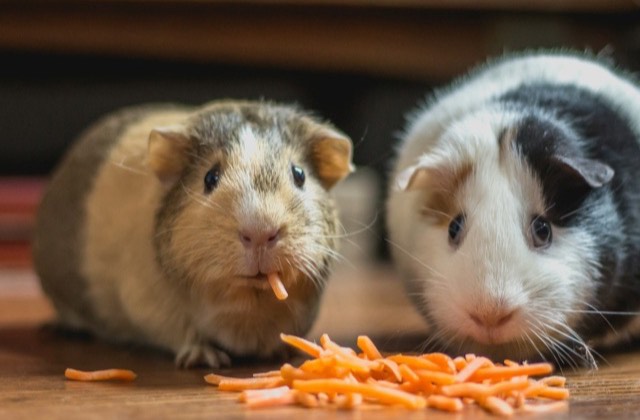
Toxic foods for rodents: the list you need to know
Published by Planète Pets · managing editor: Clément Lacaille · how our guides are written
Which foods are toxic to a rodent? The list is longer than most people think: chocolate, avocado, onion, citrus fruit and deli meats are among the worst dangers for a hamster, a rat or a guinea pig. Find safe feeding options in our food category for rodents.
Contents · 5 sections
Which foods are dangerous for every rodent?
- Chocolate: theobromine is toxic to the heart, even in a small amount.
- Avocado: persin causes serious heart and breathing trouble.
- Onion, garlic, leek: destroy red blood cells and cause anemia.
- Deli meats and cheese: too fatty and salty for a small herbivore's or omnivore's digestive system.
- Fruit pits and seeds (apple, cherry): contain cyanide-forming compounds.
Are some foods toxic to only one species?
Yes, and it is the most common trap. Citrus fruit, being very acidic, irritates the mouth of hamsters and gerbils. Large amounts of fresh parsley are not recommended for pregnant females. For chinchillas and degus, any sugary food (fruit, store-bought treats) is risky because of their fragile metabolism — see our comparison of chinchilla or degu for beginners. Guinea pigs, by contrast, actually need the vitamin C found in fresh vegetables, unlike other species that synthesize it on their own.
How do you spot risky food at the market or in the garden?
Watch out for ornamental plants (lily of the valley, mistletoe, oleander), extremely toxic if nibbled during supervised free-roam time. Always rinse any store-bought vegetable or foraged herb to remove treatment residue. When in doubt about a plant, never offer it: stick to familiar vegetables and hay instead.
What should you do after accidental ingestion?
Never try to induce vomiting in a rodent, which is physiologically impossible or dangerous depending on the species. Contact an exotic-pet vet or an animal poison control center right away, noting the amount and time of ingestion if you can. Every minute counts with a toxin like chocolate or avocado.
Frequently asked questions
Is bread dangerous for a rodent?
In a small, occasional amount, no, but it offers little nutritional value and can encourage weight gain.
Are carrot tops toxic?
No, most herbivorous rodents actually enjoy them in small amounts, as long as they are well rinsed.
Can a rodent eat nuts?
Occasionally and in very small amounts for hamsters and rats, never for guinea pigs or chinchillas, whose digestive systems cannot handle that level of fat.
An accessory from our shop for this use: Wooden hay rack with tray for rabbit, guinea pig and chinchilla (€21.90) · the whole shop
This guide is part of Planète Pets’s Rodents universe. Our advice is general in nature: for any health concern, your veterinarian remains the only reference.