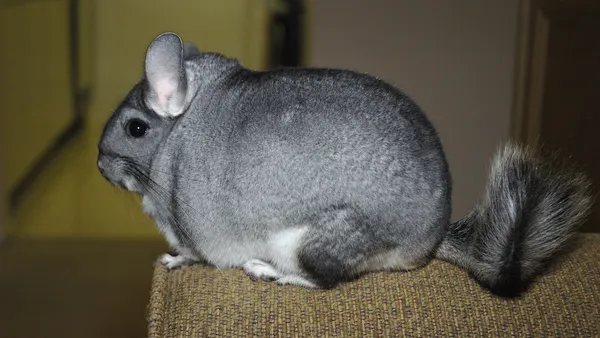
Chinchilla or Chilean degu for beginners? The honest comparison
Published by Planète Pets · managing editor: Clément Lacaille · how our guides are written
Chinchilla or Chilean degu for a first exotic rodent? If you want an animal that is active by day, sociable and easy to watch in a group, the Chilean degu is the better choice; if you prefer an evening companion that is very clean and quiet, go for the chinchilla. Both need spacious housing, covered in our bedding and habitat category for rodents.
Contents · 5 sections
How do their daily rhythms differ?
The degu is diurnal: it follows a rhythm close to ours, with activity peaks in the early morning and evening. The chinchilla is crepuscular to nocturnal: it sleeps most of the day and becomes lively in the evening. To watch your pet both waking up and settling down, the degu gives you more chances; for a household that stays quiet during the day, the chinchilla is less disruptive.
Solitary, in pairs, or in groups?
- Chilean degu: highly social, best kept in groups of two to four of the same sex.
- Chinchilla: sociable but more independent, a pair is usually enough.
- Lifespan: 6 to 8 years for a degu, 12 to 18 years for a chinchilla.
- Handling: both species dislike being grabbed by the tail, which can deglove under stress.
What housing and budget should you plan for?
A degu needs a large multi-level cage with a sand bath for daily grooming and unlimited hay, with no added sugar in its diet. A chinchilla needs a tall aviary-style cage (at least 100 cm high) rather than a wide one, in a cool room that never exceeds 22°C. Expect 200 to 350 € for the setup in both cases, then 25 to 40 € per month. For a full cost breakdown, see our guide on how much a chinchilla costs per month.
Which one fits better in an apartment?
The chinchilla, quiet and mostly active in the evening, suits an apartment well, as long as the room stays cool year-round. The degu, chattier and active by day, adapts to a bright apartment but needs closer monitoring of dietary sugar: it is a diabetes-prone species. In both cases, avoid any of the dangerous foods listed in our article on toxic foods for rodents.
Frequently asked questions
Can a degu eat fruit?
Very rarely and in tiny amounts: its metabolism is close to that of a diabetic, so sugar is almost off-limits.
Can a chinchilla live alone?
It is not recommended: even though independent, it stays more balanced as a pair. A lone chinchilla needs much more human interaction.
Are these two species suitable for children?
They suit older children better, ones able to handle them gently and respect the animal's rest: neither species enjoys being carried for long.
In our shop, for this use: Natural loofah chew carrot for rabbits and rodents, 20 cm (€17.90) · the whole shop
In our shop, for this use: Rolling 4-level ferret and chinchilla cage with hammock ($159.90, ships from the US) · the US shop
This guide is part of Planète Pets’s Rodents universe. Our advice is general in nature: for any health concern, your veterinarian remains the only reference.