How much does a guinea pig cost per month? Detailed budget
Published by Planète Pets · managing editor: Clément Lacaille · how our guides are written
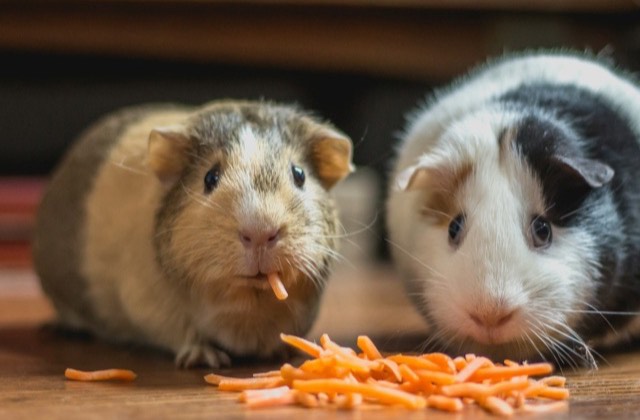
How much does a guinea pig cost per month? Expect 35 to 55 € per month for a pair (you never adopt a lone guinea pig), more than half of it going on food: unlimited hay, daily fresh vegetables and vitamin-enriched pellets. The right products are detailed in our rodent food category.
Contents · 5 sections
How big is the food budget?
It is the heart of the budget, because a guinea pig eats around the clock:
- Hay: 8 to 15 € per month for a pair (about 4 kg), in quality Crau or meadow hay bags.
- Fresh vegetables: 10 to 20 € per month (bell pepper, endive, fennel, fresh herbs) — non-negotiable, since vitamin C depends on it.
- Vitamin C-enriched pellets: 4 to 6 € per month (30 g per day per animal).
- Seasonal greens or foraged grass: free and excellent, from untreated areas.
How much does upkeep cost (bedding and hygiene)?
For a 1.5 m² enclosure, plan 10 to 18 € of bedding per month depending on the setup — the full cost comparison is in our article on the true cost of bedding. Washable textiles (fleece liners) cut this item in half after an initial 40 to 60 € investment, in exchange for a little detergent and electricity.
Should you set aside a vet fund?
Yes, without fail. Guinea pigs hide their illnesses: dental abscesses, fungal infections and digestive trouble are common. Set aside 10 to 15 € per month in a dedicated account: an exotics vet consultation costs 35 to 60 €, dental work under anaesthesia 150 to 300 €. Spreading the cost avoids a financial dead end the day the animal — especially an ageing one — needs care; see our article on the ageing guinea pig.
How can you cut the bill without harming the animal?
Buy hay in bulk (10 kg bags), grow parsley and herbs in a planter, switch to washable liners and buy durable equipment second-hand. On the other hand, never skimp on fresh vegetables or hay: those are health items, not comfort items.
Frequently asked questions
What does the first year cost?
Setup (enclosure, accessories: 150 to 250 €) + adoption (30 to 60 € for a pair from a rescue) + the monthly budget: expect 600 to 900 € for the first year.
Does a guinea pig cost more than a hamster?
Yes, two to three times more: it lives in pairs, eats fresh vegetables daily and lives 5 to 8 years.
Is exotic pet health insurance worth it?
At 8 to 15 € per month per animal, a dedicated savings pot is often the better deal, except for fragile bloodlines.
In our shop, for this use: Wooden hay rack with tray for rabbit, guinea pig and chinchilla (€21.90) · the whole shop
This guide is part of Planète Pets’s Rodents universe. Our advice is general in nature: for any health concern, your veterinarian remains the only reference.