Danio: gear and buying guides
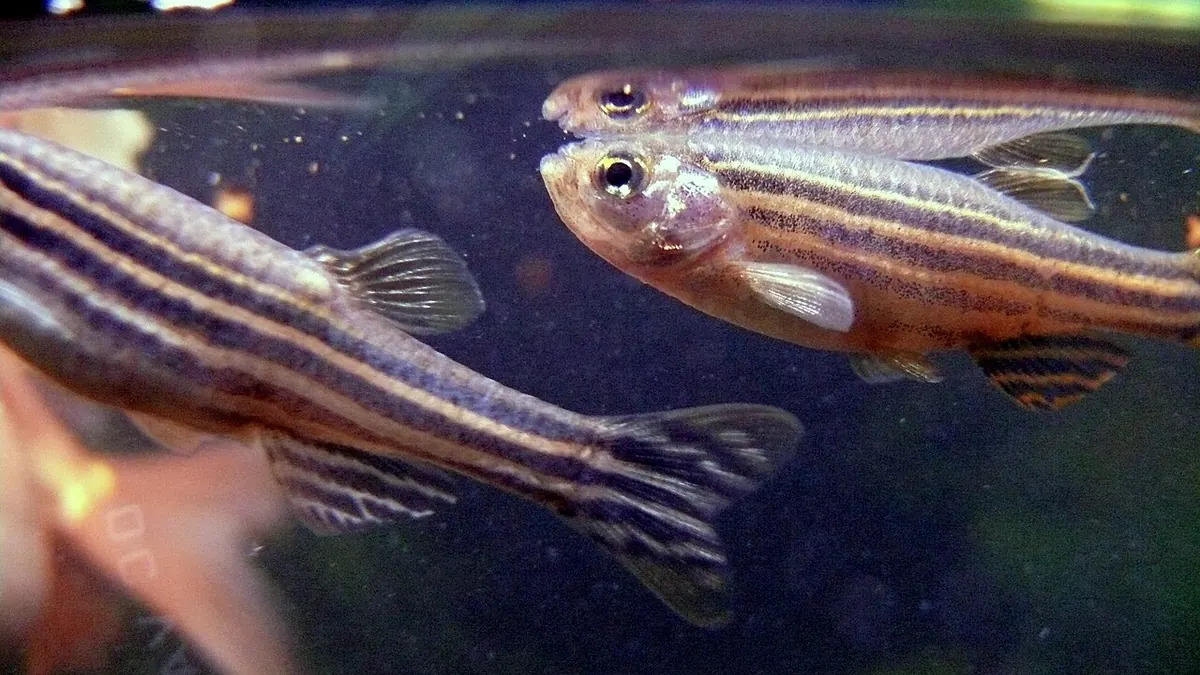

The zebra danio is a tireless little cyprinid that lives in schools of at least 8 to 10. Very tolerant, it accepts water from 18 to 25 °C, often making a heater unnecessary indoors, but it demands swimming length: at least 80 L and an 80 cm long tank. Its liveliness makes it an excellent upper-level fish.
Profile : 4 to 5 cm as an adult, at least 80 L and an 80 cm long tank for a school, water between 18 and 25 °C.
In our shop, for this use: Programmable automatic aquarium fish feeder (€32.90) · the whole shop
We don’t ship products to your country yet; our practical guide downloads anywhere: Beginner axolotl: aquarium and care (€19)
Species profile
- Lifespan
- 3 to 5 years
- Adult size
- 5 cm
- Minimum tank
- 80 L
- Water temperature
- 18 to 25 °C
- pH
- 6.5 to 7.5
- Temperament
- Tireless and playful, it races against the current in a school and may harass slow, long-finned tankmates.
- Health watch
- white spot disease after an abrupt change · mycobacteriosis in inbred strains
🩺 The health watchpoints on this page are for information only: only a veterinarian can examine your animal and make a diagnosis.
Danio gear, family by family
-
🍖
Food
A greedy omnivore that eats anything floating: flakes, micro-pellets, daphnia and frozen mosquito larvae. Two quick meals a day are enough despite its constant activity.
-
🧴
Care & grooming
A very hardy species, tolerant of hardness and pH as long as the water stays clean and oxygenated. A 20 percent weekly change and good circulation are all it needs.
-
🎾
Toys & enrichment
A gentle current from the filter outlet stimulates it: it loves swimming against the flow. Background plants and a long open midwater zone for the school to race in.
-
🏠
Bedding & habitat
A tank at least 80 cm long, covered since it jumps, with cool to temperate water. Avoid slow, long-finned tankmates, which it may harass.
-
🧳
Travel & safety
Easy group transport in bags, a species resistant to moderate fluctuations. Standard 20 to 30 minute acclimation.
-
🧰
Accessories
A strong-flow filter, a lid, a quick net and an optional heater depending on the room. A modest budget of around 80 to 150 euros for an 80 to 100 L tank.
🎾 Enriching a Danio tank: hardscape, shoal and occupation
Hardscape designed for its swimming zone
The swimming zone dictates the decor: a Danio moves at the surface, so floating plants that soften the light and clear surface zones structure its territory. An aquarium’s enrichment is its hiding places and its currents — not fluorescent ornaments.
Group life: the first enrichment
Kept at 8 or more, the Danio shows its true behaviours: hierarchies, displays, coordinated swimming. Below that, chronic stress sets in and colours fade — group size is the species’ first “toy”, before any decor purchase.
Food as occupation
Turn every meal into exercise: frozen prey released into the current makes the Danio hunt, with the feeding spot moving day to day — foraging is its real “toy”.
Quick answers
- How many Danio should be kept together?
- 8 minimum, more if the tank allows: it is a shoaling species, and numbers shape its behaviour and colours alike.
- How do you enrich a Danio tank?
- Three levers: decor set to its zone (at the surface), feeding that changes form and place, and group numbers. The rest is marketing.
An accessory from our shop for this use: Tall artificial aquarium plant, 45 to 49 cm, weighted base (€23.90) · the whole shop
We don’t ship products to your country yet; our practical guide downloads anywhere: Beginner axolotl: aquarium and care (€19)
🏠 The Danio tank: 80 L, hardware and start-up
80 litres minimum: why that number
For a group of 8+ Danio reaching 5 cm as an adult, plan 80 real litres — and remember a big tank is more STABLE, hence easier, than a small one: parameters drift slowly, leaving time to correct. This volume suits a sturdy standard cabinet — just verify perfect levelness.
Hardware: filter, heater, lighting
The Danio tank’s technical trio starts with filtration — three to five volume turnovers per hour, a heater around 1 W per litre set to 18 to 25°C, backed by an independent thermometer — built-in thermostats sometimes lie, and lighting on a timer at 8 to 10 hours a day: any longer and the algae win.
Substrate, plants and start-up
Nutrient substrate under fine sand or quartz, robust plants (anubias, vallisneria, Java moss) and wood to structure the territory. Then patience: a complete nitrogen cycle (3 to 4 weeks, nitrites back to zero) before the first Danio — the step every hurried beginner pays for dearly.
Quick answers
- What tank size for Danios?
- A real 80 litres minimum for a group of 8+ — below that, parameters drift too fast to catch.
- Does a Danio need a heater?
- Yes, about 1 W per litre set to 18 to 25°C, with an independent thermometer double-checking the thermostat.
An accessory from our shop for this use: Ceramic pebble hide for shrimp and small fish (€20.90) · the whole shop
Our products don’t ship to you yet, but the PDF practical guide is instant: Beginner axolotl: aquarium and care (€19)
🧳 Transporting a Danio: bagging, acclimatisation, moving
Bringing home or moving a Danio
A 5 cm Danio travels in a double bag — one-third water, two-thirds air — inside a cool box or opaque bag: darkness soothes, insulation protects from swings away from its 18 to 25°C comfort zone. Split the group of 8+ across several bags: less ammonia per bag, fewer losses if one fails.
Acclimatisation: the critical step
Once home, float the bag for 20 minutes so the water reaches the tank’s 18 to 25°C, then add tank water in small doses over 30 to 45 minutes, and release with a net without pouring bag water into the tank. In this species, a botched transfer is paid for in bouts of white spot disease after an abrupt change. Lights off for the first day: a newcomer hazed under floodlights starts with a handicap.
Moving an entire aquarium
A house move takes planning: fish in bags or covered buckets, filter media kept damp and warm in a cool box (your bacteria are gold), plants in wet bags, and the tank restarted the same day with as much original water as possible. The tank itself travels EMPTY: glass stressed by a few leftover litres cracks at the first corner.
Quick answers
- How long can a Danio handle transport?
- A few hours easily in a proper bag, up to 24 hours in an oxygenated professional bag. Past two hours, protect the temperature above all.
- How do you acclimatise a Danio safely?
- Float the bag 20 minutes, add tank water gradually over 30 to 60 minutes, release with a net, lights off the first day — and never pour bag water into the tank.
We don’t ship products to your country yet; our practical guide downloads anywhere: Beginner axolotl: aquarium and care (€19)
🧰 Accessories for a Danio: tests, upkeep and budget
Water tests: your dashboard
A drop-test kit (€15-30) is THE first accessory for a Danio tank: NO2 and NO3 weekly, GH-KH-pH at any doubt. Complete it with a net matched to its 5 cm, a gravel siphon for maintenance and a bucket strictly reserved for the tank: residual detergent from a household bucket is poison.
The Danio specifics
a tight-fitting lid with no gaps: the species jumps, and every slot is a one-way exit; a battery backup air pump: at full stocking, a filtration failure is measured in hours.
The full budget, no surprises
An equipped 80 L setup (tank, filter, heater, lighting, substrate, decor, tests): expect €200 to 450 upfront, then €10 to 25 a month (food, electricity, conditioner). Second-hand often halves the tank price — only the filter and heater deserve to be new. Details on the full Danio profile.
Quick answers
- Which accessories are essential for a Danio tank?
- Drop tests, siphon, net, dedicated bucket, a tight lid (it jumps), an independent thermometer: the whole kit stays under €60.
- What budget for keeping a Danio?
- €200 to 450 to set up an equipped 80 L tank, then €10 to 25 a month in routine costs.
An accessory from our shop for this use: Stick-on digital thermometer for aquarium and terrarium glass (€18.90) · the whole shop
Our products don’t ship to you yet, but the PDF practical guide is instant: Beginner axolotl: aquarium and care (€19)
Guides to read
- Community aquarium or species-only tank: which is right for a first setup?Bedding & habitat
Community aquarium or species-only tank: pros, cohabitation risks and advice for choosing how to set up your first aquarium.
- Best easy aquarium plants without CO2 for beginnersToys & enrichment
Which aquarium plants can you choose without CO2 injection? A selection of hardy, easy plants for a beginner's planted tank.
- Budget for a first brackish water aquarium: the real cost to get startedBedding & habitat
How much does a first brackish water aquarium cost? Tank, filtration, salt and salinity monitoring, budgeted item by item.
- Changing filter media too often: the mistake that wrecks your aquarium's cycleCare & grooming
Why you should never replace all your filter media at once: nitrifying bacteria, replacement frequency and the right habits.
- Restarting a neglected aquarium: a step-by-step guideCare & grooming
How do you restart an aquarium that's been left neglected without endangering the fish? Steps, water changes and mistakes to avoid.
- GH, KH and pH: understanding and adjusting aquarium water hardnessCare & grooming
GH, KH, pH: what do these three readings actually measure, and how do you adjust aquarium water hardness without stressing the fish?
- Upgrading to a bigger aquarium: moving your fish without the stressBedding & habitat
How do you upgrade to a bigger aquarium without breaking the biological cycle or stressing your fish? Steps and mistakes to avoid.
- Aquarium electrical safety: GFCI protection and good habitsTravel & safety
Heater, filter, lighting near the water: what electrical precautions keep an aquarium safe for fish and people?