Selkirk Rex: Lifespan, Weight and Temperament
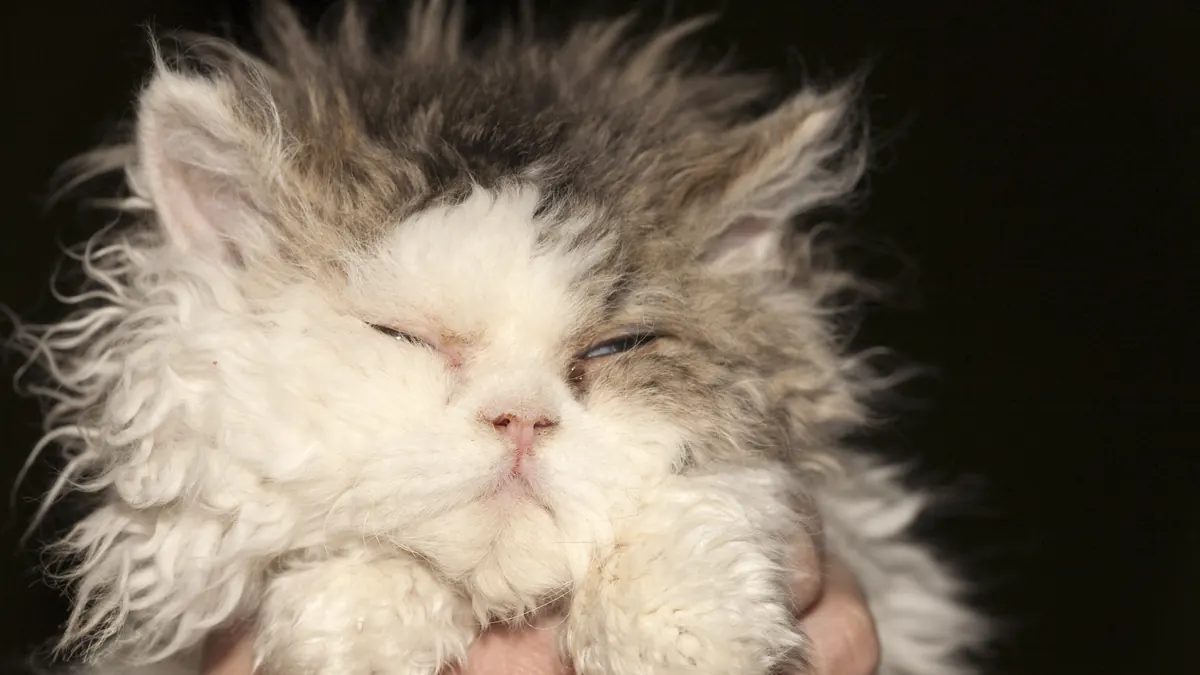

The Selkirk Rex is a round, laid-back cat recognizable by its unique curly coat, in short or long versions. Medium to large (3 to 7 kg), it inherited the calm of the British Shorthair in its lines. Its care revolves around one rule: preserve the curl without breaking it.
Profile: Medium to large cat (3 to 7 kg), short or long curly coat, moderate energy and a placid temperament.
Everything in one place, ready to print: Which Cat Breed Is Right for You? 20 Breeds Compared — 39-page PDF, instant download. Get my guide — €29
Species profile
- Lifespan
- 12 to 15 years
- Adult weight
- 3 to 7 kg
- Temperament
- A placid, patient sheep-like cat, cuddly without being demanding, heir to the British Shorthair’s composure.
- Health watch
- polycystic kidney disease (PKD) · hypertrophic cardiomyopathy (HCM)
🩺 This health information is general in nature and does not replace a consultation: at the slightest doubt about your animal’s condition, talk to your vet.
The Selkirk Rex usually lives 12 to 15 years and weighs 3 to 7 kg (about 6.5 to 15 lb) as an adult, with males heavier than females. It is a medium to large, solid, muscular cat with a placid, patient temperament, recognisable by its curly coat, short or long.
Selkirk Rex weight and size
Our attribute database gives 3 to 7 kg. The Cat Fanciers’ Association (CFA), which recognises the breed, gives 12 to 15 lb for adult males, with females somewhat smaller. Being rather laid-back, it gains weight easily: weigh it regularly and measure its food.
Selkirk Rex lifespan and health
Our database gives a lifespan of 12 to 15 years. Its profile flags two health points: polycystic kidney disease (PKD) and hypertrophic cardiomyopathy (HCM). Ask the breeder for the parents’ screening results and keep your cat under regular veterinary follow-up.
Selkirk Rex temperament
Placid, patient and cuddly without being demanding: it inherited the composure of the British Shorthair in its lines. The CFA describes it as a cat that does well with children and other animals, as long as children handle it gently. Playful in moderation, it alternates short play sessions with long naps.
Origin
According to the CFA, the breed comes from a spontaneous mutation found in a litter born in Montana in 1986: a curly-whiskered female, adopted by Persian breeder Jeri Newman, produced three curly kittens out of six with a black Persian male, showing that the gene is dominant. The CFA accepted the breed for registration in 1992.
Frequently asked questions
How long do Selkirk Rex cats live?
Usually 12 to 15 years, according to our attribute database, with regular veterinary follow-up.
How much does an adult Selkirk Rex weigh?
3 to 7 kg; the CFA gives 12 to 15 lb for a male, with females lighter.
Should you brush a Selkirk Rex?
Sparingly and gently: a wide-tooth comb once or twice a week, more for longhairs; heavy brushing flattens the curls.
Selkirk Rex gear, family by family
-
🍖
Food
Rather laid-back, the Selkirk Rex gains weight easily: a measured ration and regular weigh-ins are in order. A slow-feeder bowl reins in fast eaters.
-
🧴
Care & grooming
Brush sparingly and gently: too-frequent brushing straightens and breaks the curl. A wide-tooth comb once or twice a week (more for the longhaired variety) and a light water mist to revive the curls are enough.
-
🎾
Toys & enrichment
Playful in moderation, it enjoys short sessions with balls and feather teasers, then happily returns to napping. Simple food puzzles stimulate it without frustration.
-
🏠
Bedding & habitat
A medium-height cat tree with wide platforms and a soft bed matches its easygoing lifestyle. Its dense coat makes it sensitive to strong heat: provide a cool spot in summer.
-
🧳
Travel & safety
Its natural calm makes trips easier: a standard well-ventilated rigid carrier is enough. Beware of overheating in the car in summer due to its thick curly coat.
-
🧰
Accessories
A wide-tooth comb, a water mister and a horizontal scratcher round out its kit. Avoid harsh slicker brushes that destroy the curly texture.
🎾 Play and enrichment for a Selkirk Rex: hunting and occupation
Fifteen minutes of hunting a day
Beneath its peaceful airs, the Selkirk Rex keeps its predator reflexes: give it a daily wand session closed with a genuinely rewarded “catch” — tone maintained, weight gain kept at bay.
Enriching the territory
A Selkirk Rex’s territory is enriched cheaply: a puzzle feeder for kibble, a ball circuit, catnip pouches, and a weekly toy rotation to keep novelty alive. At Selkirk Rex scale, kitten-sized toys do not last: pick sturdy wands and good-sized prey.
Boredom: enemy number one indoors
When a Selkirk Rex scratches the sofa, wakes the house at 4 a.m. or licks compulsively, it is not “misbehaving”: it is bored. The answer lies in three fittings — high posts by a window, hiding spots, daily play at fixed times. The full profile is on the full Selkirk Rex profile.
Quick answers
- How much playtime does a Selkirk Rex need?
- One daily session of ten to fifteen minutes is enough — consistency is what counts.
- Which toys does a Selkirk Rex prefer?
- A wand toy for shared hunting, good-sized, sturdy prey toys, and a puzzle feeder for time alone — rotated to prevent boredom.
🧳 Travelling with a Selkirk Rex: carrier, car and safety
The right carrier for a Selkirk Rex
The right format for its 3 to 7 kg: a rigid carrier roughly 55 cm long, with a top opening that proves invaluable at the vet’s. Leave it out permanently with a home-scented blanket: a familiar carrier halves departure stress.
In the car and beyond
The carrier rides strapped on the seat or wedged in the footwell, never loose — at 3 to 7 kg it becomes a projectile under braking. A light cloth over the carrier settles most cats in transit. Trains only require the carrier; planes admit cats in the cabin as long as the total stays under the weight limit (8 kg bag included at most airlines).
Identification and everyday safety
Identification is mandatory (microchip), with an EU passport and rabies vaccination for border crossings. In flats, safety is decided at the windows: blocked tilt-and-turns and protection nets — cat falls are a veterinary-ER classic.
Quick answers
- What carrier size for a Selkirk Rex?
- Aim for 55 cm long: the cat must sit head-free and turn without contortion. Favour rigid with a top opening — invaluable on the vet’s table.
- How do I get a Selkirk Rex used to its carrier?
- Leave it open in the living room with a scented blanket and treats inside, closing the door only once the habit is set: within two or three weeks the carrier becomes a den.
🧰 Accessories for a Selkirk Rex: the right picks at the right size
Bowls, fountain, feeder
Pick low, wide bowls for the Selkirk Rex — whiskers hate brushing the rims — in ceramic or stainless steel, and set the water at least a metre from the food. The fountain remains the best value-for-money item in the cat aisle: a cat that drinks more is a urinary tract that fares better.
The extras that matter for a Selkirk Rex
a maxi-format cat flap (standard ones brush its shoulders). Breed-by-breed detail lives on the full Selkirk Rex profile.
Starter budget
Expect €200 to 320 to equip a Selkirk Rex properly: cat tree, tray and litter, carrier, bowls and fountain, scratchers and first toys. One good tree and a large tray beat ten gadgets.
Quick answers
- Which accessories are essential for a Selkirk Rex?
- A 60 cm tray, a stable cat tree, a 55 cm carrier, shallow bowls, a fountain, scratchers — and for this breed specifically: rotating toys.
- What equipment budget for a Selkirk Rex?
- €200 to 320 for a durable full kit, then €30 to €60 a month including food and litter.
Guides to read
- Overweight cat: setting up a weight loss plan without the frustrationFood
How to help an overweight cat lose weight without starving it or causing stress: diagnosis, a realistic pace, the right food, and vet follow-up.
- Pet insurance for cats: is it worth taking out a policy?Accessories
Cat insurance: what it actually covers, monthly cost, deductibles and exclusions, and the cases where it genuinely pays off.
- Lost cat: the right moves to find it quicklyTravel & safety
What to do the moment a cat goes missing? Priority search area, effective methods, best times of day, and the role of microchipping.
- Pregnant cat: setting up a cosy nest for birth and the kittensBedding & habitat
How to set up a calm space for a pregnant cat: location, supplies, gestation length, and the signs that labour is about to start.
- A window bird feeder: real enrichment for an indoor catToys & enrichment
Why set up a bird feeder outside an indoor cat's window: behavioural benefits, safe installation, and budget.
- Grooming a British Shorthair: shedding, brushing, and hairballsCare & grooming
The British Shorthair has a dense coat that needs regular brushing: how often, the right tools, managing the moult, and preventing hairballs.
- Kitten or Adult Cat: What Gear You Actually Need by AgeAccessories
Litter box, scratching post, bed, food: starter gear differs depending on whether you adopt a kitten or an adult cat. Our guide to equipping the home right.
- Professional Grooming or At-Home Grooming for a Cat: What's the Real Budget?Care & grooming
Grooming salon or brush at home: costs, frequency, and the cases where a professional groomer genuinely becomes worth the price.
Free guide: the 10 mistakes new owners make
New dog or cat owner? Our guide walks through the ten classic first-year mistakes — food bowl, vet, training, budget — so you avoid them from day one. Instant access after signing up.
✅ All set! Read the guide now.