Transporting a Leopard gecko: box, temperature and escape-proofing
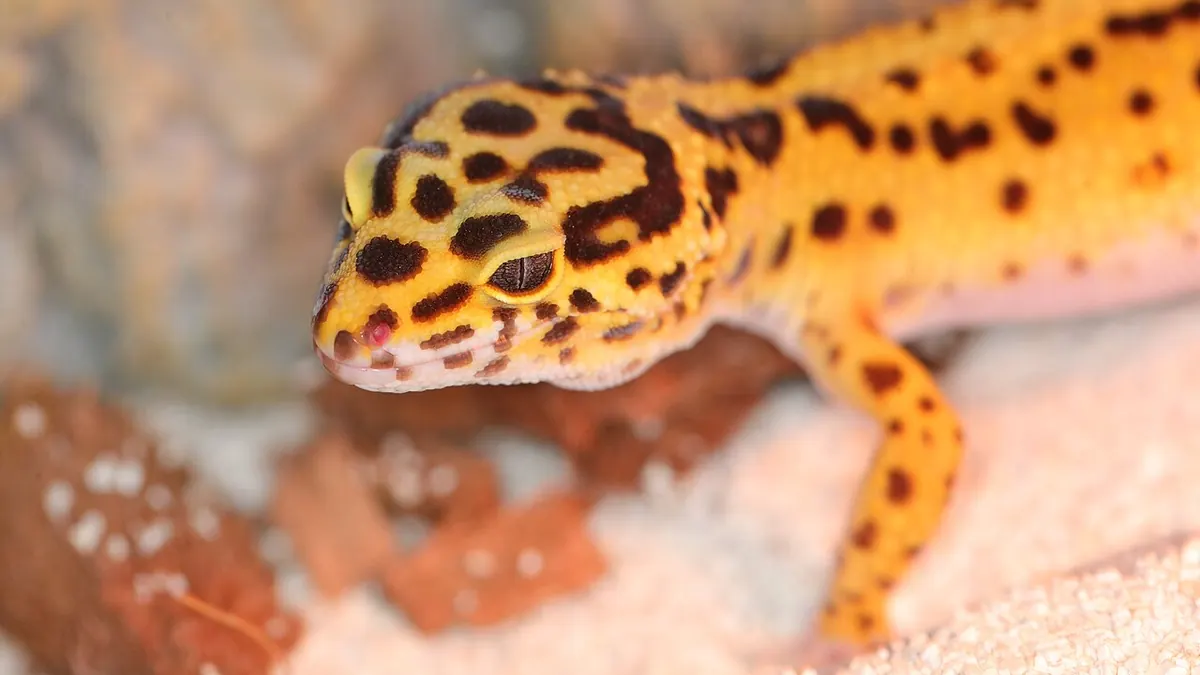

Leopard gecko : Transport in a ventilated rigid faunarium padded with paper towel and kept away from cold: the species is sensitive to temperature shocks. Never grab a leopard gecko by the tail, as it can drop off.
In our shop, for this use: Ventilated clear box for feeder insects, transport and quarantine, 19 cm (€17.90) · the whole shop
We don’t ship products to your country yet; our practical guide downloads anywhere: Your First Terrarium: Leopard Gecko, Bearded Dragon, Corn Snake, Ball Python (€15)
In short: Around 20 to 28 cm as an adult, 15 to 20 years of lifespan, beginner level. Placid and tolerant of gentle handling — the definitive beginner lizard. It stores its fat reserves in its tail and can drop it: never grab the tail, and a thinning tail is a warning sign about its health.
Transporting an ectotherm
For a 20 to 28 cm Leopard gecko, pick a rigid, ventilated box just big enough to prevent sliding, lined with paper or cloth and kept dark: deprived of visual stimulation, it stays calm. In winter, a chemical heat pack wrapped and fixed OUT of direct contact: a Leopard gecko does not always feel a burn before the lesion.
Temperature: the journey’s only real constraint
Transporting a Leopard gecko comes down to one instruction: hold the box within its 24-26°C to 30-32°C range. Pre-temper the car, ban the summer boot and sunny parking — an ectotherm takes in ten minutes what a mammal would take ten hours to suffer. Long trips are planned for early morning in summer, midday in winter.
Safety and escape-proofing
An enclosure must lock: reptile escapes end in hypothermia behind furniture. Sliding glass secured, vents screwed down, and an inspection round after every intervention.
Frequently asked questions
How do you take a Leopard gecko to the vet?
The protocol: a snug dark rigid box, mental thermometer set to 24-26°C to 30-32°C, a wrapped heat pack in cold weather, and the most direct route possible.
Can a Leopard gecko escape its enclosure?
Better than you would think: the three classic exits are unlocked glass, an unclipped vent and decor rising too close to the lid. An indoor escapee usually turns up near a heat source.
The guides that apply to you
- Heatwave and terrarium: how to protect your reptile from overheating?
In a heatwave, a terrarium can turn deadly above 35-38 °C ambient. The immediate steps and anti-overheating gear from 10 to 60 €.
- Green anole: what a study on routine handling changes about fear of transport
A Belgian study handled green anoles twice a day for three weeks without triggering any measurable chronic stress, a reassuring result before occasional trips to the vet.
- Transporting a Bearded Dragon to the Vet or on a Trip Without Stress
How do you transport a bearded dragon? A suitable box, keeping it warm, a calm journey and gentle re-acclimation to limit the reptile's stress.
- Box turtle: at what exact point during capture does stress peak?
A US study tracked corticosterone in 92 wild box turtles from capture to release: the stress peak doesn't come right away, but around the fifty-minute mark of handling.