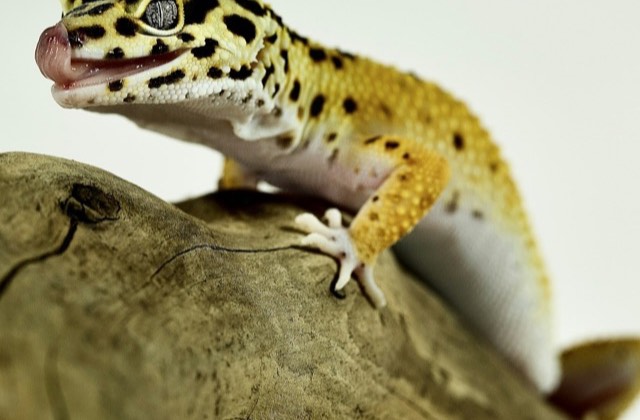
Heatwave and terrarium: how to protect your reptile from overheating?
Published by Planète Pets · managing editor: Clément Lacaille · how our guides are written
In a heatwave, the danger flips: once the room exceeds 30 to 32 °C, even the terrarium's “cool zone” disappears and the animal can no longer thermoregulate. Switch off the heaters, shade the room and create cool spots: beyond an internal 38 to 40 °C, heatstroke can kill a reptile within hours — desert species included.
Contents · 5 sections
Why does a “desert” reptile fear the heat?
In the wild, a bearded dragon escapes the scorching hours in a burrow at 25 °C. In a terrarium, it has no such escape: if the whole enclosure climbs to 38 °C, the animal gapes, grows agitated, then collapses. The warning signs: mouth held open constantly, very pale colouring, pacing against the glass and then lethargy. It is an absolute emergency.
What should you do as soon as the weather alert drops?
- Switch off spots and heat mats as soon as the room alone maintains the temperatures — the thermostat does it automatically;
- Close shutters and curtains by day, air out at night;
- Move the terrarium out of a conservatory or a south-facing spot, without ever leaving it in direct sun;
- Multiply the cool spots: a large water bowl, a humid hide, tiles on the enclosure floor;
- Mist morning and evening for species that tolerate it — evaporation cools.
What equipment helps you through heatwaves?
An alarm or connected thermometer (15 to 60 €) warns before the critical threshold; a fan aimed into the room — never straight into the enclosure — drops the temperature by 2 to 4 °C; bottles of frozen water placed on the mesh top or against a wall create a temporary cool zone. As a last resort, the air-conditioned room of the house becomes the terrarium's refuge. Find this equipment in the reptile travel and safety section.
Should UVB lighting stay on during the heatwave?
Yes if possible: a T5 tube gives off hardly any heat and the light cycle should stay stable. On the other hand, replace the basking spot with ambient warmth alone for as long as the wave lasts: at 32 °C in the room, the hot spot is already taken care of. The animal may eat less — that is normal and temporary.
Frequently asked questions
At what temperature is a reptile in danger?
Above 35 °C with no retreat zone for most species, and from 30 °C for temperate or forest species. The duration of exposure matters as much as the peak.
Can I give my overheated reptile a cool bath?
A lukewarm bath (not ice-cold — thermal shock) helps bring down the temperature of an animal in the early stages of heatstroke. Lethargy or intense gaping call for an immediate call to an exotics vet.
Is air conditioning risky for a terrarium?
No, as long as the cold airflow does not blow directly onto the enclosure and the room stays within the species' range. It is the most reliable anti-heatwave tool.
In our shop, for this use: Stick-on digital thermometer for aquarium and terrarium glass (€18.90) · the whole shop
This guide is part of Planète Pets’s Reptiles universe. Our advice is general in nature: for any health concern, your veterinarian remains the only reference.