Enrichment for a Leopard gecko: decor that does the work
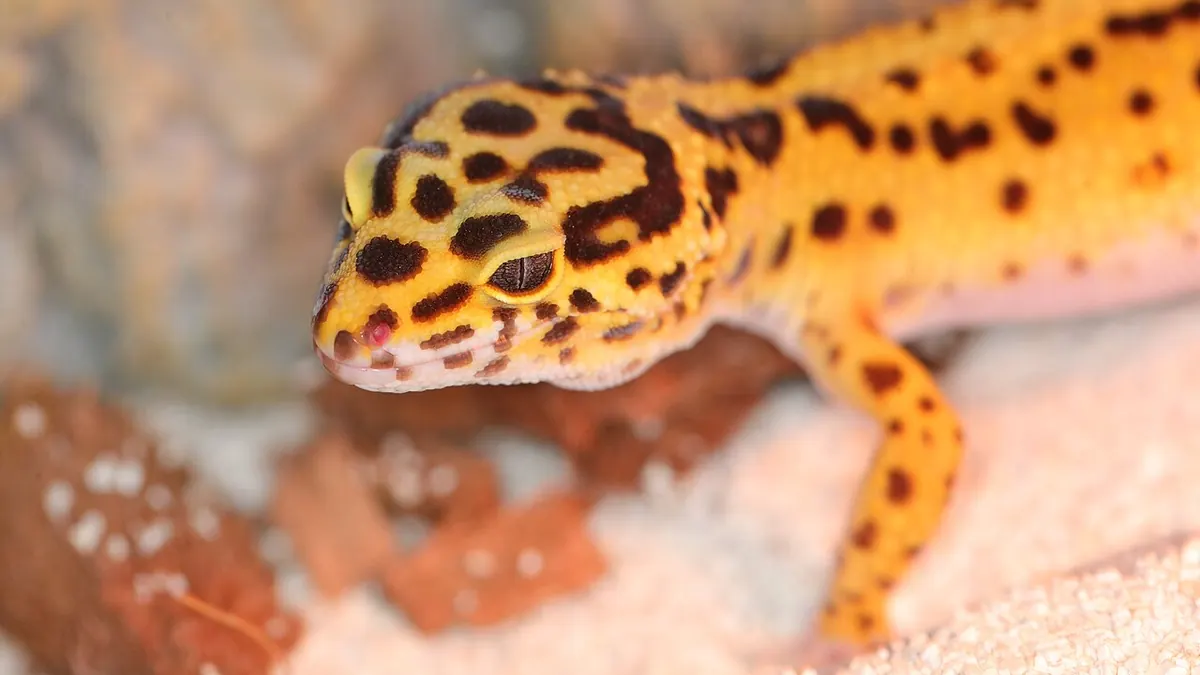

Leopard gecko : No toys as such, but a rich layout works: several hides, flat rocks, low branches and live prey released in the enclosure to trigger nighttime hunting behaviour.
We don’t ship products to your country yet; our practical guide downloads anywhere: Your First Terrarium: Leopard Gecko, Bearded Dragon, Corn Snake, Ball Python (€15)
In short: Around 20 to 28 cm as an adult, 15 to 20 years of lifespan, beginner level. Placid and tolerant of gentle handling — the definitive beginner lizard. It stores its fat reserves in its tail and can drop it: never grab the tail, and a thinning tail is a warning sign about its health.
Enrichment, reptile-style
The toy aisle is irrelevant to a Leopard gecko: its enrichment is built into the enclosure’s very architecture. Multiple hides, structured backgrounds and diggable substrate: nocturnal activity unfolds when the decor allows it.
Varying the hunt and the exploration
Release live insects at different points of the enclosure rather than always tong-feeding: hunting is an insectivore’s first enrichment. Watch it on its own schedule: a very dim LED moonlight reveals the Leopard gecko’s nocturnal activity without disturbing it.
What is useless (or harmful)
A tankmate “for company” (cohabitation means stress or injuries in most species), rodent wheels and toys, scented resinous decor, imposed daily handling: all false good ideas. A Leopard gecko that explores, hunts and uses its whole volume is an enriched animal — the decor does the work, not you.
Frequently asked questions
How do you keep a Leopard gecko occupied?
A complex layout (hides, relief, diggable substrate) refreshed in small touches, plus food to find rather than served at the same spot.
Can you handle a Leopard gecko?
Yes — one of the most tolerant species: short sessions, low hands, never by the tail.
The guides that apply to you
- Enriching a red-eared slider's aquatic tank: what a study on this species shows
A study on enrichment in the red-eared slider reveals measurable behavioural preferences, a concrete basis for setting up this aquatic turtle's tank.
- Leopard gecko: why offering tiny insects can nearly double its activity
A German study tracked leopard geckos for eleven months: swapping large prey for tiny insects almost doubled how often they showed active behaviour. A free, risk-free way to enrich its routine.
- Enriching a Greek tortoise's outdoor enclosure: terrain, digging zones and complexity
A flat, bare enclosure is not enough for an active Greek tortoise. What a home-range study on Hermann's tortoise reveals for building a genuinely stimulating space.
- Branches, vines and climbing supports for terrariums: choosing well
Natural branches, flexible vines, hammocks: which climbing supports to install in a terrarium, how to disinfect them and at what price.