Feeding a Leopard gecko: diet, supplements, food refusals
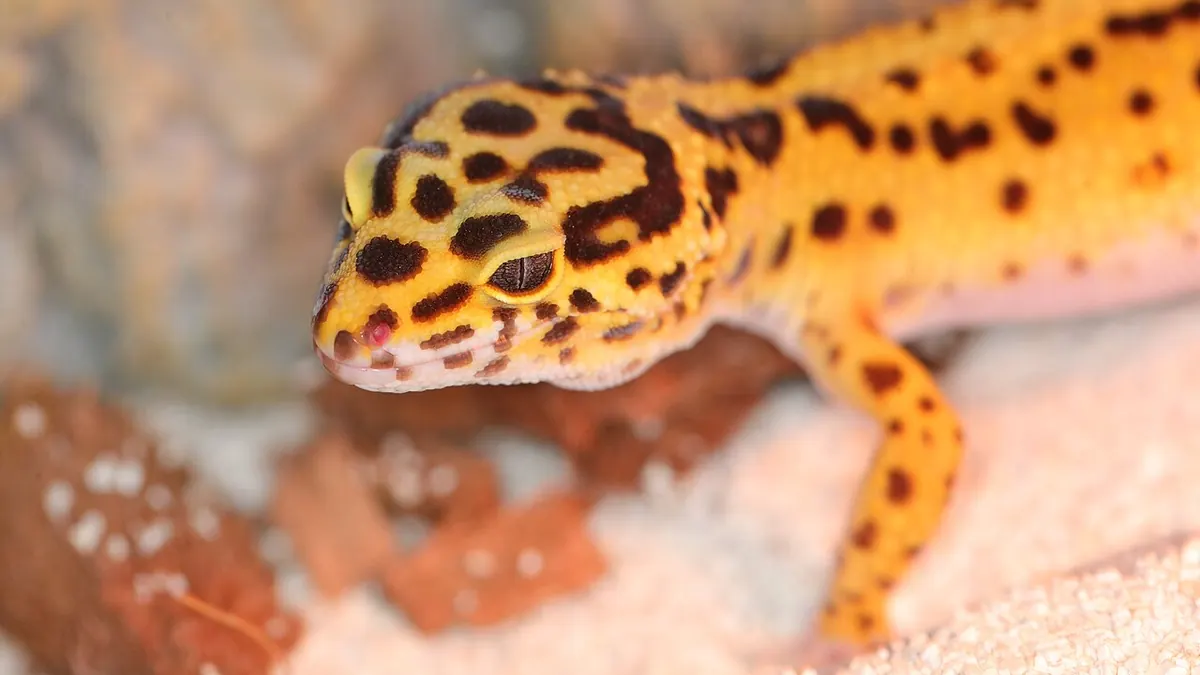

Leopard gecko : Strictly insectivorous: crickets, dubia roaches and worms, rotated for variety and always dusted with calcium plus occasional D3 vitamins. Mealworms should stay a treat, not a staple.
Our products don’t ship to you yet, but the PDF practical guide is instant: Your First Terrarium: Leopard Gecko, Bearded Dragon, Corn Snake, Ball Python (€15)
In short: Around 20 to 28 cm as an adult, 15 to 20 years of lifespan, beginner level. Placid and tolerant of gentle handling — the definitive beginner lizard. It stores its fat reserves in its tail and can drop it: never grab the tail, and a thinning tail is a warning sign about its health.
The Leopard gecko diet, precisely
A strict insectivore: freshly fed (gut-loaded) crickets and dubia roaches, worms as treats, calcium and occasional D3 dusting at nearly every meal. Temperature governs digestion: a Leopard gecko kept below its 30-32°C basking spot digests poorly and eventually refuses food — faced with a refusing animal, check the thermometer before the menu.
Gut-loading and supplements: the invisible part
A cricket is only worth what it ate: feed your insects for 24-48 h (fresh vegetables, bran) before offering them — that is gut-loading. Add calcium + D3 dusting at nearly every juvenile meal, every other one for adults, plus a calcium dish available at all times.
Water and hydration
A stable water dish changed daily, big enough for a soak if the animal wants one — many drink little but bathe before shedding. Dehydration shows in skin folds and sunken eyes: that means the exotics vet, not the mister alone. The full profile is on the full Leopard gecko profile.
Frequently asked questions
What does a Leopard gecko eat?
A strict insectivore: freshly fed (gut-loaded) crickets and dubia roaches, worms as treats, calcium and occasional D3 dusting at nearly every meal.
Why is my Leopard gecko refusing food?
Check temperatures first (basking spot at 30-32°C): too cold means no digestion. Then shedding and settling-in stress — but measured weight loss calls for the exotics vet.
The guides that apply to you
- Feeding a blue-tongue skink: balancing an omnivore
What does a blue-tongue skink eat? Ratios of protein, vegetables and fruit, feeding frequency, calcium, and foods to avoid. The complete feeding guide.
- Feeding tongs for reptiles: safety and good habits
Feeding tongs for reptiles: stainless steel or bamboo, ideal length, prices from 5 to 20 € and safety rules to avoid bites.
- Uromastyx: what a digestion study changes about setting the basking spot after meals
A study showed that uromastyx seek out a higher temperature after eating, a postprandial thermophily behaviour that sheds light on how to manage the basking spot around feeding times.
- Water bowls and soaking dishes for reptiles: size, material and upkeep
Which water bowl for a leopard gecko, a corn snake or a tortoise? Size, material, placement and upkeep for consistently clean water.