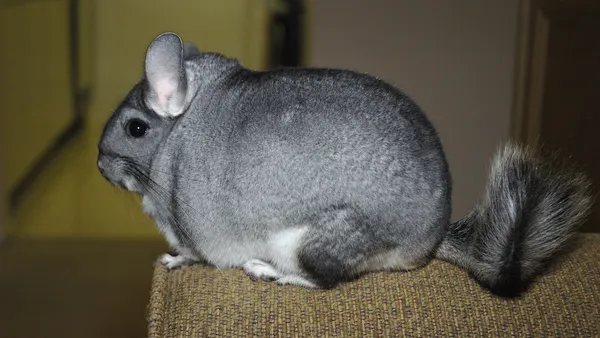
Chinchillas: does stressful handling make fur-chewing more likely?
Published by Planète Pets · managing editor: Clément Lacaille · how our guides are written
Fur-chewing — the habit some chinchillas have of gnawing their own coat until bald patches appear — has puzzled breeders for decades. An Argentine study set out to test whether physiological stress was the cause. Our handling and travel tips are gathered in the rodent travel and safety section.

Urinary cortisol and an anxiety test
Ponzio, Monfort, Busso, Carlini, Ruiz and Fiol de Cuneo published a study in 2012 in Hormones and Behavior comparing normal chinchillas with fur-chewing chinchillas. In females showing the most severe form of the behaviour, urinary cortisol metabolites were significantly higher, and those same females showed more anxiety-like behaviour in the elevated plus-maze test. The authors conclude that fur-chewing is not a simple cosmetic tic but the visible sign of chronic physiological stress, with a clear female bias.
What this means for how you handle a chinchilla
Chinchillas are especially sensitive to repeated stressors: noise, bright light, or rough or overly frequent handling. Since the study links chronic stress to fur-chewing, limiting unnecessary handling and using a calm, two-handed hold — never pulling on the tail or grabbing a patch of coat — reduces the cumulative stress load. For a vet visit or a house move, a rigid, familiar carrier introduced several days ahead avoids adding one more stressor to an animal that may already be predisposed. Our article on pet chinchilla welfare and housing mistakes covers the other housing errors to avoid, and our guide to the chinchilla's continuously growing teeth rounds out routine health monitoring.
- Higher urinary cortisol in females showing the most severe form of fur-chewing.
- Measured anxiety on the elevated plus-maze, only in the affected females.
- Clear female bias in how the behaviour is expressed, per the authors.
- Calm, infrequent handling: the simplest lever for cutting cumulative stress.
A chinchilla that starts gnawing its coat isn't acting out of whim but often expressing established stress — the first thing to revisit is how and how often it's handled, well before looking elsewhere.
Frequently asked questions
Does fur-chewing affect all chinchillas the same way?
No: the study found a clear female bias, with a link between the intensity of the behaviour and measured urinary cortisol levels.
Should I see a vet if my chinchilla is chewing its coat?
Yes, to rule out a dermatological or nutritional cause before concluding it's stress, then review the environment and how often the animal is handled.
How do I transport a chinchilla without adding to its stress?
Use a rigid carrier the animal is already familiar with, hold it with two hands without ever pulling on the coat, and keep non-essential trips to a minimum.
See it in the Planète Pets shop: Wooden hay rack with tray for rabbit, guinea pig and chinchilla (€21.90) · the whole shop
This guide is part of Planète Pets’s Rodents universe. Our advice is general in nature: for any health concern, your veterinarian remains the only reference.