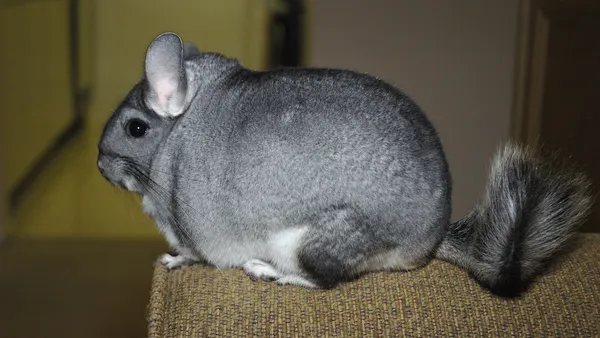
Chinchilla's continuously growing teeth: why hay makes all the difference
Published by Planète Pets · managing editor: Clément Lacaille · how our guides are written
In chinchillas, both incisors and molars grow continuously, sometimes up to 2 mm a week. A landmark veterinary study on dental disease in chinchillas, led by David Crossley in the United Kingdom, found dental abnormalities in more than a third of apparently healthy animals examined, and in the majority of those presented with signs of illness. This constant tooth wear sits at the heart of many of the feeding guidelines covered in our rodent food section.
Contents · 5 sections
A balance between growth and wear
In the wild, chinchillas graze on sparse, highly fibrous mountain vegetation that wears down their molars as fast as they grow. Lowland hay, richer in energy but less abrasive, doesn't serve the same mechanical function even though it remains digestible. It's the fibrous texture and the chewing time, far more than nutrient composition alone, that limit excessive molar elongation. Our general dietary guidelines are covered in the guide on hay for guinea pigs and chinchillas.
Recognising a developing malocclusion
A gradual loss of appetite, a marked preference for soft foods, excessive drooling or unexplained weight loss should raise concern: sharp points formed by overly long molars eventually injure the tongue or cheek, making chewing painful. These signs echo those covered, for another rodent species, in our article on checking a hamster's teeth for signs of malocclusion: dental vigilance remains useful for every continuously-growing-toothed rodent.
Hay as the foundation, not a supplement
Quality hay should stay available in unlimited quantity, day and night, and make up the bulk of what's eaten, well ahead of pellets or extruded feed. The latter, being softer and swallowed quickly, barely call on the prolonged chewing needed for natural wear. Dried fruit and sugary treats, sometimes sold as supplements, provide no abrasive value and should be sharply limited, as our guide on chinchilla diet, between pellets, hay and toxic foods points out.
When to see a vet
A visit to an exotic-pet vet is warranted at the first signs, since an advanced malocclusion often requires correction under anaesthesia and never resolves on its own through diet adjustment alone. An annual dental check, even with no visible symptom, remains the best long-term prevention.
Frequently asked questions
Does hay alone prevent all malocclusion?
It greatly reduces the risk but doesn't eliminate it entirely: some individuals carry a genetic predisposition, hence the value of regular veterinary checks.
Should chew blocks be given in addition to hay?
They can complement it but never replace hay, since they mostly work the incisors and far less the molars, which are the teeth actually at risk of malocclusion.
Is a chinchilla eating less hay than usual necessarily sick?
Not always, but a sustained drop in hay intake is one of the earliest signals to watch and warrants a precautionary dental check.
An accessory from our shop for this use: Wooden hay rack with tray for rabbit, guinea pig and chinchilla (€21.90) · the whole shop
This guide is part of Planète Pets’s Rodents universe. Our advice is general in nature: for any health concern, your veterinarian remains the only reference.