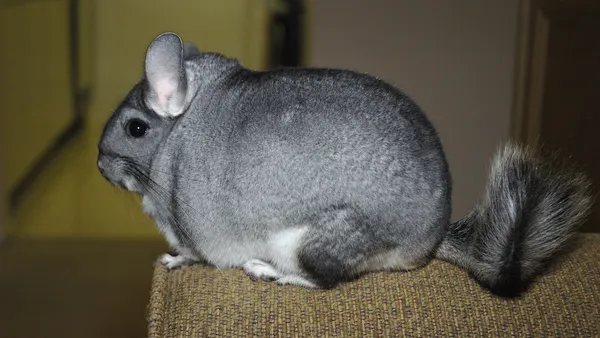
Fur chewing in chinchillas: causes and solutions
Published by Planète Pets · managing editor: Clément Lacaille · how our guides are written
Fur chewing affects a notable share of pet chinchillas, leaving characteristic bald patches described as a "moth-eaten coat". Far from trivial, this repetitive behaviour rightly worries owners. All our health guides are gathered in the rodent care and grooming section.
Contents · 5 sections
What does research show about this behaviour?
A study published in 2018 in the journal Animals found that fur chewing has a significant genetic component in chinchillas, with an estimated heritability of 0.16, and a measurable economic impact on fur quality (study on PMC). Work published in Physiology & Behavior further linked the behaviour to altered adrenal activity and a more anxious temperament in certain individuals (study on ScienceDirect).
What are the likely causes?
- Individual predisposition: some chinchillas are genetically more prone to it, regardless of their living conditions.
- Understimulating environment: a cramped space or insufficient activity favours the behaviour appearing.
- Chronic stress: constant noise, lack of hideouts, or frequent changes in the environment.
- Fearful temperament: the most anxious individuals show statistically more compulsive oral behaviours.
What should you do day to day?
Enrich the space with varied toys and structures, add more hideouts, and keep up a regular sand bath, a natural grooming habit that also eases certain skin discomforts. Reduce identifiable stress sources: noise, rough handling, or direct proximity to a perceived predator (a dog or cat). A stable environment, with no sudden change of cage placement, also helps limit relapses.
When should you see a vet?
Fur chewing isn't medically dangerous on its own, but it can mask or coexist with a dermatological cause (parasites, allergy) that an exotic-animal vet should rule out before concluding it's purely behavioural.
Frequently asked questions
Does the coat grow back after a fur-chewing episode?
Yes in most cases, once the cause is identified and corrected, though regrowth can take several months.
Is fur chewing contagious between chinchillas?
No, it isn't an infectious phenomenon, though an anxious chinchilla can indirectly influence a cage-mate's behaviour.
Should a fur-chewing chinchilla be isolated?
No, unless a vet advises otherwise: social isolation generally worsens stress rather than reducing it. Browse all our guides on the rodent hub.
An accessory from our shop for this use: Natural loofah chew carrot for rabbits and rodents, 20 cm (€17.90) · the whole shop
This guide is part of Planète Pets’s Rodents universe. Our advice is general in nature: for any health concern, your veterinarian remains the only reference.