Leaving a reptile in the car: the two figures that settle it
Published by Planète Pets · managing editor: Clément Lacaille · how our guides are written
The drive home from the shop, the round trip to the vet, the lunch stop on the motorway: every time the same sentence, "I'll crack the windows, I'll only be ten minutes." For a reptile the question is not the same one as for a dog or a cat: no panting, no sweating, and a body temperature that follows the air rather than resisting it. The only safeguard is a physiological ceiling — and that ceiling has been measured. Two studies, one on cabin physics and one on thermal tolerance, let us put numbers on the reasoning. Our travel guides are gathered in the reptile travel and safety section.
What a parked car becomes
McLaren, Null and Quinn published a series of measurements in Pediatrics in 2005, taken inside a dark-coloured sedan across sixteen clear, sunny days, at outside temperatures of 22.2 to 35.6 °C (see the study). It is a paediatric paper, prompted by child deaths: no animal was on board. So it does not measure a reptile risk — it measures a cabin.
- The temperature climbs roughly 1.8 °C every five minutes, and 80% of the total rise happens in the first thirty minutes.
- On the coolest day of the protocol — 22 °C outside — the interior reached 47.2 °C.
- Cracking the windows by 3.8 cm changed nothing: neither the rate of rise nor the maximum reached. That condition was, however, only tested on two of the sixteen days.
A carrier does not protect against this: it delays the rise, then traps the heat. The full cabin → carrier → animal chain was not measured by this study — that is a deduction — but it does not point in a reassuring direction.
A leopard gecko's thermal ceiling
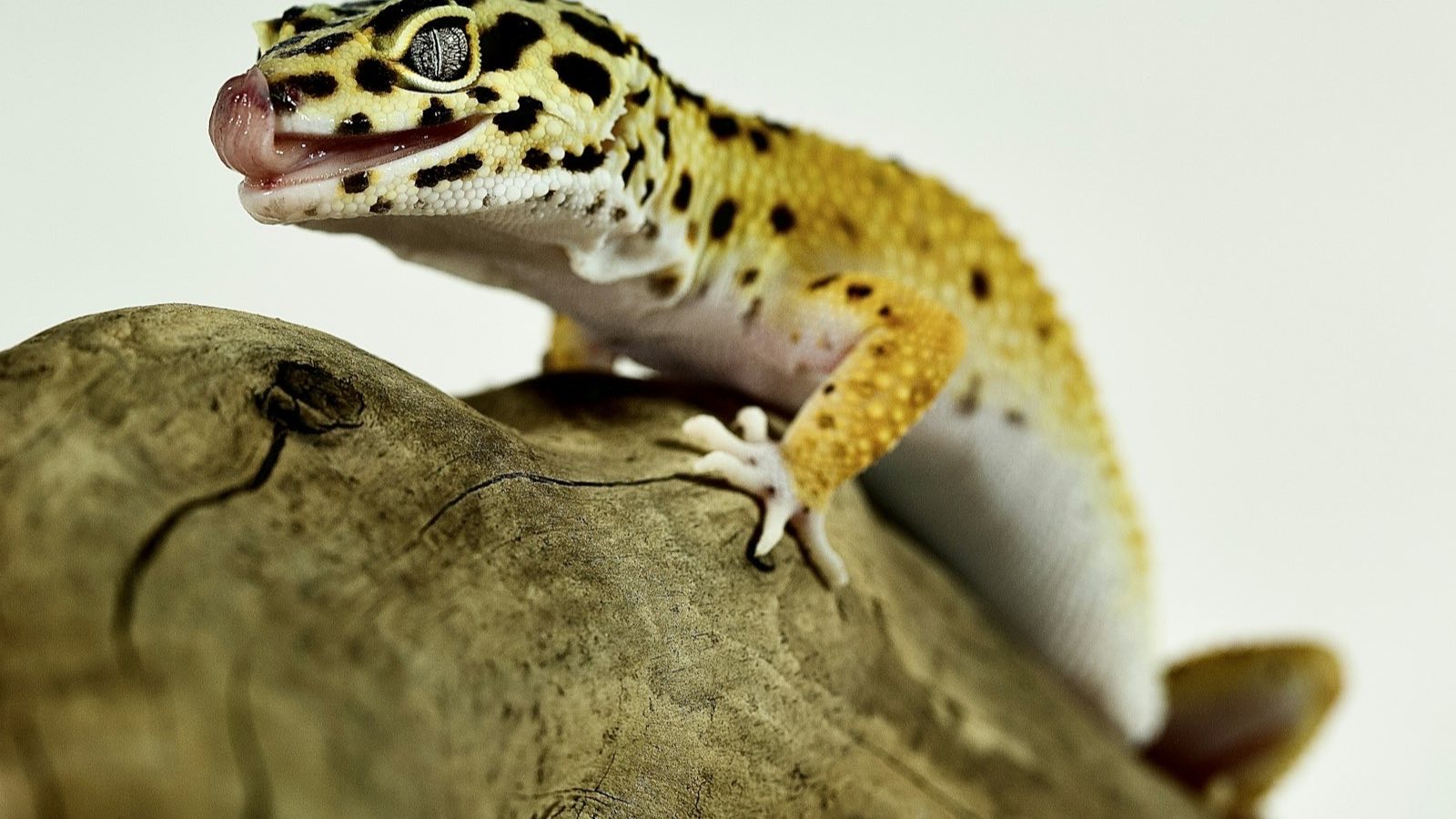
White, Kim, Wegh and Chiari measured, in the Journal of Thermal Biology in 2024, the critical thermal maximum of 28 adult leopard geckos: the body temperature at which the animal loses its righting reflex, meaning it can no longer get back onto its feet.
- 41.07 °C on average (± 1.99), under fast heating of about 1 °C per minute from 28 °C.
- That is below the 42.3 °C cross-species mean used in the literature: the leopard gecko is not a notably heat-hardy lizard.
- After a first heat episode, the animals gain only 0.76 °C of margin six hours later — and that slim benefit had vanished by twenty-four hours. The heaviest individuals gain the least.
Read it carefully: this is not a safety threshold. It is a failure point obtained in the laboratory under fast heating, and the authors note that holding an animal there would be lethal. Dehydration and damage occur well below it. Nothing here suggests 40 °C would be comfortable.
What to do with this
Put the two figures side by side: 47 °C inside a cabin on a mild spring day, against an organism that fails at 41. There is no margin, and it is spent within half an hour. The only robust rule is never to leave the animal in the vehicle — not even "just while I". Our equipment markers are in the article on the carrier and heat pack, and the gecko's particular case in the one on transporting a leopard gecko. For hot spells at home, see heatwaves and terrariums.
Frequently asked questions
What if I park in the shade?
The study only measured cars parked in the sun, and only one dark vehicle: shade surely helps, but no figure says by how much, nor allows treating it as protection.
This guide is part of Planète Pets’s Reptiles universe. Our advice is general in nature: for any health concern, your veterinarian remains the only reference.