Transporting a crested gecko: why its tail forgives no mistakes
Published by Planète Pets · managing editor: Clément Lacaille · how our guides are written
The crested gecko (Correlophus ciliatus) has a reputation for being docile, but transporting it carries a risk specific to the species: a lost tail never grows back. A review by Philip Bateman and Patricia Fleming, published in 2009 in the Journal of Zoology, synthesizes two decades of research on caudal autotomy in lizards and notes that this defensive reflex, triggered by rough handling or intense stress, carries a real physiological cost: loss of reserves stored in the tail and the energy expense of healing (see the study). In the crested gecko, that cost is never offset by regrowth, unlike many other gecko species. Find all our pointers in the travel and safety section.
Contents · 5 sections
Why transport is a particularly risky moment
A quick grab by the tail to catch the animal before boxing it up remains, per the 2009 review, the most common trigger for autotomy in captivity. A stressful trip — noise, jostling, a sudden temperature change — can also lower the trigger threshold, even without direct contact with the tail.
How to handle and load the animal safely
Always let the crested gecko walk onto your open hand rather than grabbing it, supporting the whole body from underneath. Transfer it straight into a small faunarium lined with damp paper towel, with a piece of branch to grip, without carrying it in hand for long before departure.
What conditions to maintain during the trip
Stay under 28 °C at all times: this species already lives at room temperature and copes poorly with a heat spike, an extra stress factor that further lowers the autotomy threshold identified by the review. Shield the box from direct sun and keep the trip as short as possible.
If the tail drops despite every precaution
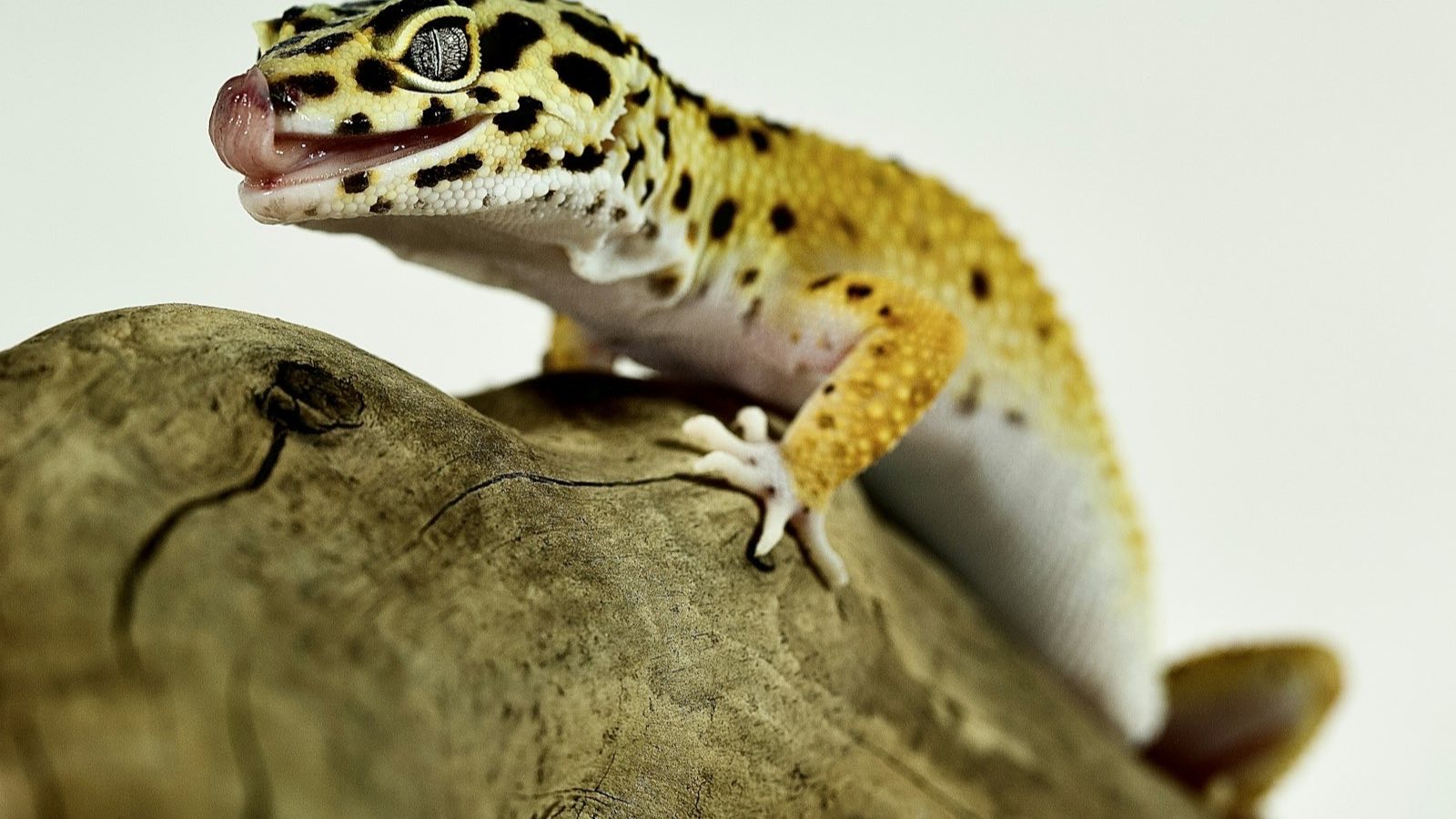
The wound should stay clean and dry, with no ointment or occlusive dressing: healing happens on its own within a few weeks, but with no regrowth at all in this species, unlike the leopard gecko. That's a difference worth knowing before buying, not discovering after an accident.
- Handling: always from underneath, never by the tail or hindquarters.
- Container: a small ventilated faunarium with damp paper towel and a branch.
- Transit temperature: under 28 °C at all times, away from direct sun.
- Regrowth: none in the crested gecko, unlike other geckos.
This difference with the leopard gecko is covered in our comparison crested gecko or leopard gecko, and complements our pointers on terrarium setup, which already cuts down on unnecessary daily handling.
Frequently asked questions
Can you still handle a crested gecko after it drops its tail?
Yes, once the wound has healed, just handle the rest of the body extra carefully until the animal regains confidence.
Does tail loss affect the animal's balance?
A bit at first, since the tail plays a role in balance during jumps, but most individuals adapt well within a few weeks.
Should you see an exotics vet after autotomy?
Not systematically if the wound stays clean and dry, but heavy bleeding or an infected wound warrants a prompt check-up.
See it in the Planète Pets shop: Ventilated clear box for feeder insects, transport and quarantine, 19 cm (€17.90) · the whole shop
This guide is part of Planète Pets’s Reptiles universe. Our advice is general in nature: for any health concern, your veterinarian remains the only reference.