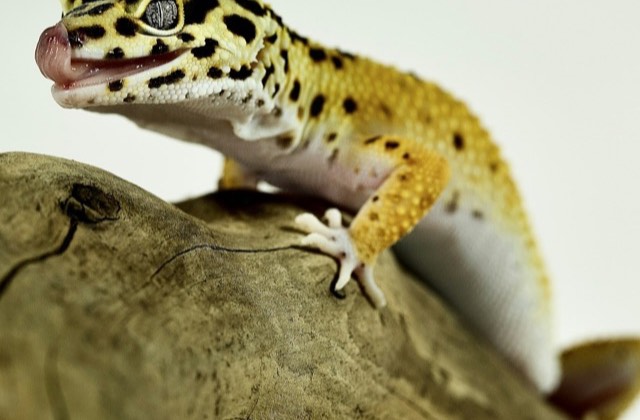
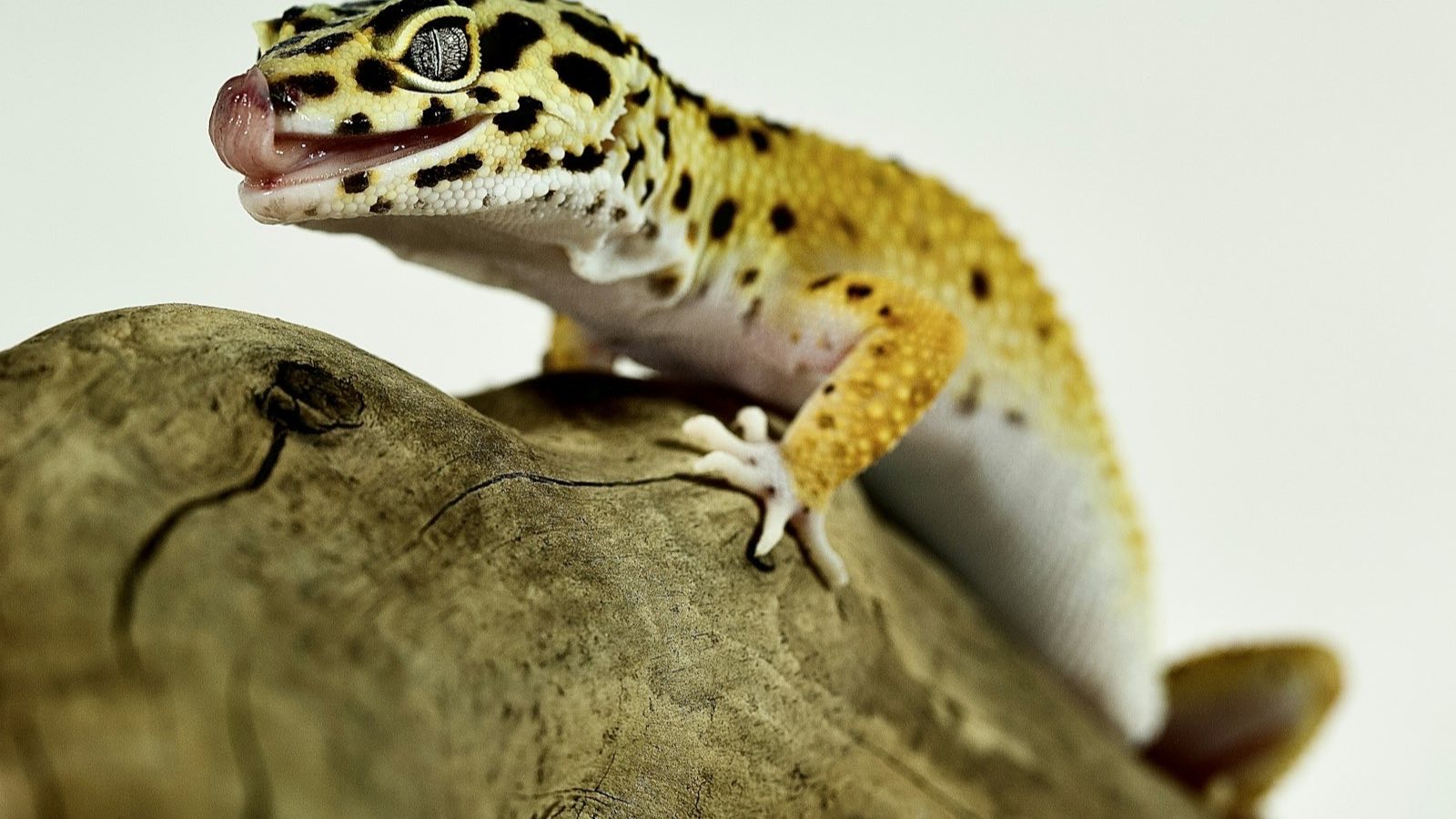
Crested gecko or leopard gecko: which to choose as a first gecko?
Published by Planète Pets · managing editor: Clément Lacaille · how our guides are written
Between the crested gecko (Correlophus ciliatus) and the leopard gecko (Eublepharis macularius), the choice mostly comes down to how much time you want to spend on heat gradients and handling. A study by Fernández-Lázaro, Latorre, Fontanillas Pérez and Barja, published in 2023 in the journal Animals, compared reactions to novel objects and fecal glucocorticoid metabolite levels in these two nocturnal geckos, and measured significantly higher and more variable stress levels in crested geckos than in leopard geckos (see the study). Worth knowing, since crested geckos have a reputation as the easier of the two. Compare both profiles in our bedding and habitat section.
Contents · 5 sections
Which needs the least equipment?
The crested gecko needs neither mandatory UVB nor a strong basking spot: it does fine at room temperature in a heated home (22-26 °C). The leopard gecko needs a floor-level hot spot (28-32 °C) and, per current recommendations, low-intensity UVB. On equipment alone, the crested gecko starts with a slightly lower budget.
Which handles better?
This is where the 2023 study matters: leopard geckos proved more physiologically stable when facing novelty and handling than crested geckos, whose measured stress levels ran higher on average. A stressed crested gecko can also drop its tail through autotomy, with no regrowth possible in this species.
Which is simpler to feed?
The crested gecko accepts a ready-made commercial mash, topped up with occasional insects: a quick routine. The strictly insectivorous leopard gecko needs a regular supply of crickets and worms, dusted with calcium at every meal.
Which fits your schedule?
For a busy schedule, the crested gecko stays practical thanks to its simplified diet. For anyone wanting to handle their reptile regularly without risking repeated stress, the leopard gecko, more stable per the study, is the safer pick.
- Equipment: crested gecko simpler (no mandatory UVB); leopard gecko more demanding (UVB + hot spot).
- Measured stress: higher in the crested gecko per Fernández-Lázaro et al. 2023.
- Diet: ready-made mash for the crested gecko; live insects mandatory for the leopard gecko.
- Tail: never regrows on a crested gecko, partly regrows on a leopard gecko.
Terrarium choice matters just as much regardless of species; see our comparison on royal python or boa constrictor for the same logic applied to snakes, and our piece on the budget for another easy lizard, the blue-tongued skink.
Frequently asked questions
Can a crested gecko live without UVB?
Many keepers skip it successfully thanks to an already-fortified mash diet, but low UVB remains a recommended extra safety margin per a growing number of exotics vets.
Does the leopard gecko also lose its tail easily?
Yes, through autotomy under significant stress, but its tail partly regrows, unlike the crested gecko's, which does not regrow at all.
Can you house a crested gecko and a leopard gecko together?
No: they're two species with different temperature needs, and cohabitation between two different reptile species is discouraged in every case.
In our shop, for this use: Ventilated clear box for feeder insects, transport and quarantine, 19 cm (€17.90) · the whole shop
This guide is part of Planète Pets’s Reptiles universe. Our advice is general in nature: for any health concern, your veterinarian remains the only reference.