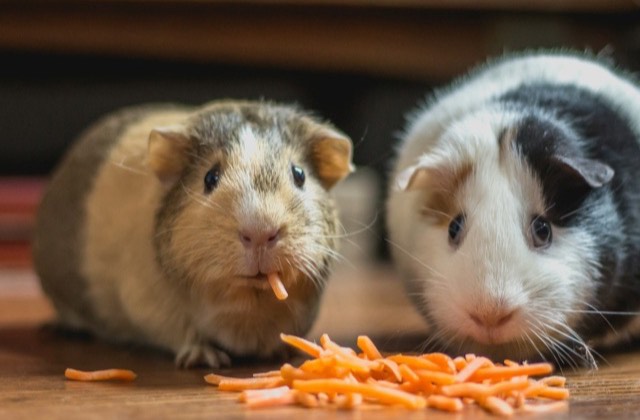
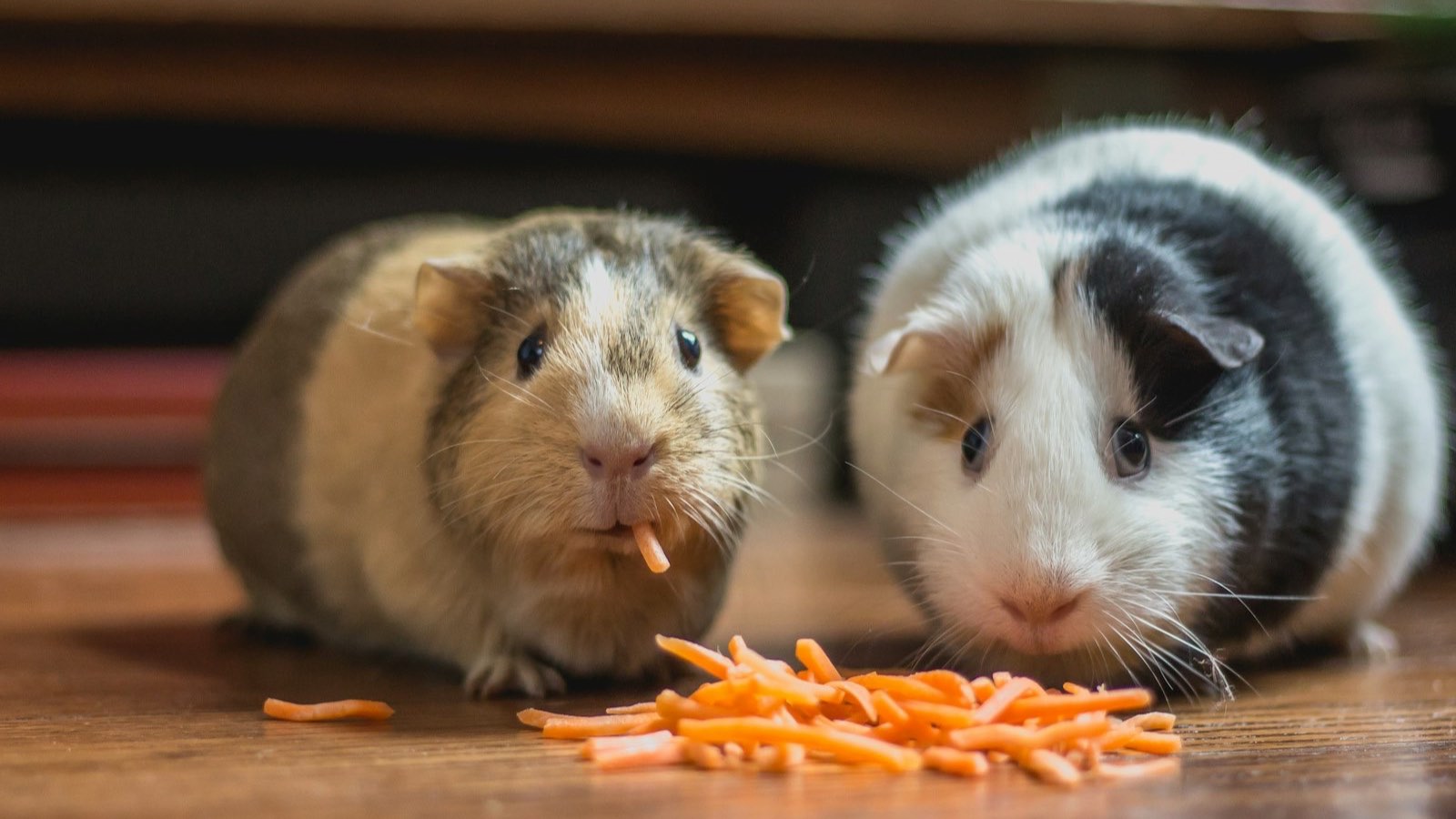
Popcorning in guinea pigs: a sign of wellbeing worth encouraging
Published by Planète Pets · managing editor: Clément Lacaille · how our guides are written
Play in non-human animals was long dismissed as anecdotal, until a landmark review on the ethology of play, by Held and Špinka, established that spontaneous playful behaviour is one of the few indicators directly tied to a positive affective state, rather than merely the absence of stress (see the study). In guinea pigs, this behaviour has a familiar name: popcorning, those abrupt, disorganised little hops that extend the guidelines in our rodent toys and enrichment section.
Contents · 5 sections
What a typical popcorning episode looks like
The animal suddenly jumps in place or while moving forward, sometimes changing direction mid-air, often accompanied by short, high-pitched squeaks. This sequence, very different from a flight response or a fear-driven startle, which stays linear and silent, usually happens around identifiable positive moments: feeding time, being let out of an enclosure, or reuniting with a favoured cage mate.
A wellbeing marker, not a mere reflex
Unlike an isolated reflex, popcorning shows up more often in guinea pigs with enough space and varied enrichment, making it a useful observable signal for assessing everyday quality of life, alongside the criteria covered in our guide on guinea pig enrichment. Its prolonged absence in a previously expressive animal is, in fact, worth taking seriously as a possible sign of distress.
Encouraging this behaviour through the environment
Enough floor space to allow for broad movement, regular time out of the cage and the presence of a compatible cage mate all clearly favour popcorning, while an overly cramped enclosure mechanically limits this kind of movement, a factor also covered from a social angle in our article on guinea pig alone or in pairs. Varying hideouts, tunnels and levels within an enclosure, rather than keeping the same layout indefinitely, also creates more openings for spontaneous movement and makes this behaviour easier to spot day to day.
Not to be confused with fear-driven agitation
A young guinea pig still getting used to handling can briefly confuse an observer: a rushed dash toward a hideout can look like a single hop. Repeated, multidirectional jumps paired with short, happy squeaks, rather than a straight, silent bolt toward shelter, remain the most reliable way to tell popcorning apart from a stress reaction.
Frequently asked questions
Does an older guinea pig popcorn less?
That's common, as reduced mobility with age lowers the intensity of jumps without necessarily reflecting distress.
Could popcorning look like a seizure?
No, it stays brief, voluntary and is followed by normal behaviour; prolonged disorientation after the episode, on the other hand, should raise concern and warrant a vet visit.
Can popcorning be triggered on demand?
Not reliably, but consistently pairing fresh vegetables or opening the enclosure with a calm moment increases the chances of seeing it.
An accessory from our shop for this use: Hanging chew garland for rabbits and rodents (€17.90) · the whole shop
This guide is part of Planète Pets’s Rodents universe. Our advice is general in nature: for any health concern, your veterinarian remains the only reference.