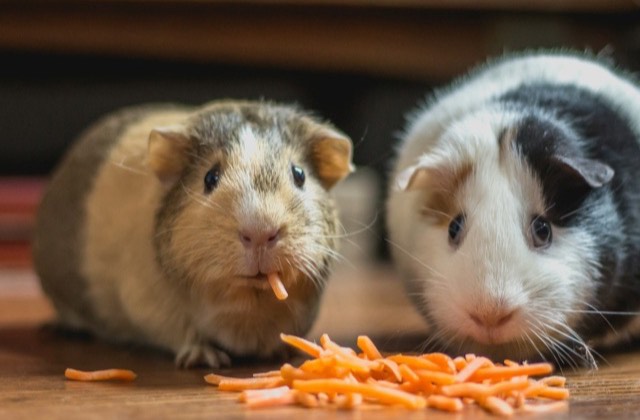
Why baby guinea pigs are born almost ready to fend for themselves
Published by Planète Pets · managing editor: Clément Lacaille · how our guides are written
A baby guinea pig isn't born naked or blind — it arrives with a full coat, open eyes, and is able to move around and nibble hay within its first hours of life, a rare degree of precocity among rodents. Künkele and Trillmich published a landmark study on lactation energetics in guinea pigs in the journal Physiological Zoology in 1997, showing the high physiological cost a mother pays to produce young this developed at birth, compared with the blind, hairless litters of rats or mice (see the study). Find our comparisons in the food section.
Contents · 4 sections
A precocity that changes feeding from day one
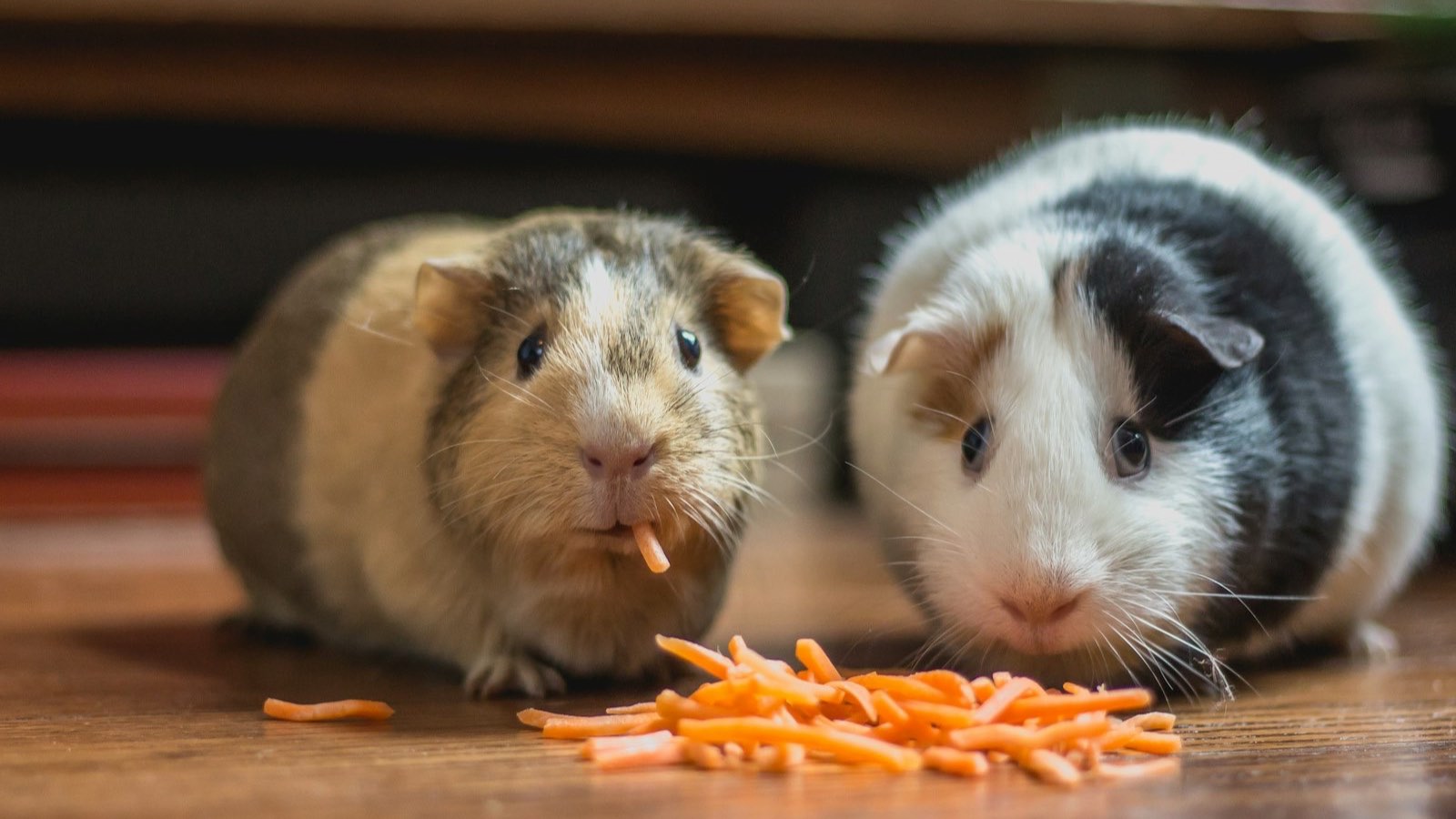
Unlike a baby rat or mouse pup that depends entirely on its mother's milk during its first days, a baby guinea pig starts eating hay and solid pellets almost immediately, alongside nursing. Mother's milk still matters for several weeks though: it provides antibodies and nutrients that solid food alone doesn't yet cover for such a young animal.
What this means for weaning
Since the young are already eating on their own so early, weaning a litter of guinea pigs follows a more gradual timeline than in other rodents: separation from the mother generally happens between three and four weeks, once feeding independence is confirmed rather than at one fixed age across species. Our guide on weaning baby rodents covers these benchmarks species by species.
Fresh vegetables still need a gradual introduction
This precocity doesn't rule out a cautious approach to fresh vegetables: a still-immature digestive system doesn't handle excessive variety well in the first days, even in an animal already capable of chewing hay so early. Our guide on daily vegetables for guinea pigs covers the right pace of introduction for young and adult animals alike.
Frequently asked questions
Can a baby guinea pig survive without its mother from birth?
No, despite its apparent precocity, it still depends on mother's milk for several weeks for immune protection and certain nutrients; separating it too early remains risky.
Should hay be offered from day one?
Yes, good-quality hay should be available at all times from birth; the young naturally nibble on it well before full weaning, alongside their mother's milk.
Does this precocity lower the risk for the mother?
No, the opposite: producing young this developed carries a high energy cost for the mother, which is why her diet needs extra support and monitoring throughout pregnancy and nursing.
See it in the Planète Pets shop: Wooden hay rack with tray for rabbit, guinea pig and chinchilla (€21.90) · the whole shop
This guide is part of Planète Pets’s Rodents universe. Our advice is general in nature: for any health concern, your veterinarian remains the only reference.