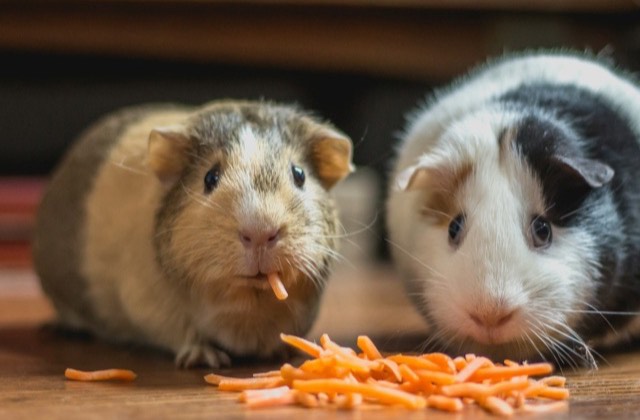
Weaning baby rodents: from birth to feeding independence
Published by Planète Pets · managing editor: Clément Lacaille · how our guides are written
Adopting a just-weaned baby rodent from a pet shop is common, but the age at which weaning actually happened matters far more than most owners realise. Literature on early weaning in laboratory rodents shows that separating a pup from its mother too soon durably raises stress levels and disrupts certain adult behaviours (see the study). A useful reference before setting up a cage: our rodent food section covers the needs specific to each species once weaning is complete.
Contents · 4 sections
Timelines vary by species
Mice and rat pups generally nurse until 3-4 weeks old and can move to a new home around 5-6 weeks. Hamsters wean a little earlier, around 3 weeks, but benefit from staying with their mother a few more days to stabilise their weight. Gerbils and guinea pigs follow similar timelines, with digestive maturity generally reached before 4 weeks. In every case, a pet shop or breeder advertising "early" weaning should raise a flag: a pup that's too young digests solid food poorly and copes badly with a change of environment.
Making the food transition gentle
A freshly weaned baby rodent should be given, in its new home, the exact same food the breeder was using for at least a week before any gradual transition to the chosen brand or mix. Abrupt food changes cause diarrhoea and needless digestive stress in a still-fragile system. That same caution applies at the other end of a rodent's life, as covered in our guide on senior rats and adjusting their diet: dietary transitions, whether young or old, should always be handled gently.
Signs of a successful weaning
A well-weaned young rodent eats solid food eagerly on its own, has a neat coat, well-formed droppings and normal activity for its species. A listless animal, one with a bloated belly, or one refusing solid food in the first few days should be seen without delay by an exotic-pet vet, as recommended in our article on finding an exotic pet vet for your rodent.
Frequently asked questions
Can I adopt a 3-week-old rodent?
That's too early for most species: it's best to wait until at least 5 weeks for a rat or mouse pup, slightly less for an already well-developed hamster.
Should I change the food immediately on arrival?
No, it's better to keep the same food for a few days, then transition gradually over one to two weeks.
Is a lone baby rodent in its cage stressed?
For social species like rats, gerbils or guinea pigs, yes: they need a companion of the same species, unlike hamsters, which live alone as adults.
In our shop, for this use: Wooden hay rack with tray for rabbit, guinea pig and chinchilla (€21.90) · the whole shop
This guide is part of Planète Pets’s Rodents universe. Our advice is general in nature: for any health concern, your veterinarian remains the only reference.