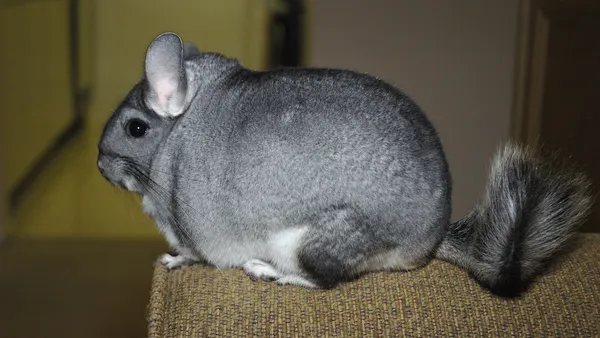
Exercise wheel for a chinchilla: what size to choose?
Published by Planète Pets · managing editor: Clément Lacaille · how our guides are written
Unlike a hamster, a chinchilla has an elongated body and a spine that is much longer relative to its size. A wheel sized for another rodent, even if the animal can technically run on it, forces an abnormal curve into the spine with every stride. Our enrichment ideas are gathered in the rodent toys and enrichment section.

Contents · 5 sections
What the research on wheel running shows
A review by Sherwin, published in 1998 in the journal Animal Behaviour on voluntary wheel running in rodents, notes that wheel size needs to match each species' own body shape to allow natural rather than forced movement, or a beneficial behaviour risks turning into a source of stress or physical discomfort (see the study). This proportionality requirement applies directly to chinchillas, whose body size far exceeds that of a hamster or even a gerbil.
The minimum recommended diameter
For an adult chinchilla, a diameter of at least forty-five centimetres is generally recommended, compared with eleven to twenty centimetres for a dwarf hamster according to our silent exercise wheel size guide. Below that threshold, the animal is forced to run hunched over, a posture repeated on every session that can, over time, contribute to chronic pain.
A solid running surface, not a mesh one
A wheel with a solid surface, free of bars or mesh, removes any risk of the hind feet getting caught, a real concern given how slender they are in this species. Quiet rotation matters too: a squeaky mechanism often discourages nighttime use, even though that is when this crepuscular animal is naturally most active.
A wheel does not replace floor space
Even with a perfectly sized wheel, it does not substitute for enough vertical jumping space, essential to the wellbeing of this climbing species. Our article on exercise wheel or saucer for rodents compares the two options across species.
Frequently asked questions
Does a wooden wheel work for a chinchilla?
Raw wood absorbs moisture and odour and wears down quickly under claws; rigid plastic or treated metal stays more durable and hygienic.
Does a young chinchilla need a smaller wheel?
No, it is better to invest directly in an adult-sized wheel, since the animal grows quickly during its first year.
Should the wheel be removed if the chinchilla ignores it?
No, an adjustment period of several weeks is normal; poor placement within the cage is often behind an apparent lack of interest. Browse all our guides on the rodent hub.
See it in the Planète Pets shop: Hanging chew garland for rabbits and rodents (€17.90) · the whole shop
This guide is part of Planète Pets’s Rodents universe. Our advice is general in nature: for any health concern, your veterinarian remains the only reference.