Boa constrictor: what a study on thermal aggregation changes about terrarium heating
Published by Planète Pets · managing editor: Clément Lacaille · how our guides are written
Watching a boa constrictor stay balled up against its heat lamp isn't trivial: an older study measured this exact clustering behavior in relation to ambient temperature, with direct consequences for how a thermal gradient should be built in a terrarium. Find all our habitat guidance in the reptile bedding and habitat section.
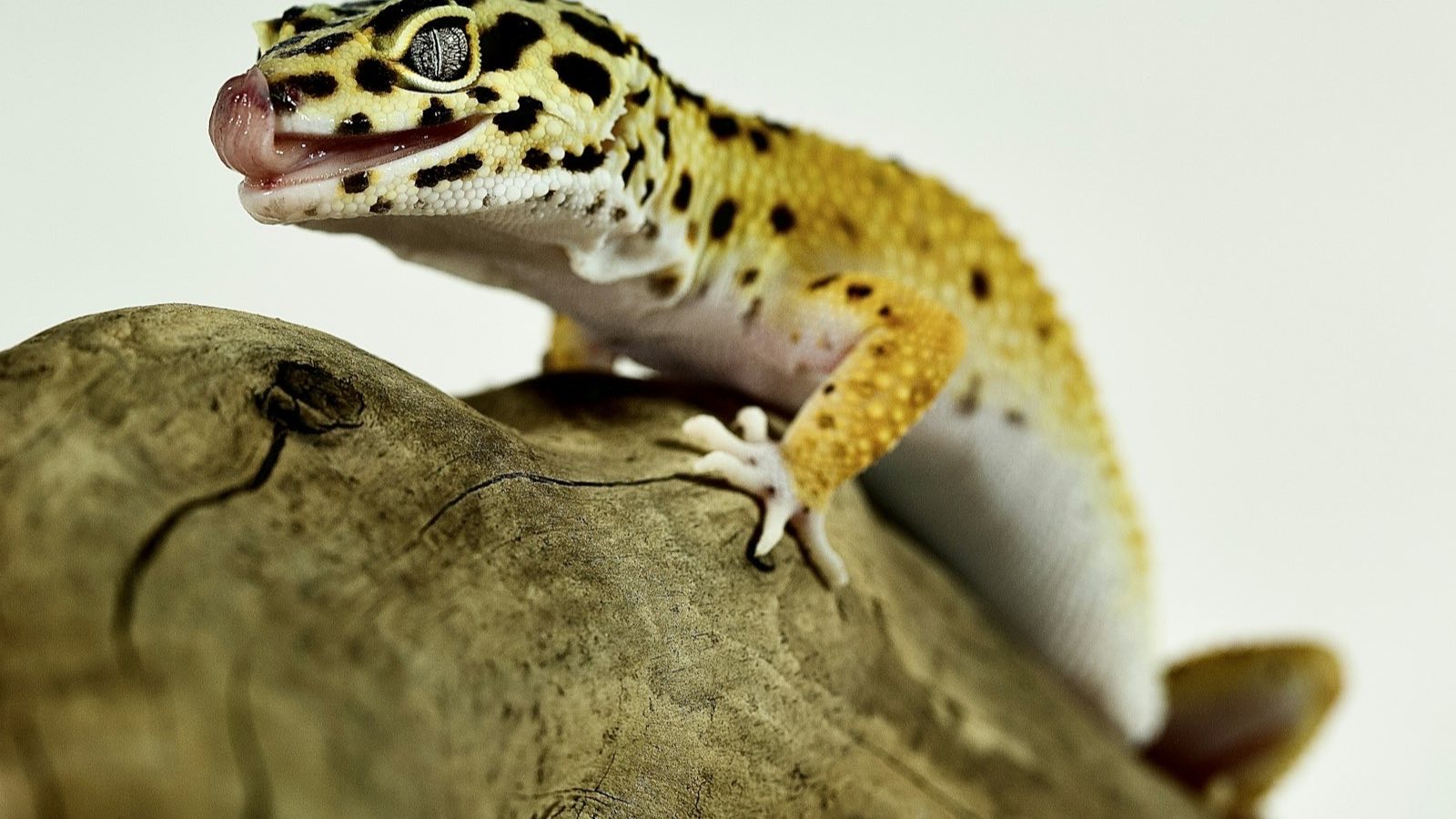
A study on thermal aggregation in the boa constrictor
Myres and Eells published a 1968 study in Herpetologica titled "Thermal Aggregation in Boa Constrictor" (study on JSTOR). By placing young boas in enclosures offering several temperature tiers, the researchers measured that individuals clustered into a tighter mass the lower the ambient temperature was, and spread out clearly as soon as a sufficiently warm zone became available. This close contact between conspecifics functioned as a social thermoregulation strategy, not as a spontaneous social behavior.
What this changes about building the thermal gradient
This study highlights an often-overlooked point: a boa that stays motionless, balled up in a corner near its heat source, isn't necessarily seeking company or comfort — it may be compensating for a basking zone that is too weak or poorly defined.
- Provide a clear, localized basking spot, around 30-32°C, clearly separated from a cool zone at 24-26°C, rather than diffuse, uniform heat throughout the terrarium.
- Be wary of a boa that stays glued to the basking spot without ever exploring the cool zone: this behavior can signal too weak a gradient rather than a simple preference.
- Never house two boas together so they can warm each other: the clustering measured by this study is a sign of thermal stress, not a social need to satisfy artificially.
This reading of the behavior rounds out the practical guidance in our guide to heating a terrarium from below or above, and the regulation details covered in our article on dimming thermostats and terrarium timers.
Frequently asked questions
Is a boa constrictor that always stays near the lamp sick?
Not necessarily, but it's worth checking that a cool zone actually exists and is easy to reach; a poorly set gradient pushes the animal to stick to its only heat source.
Should two boas be housed together to keep each other warm?
No: this study shows that clustering is a response to a lack of individual warmth, not a social need to fulfill; each boa needs its own complete thermal gradient.
Does this study apply to an adult boa in an individual terrarium?
The measurements were taken on young individuals, but the principle of a clear gradient offering a real choice of temperatures holds at any age. Find all our guides in the reptile hub.
See it in the Planète Pets shop: Stick-on digital thermometer for aquarium and terrarium glass (€18.90) · the whole shop
This guide is part of Planète Pets’s Reptiles universe. Our advice is general in nature: for any health concern, your veterinarian remains the only reference.